


Bob Dunfey is always on the go. On Monday, the energetic 74-year-old plans to complete his 34th consecutive Boston Marathon.
Then he’ll get right back to running around in a different manner as the volunteer race director of the Maine Community Bank Maine Marathon, Half Marathon and Relay, which will hold its 35th race on Oct. 4, with its start and finish in Portland.
In 2025, the Maine Marathon and its 5,144 registered runners generated $793,285 in charitable giving, including $207,685 in direct payments from the race. Most of the funds are generated by individual runners who run in support of a charity of their choice, sometimes unbeknownst to the nonprofit that will receive funds.
“I love those runners because they haven’t even contacted the charity, and then it’s me contacting them that they have $7,000 or whatever coming their way,” Dunfey said. “Delivering those checks is a real pleasure for me.”
The Maine Marathon is also closing in on a major milestone. Since its inception, the race and its participants have raised over $8.9 million.
That largesse is the purpose of the Maine Marathon, Dunfey says, and is possible in part because of the 900-plus volunteers. Dunfey, who succeeded Howard Spear as race director in 2017, estimates he puts in 1,500 unpaid hours a year.
“A lot of our appeal to runners and volunteers is that we give back so much money to the community,” Dunfey said.
Each year, three or four nonprofits are chosen as primary beneficiaries by a selection committee through a blind, ranked vote process. For 2026, about 20 Maine nonprofits applied, Dunfey said.
The 2026 beneficiaries, Pine Tree Society, Camp No Limits and Day One, will each receive $20,000. Nana’s House, based in Standish, will get a donation of $5,750.
Because runners are incentivized to also raise funds, the total amount to the designated beneficiary often exceeds the guaranteed donation. Being a beneficiary also provides nonprofits with important exposure to a new demographic, said Adria King, the chief development officer for Pine Tree Society, which is celebrating its 90th anniversary as an organization dedicated to providing disability communities with support, and, in particular, adaptive outdoor recreation at its Pine Tree Camp in Rome. The camp, in its 80th year, accepts campers regardless of their family’s financial abilities.
Pine Tree Society receives no federal funding and needs to raise $2 million annually. King said the Maine Marathon contribution will go “directly toward supporting Pine Tree Camp’s open-door policy.”
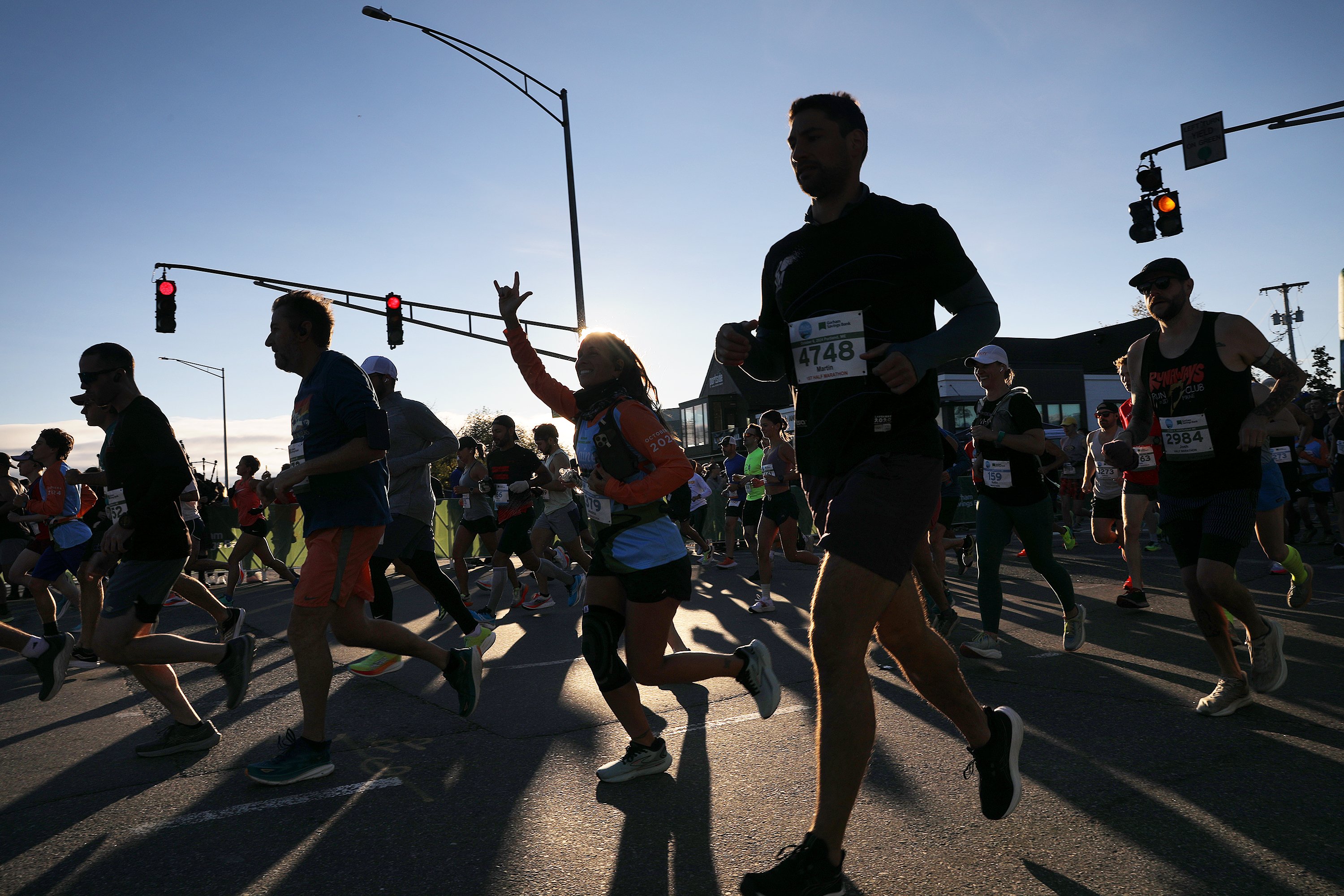
The Maine Marathon can also react to specific community needs.
That happened last year. Once Dunfey had paid his expenses for vendors (tents, scoring, etc.) and distributed the charitable funds pledged, the race had a $90,000 surplus. That’s not unusual. Most years, the extra would be split between charities that had applied to be a beneficiary.
Last year was different. A few weeks after the marathon, Dunfey attended an event for business leaders hosted by the Portland Press Herald.
At the event, Heather Paquette, the president of Good Shepherd Food Bank of Maine, detailed how the nearly 191,000 Mainers facing food insecurity, which includes one in five of the state’s children, were on the cusp of an immediate crisis. The federal government was in a shutdown, and if it didn’t reopen by Nov. 11, the SNAP benefits that families depend on for food essentials would be cut off.
“We were already a week into the situation and pantries were seeing 30-50% longer lines at pantries,” Paquette said.
Dunfey and his board responded quickly. They asked the Maine Track Club, which owns the race, to kick in another $50,000 for a total of $140,000 to fight food insecurity. Good Shepherd received $65,000. Another five nonprofits received $15,000 each.
“To have a donation of that size is extremely meaningful, and it came at a time when pantries were not seeing as much food as normally,” Paquette said. “It really spoke to me of the generosity and community orientation of the Maine Marathon.”
Dunfey is hoping that the 2026 Maine Marathon will raise even more funds. In 2024, which actually had a larger total gift than 2025, a total of 34 organizations generated at least $1,000. Another 51 groups, including many local high school cross country teams, used the Maine Marathon that year to raise a combined $26,000.
Dunfey said Monday that about 30 additional nonprofits are fundraising in 2026.
Runner registration is open and the entry fee is discounted until April 30. Currently, the cost to enter is $85 for the marathon, $60 for the half marathon, and $150 for a relay team of up to four runner. The price increases in $10 increments ($20 for a relay team) every couple months.
As a race, the Maine Marathon and half marathon has many positive aspects. There’s the logistical ease of starting and finishing in the same spot on Baxter Boulevard. Relatively easy and affordable parking, typically pleasant early October weather, a scenic course, and well-honed volunteer staff also are key positives. But it’s the core mission that matters most.
“The race is a great experience with features and amenities, but the charitable piece is pretty powerful,” Dunfey said

We invite you to add your comments. We encourage a thoughtful exchange of ideas and information on this website. By joining the conversation, you are agreeing to our commenting policy and terms of use. More information is found on our FAQs. You can update your screen name on the member's center.
Comments are managed by our staff during regular business hours Monday through Friday as well as limited hours on Saturday and Sunday. Comments held for moderation outside of those hours may take longer to approve.
Join the Conversation
Please sign into your CentralMaine.com account to participate in conversations below. If you do not have an account, you can subscribe here. Questions? Please see our FAQs.