

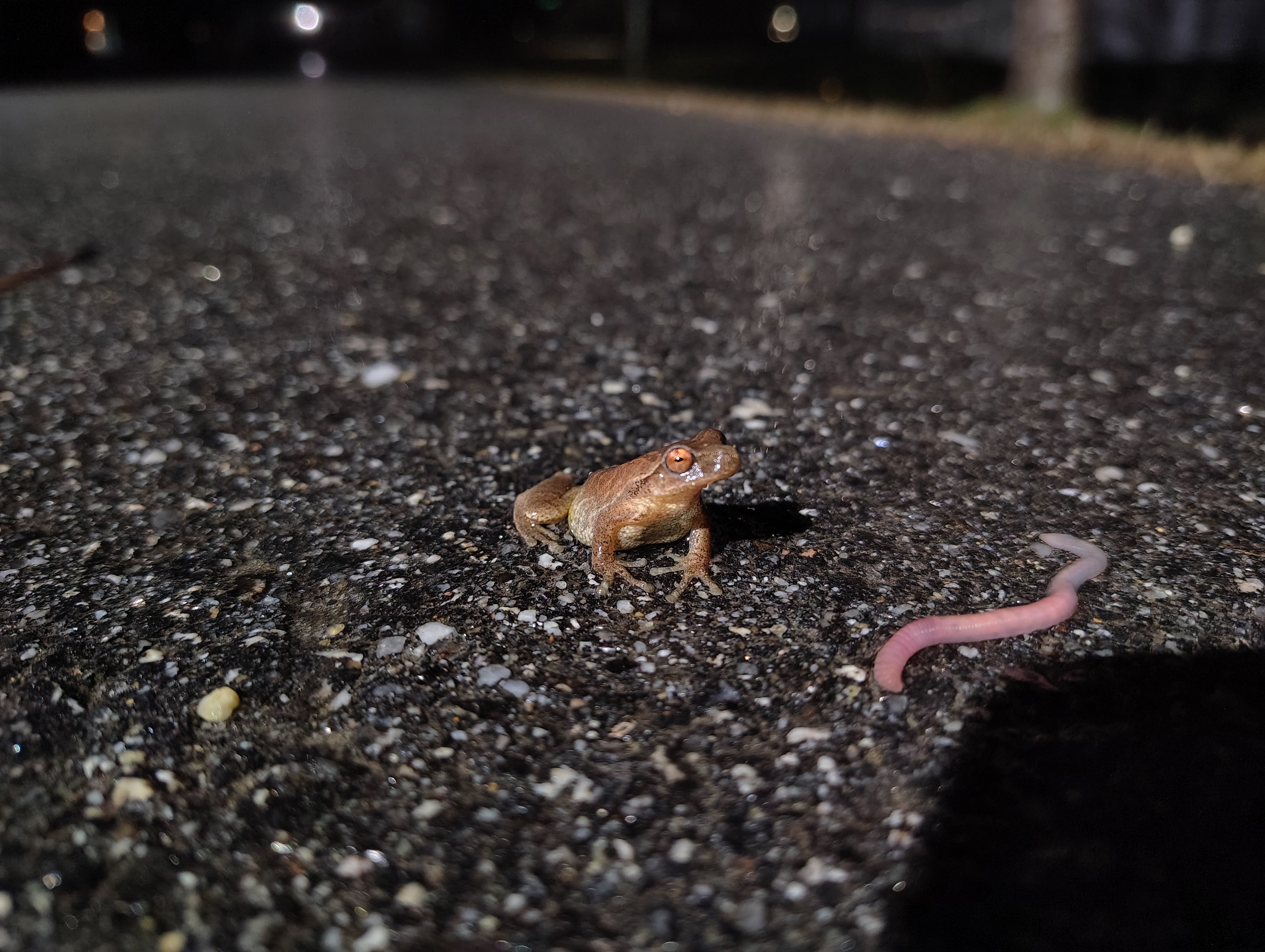
Rain fell steadily as I walked dark stretches of road in Jay, Wilton and Farmington wearing a reflective vest and headlamp, scanning wet pavement for movement.
Somewhere beyond the trees, frogs called loudly in the darkness. The temperature hovered around 45 degrees, conditions that Maine Big Night volunteers are told can produce ideal migration nights for frogs and salamanders moving toward breeding pools.
But on my first night out, I found no living frogs, toads or salamanders crossing the road.
Just worms.
And one squished gray frog with bright yellow legs, likely a wood frog, flattened against the wet pavement.
That contrast, loud frog calls surrounding an otherwise quiet road, quickly became one of the most memorable parts of participating in Maine Big Night. The statewide volunteer effort asks residents to help amphibians survive dangerous road crossings during their annual spring migration.
The project was founded by Greg LeClair after observing high rates of amphibian mortality on roads throughout Maine. Today, volunteers across the state monitor assigned road segments between March 15 and May 15, collecting scientific data while helping frogs and salamanders cross safely.
Through a short certification process and minimal equipment, Maine Big Night turns ordinary, rainy spring nights into hands-on conservation work, training volunteers to identify, count and help amphibians while documenting the impact Maine roads have on migrating frogs, toads and salamanders.
To participate, volunteers complete a training course and pass an open-notes certification quiz with a score of at least 90%. The training explains how to identify amphibians commonly found in Maine and outlines field responsibilities and safety requirements. Many of the quiz questions involve identifying frogs, toads and salamanders from photographs included in the training materials.
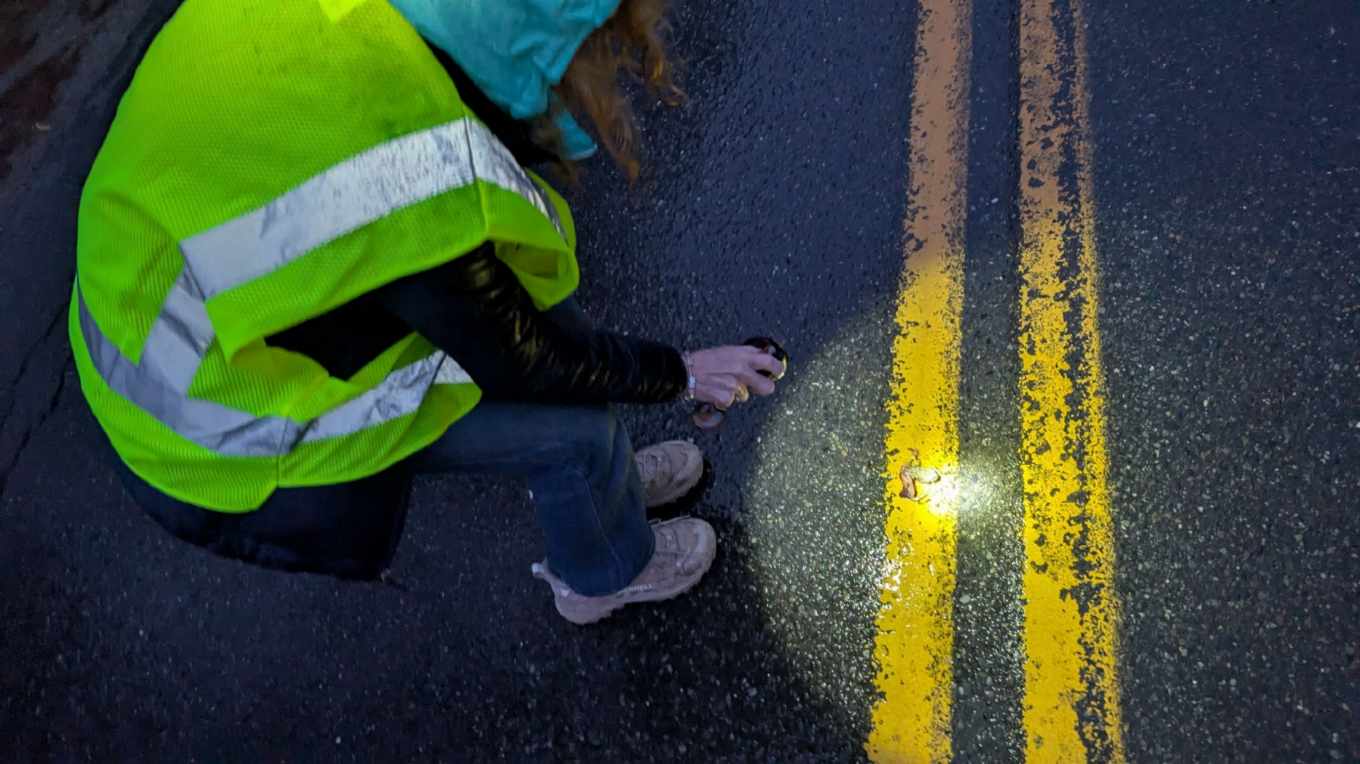
The process was straightforward and easier than I expected. Much of the training focuses on practical field work: counting amphibians; identifying species; recording whether they are alive, injured or dead; and removing dead amphibians from the roadway to avoid double-counting during surveys.
Volunteers are expected to wear high-visibility reflective vests and use a flashlight or headlamp while staying out of active traffic lanes. Gloves are recommended when handling amphibians because of their highly absorbent skin.
I remembered the vest and headlamp.
I forgot the gloves.
The second rainy night out brought similar conditions and similar results. Again, frogs called from nearby wetlands and roadside ditches, but the road itself remained mostly empty except for a few dead frogs and scattered worms glistening under flashlight beams.
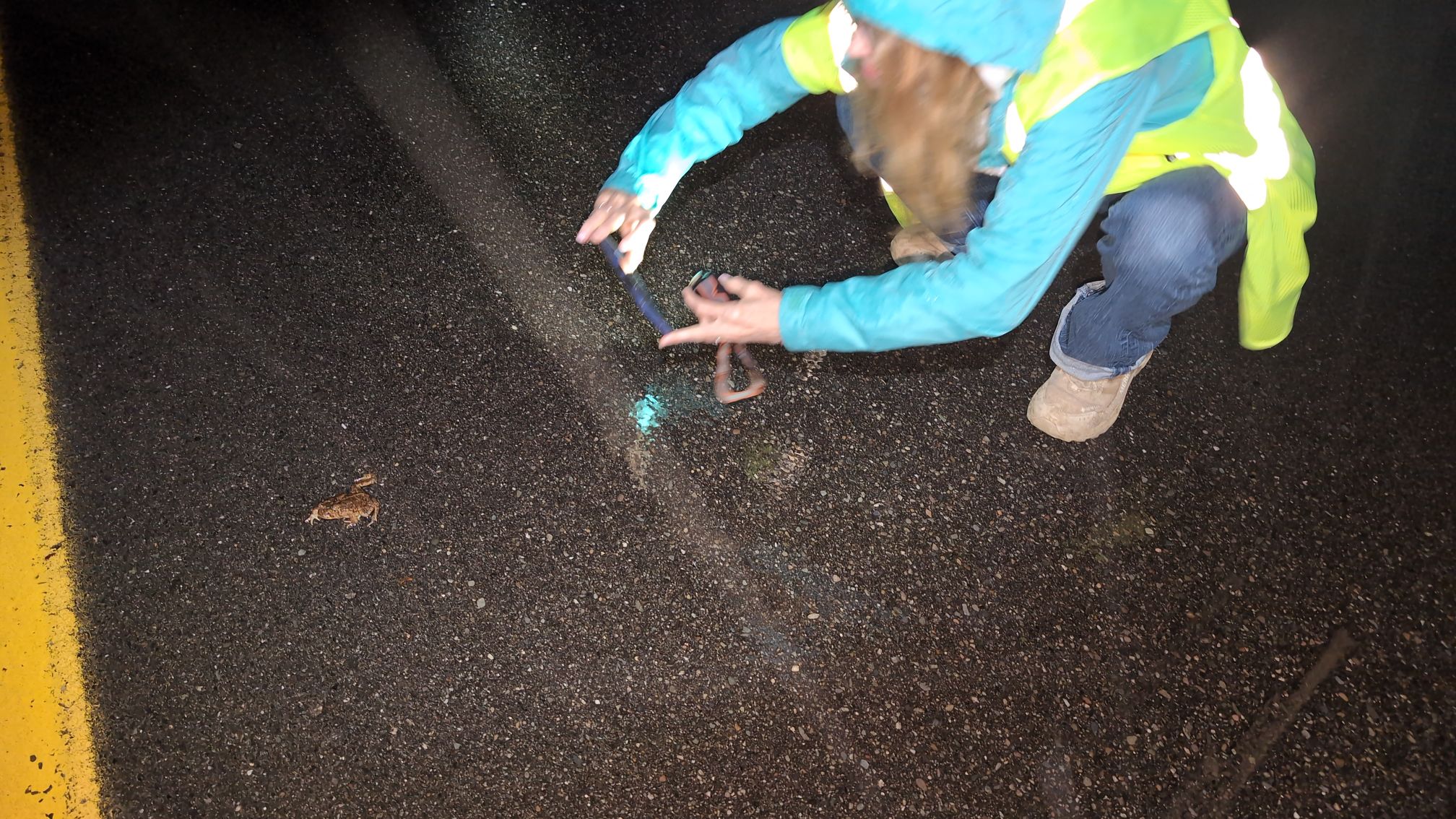
Many times, I thought I spotted tiny frogs hopping across the pavement.
Leaves. Every time.
Even on slower nights, the experience changes how carefully you watch the road. Every small shape becomes worth checking.
Most of the roads I monitored were quiet back roads, but the few amphibians I did find were along Franklin Road in Jay, part of Route 133.
After several nights walking wet roads in the rain, I started thinking differently about the small animals crossing them.
The experience made me realize how narrow the margin is for these animals on Maine roads.
That feeling of slowly scanning the pavement for movement was familiar to Leo Eli Goddard, another volunteer who recently completed the certification process.
“I was looking for someone to participate with because I didn’t want to go it alone for my first time,” Goddard said.
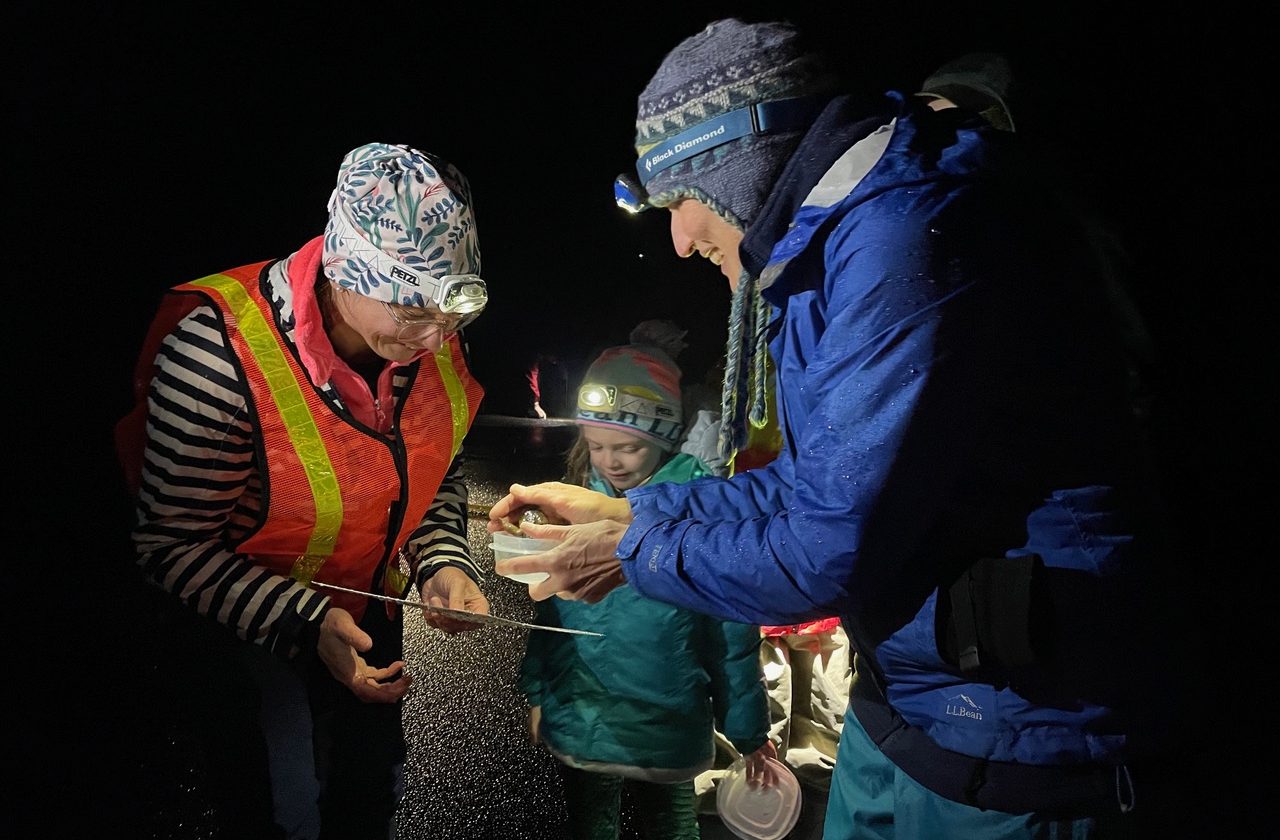
He later joined Michelle Melaragno and Chelsea Eaton during a Big Night outing near Life Forest Whistle Ridge Conservation Cemetery in Auburn.
“It was pretty early for a Big Night and we only saw a few creatures crossing, but it was still very exciting,” he said.
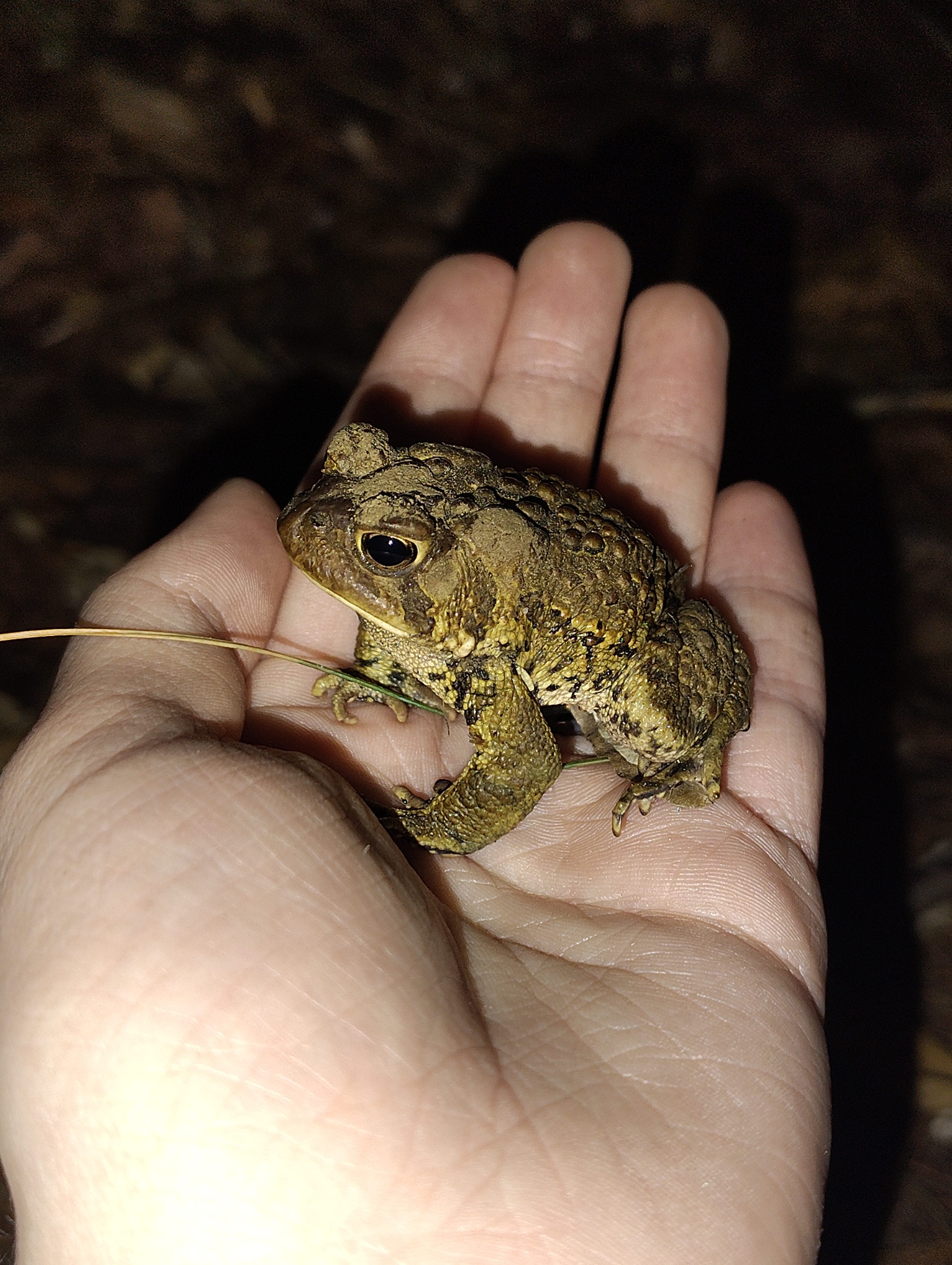
On another rainy evening, Goddard spotted what he described as a “suspicious shape in the road” and discovered an American toad crossing the pavement.
“He was so adorably grumpy looking,” Goddard said.
Goddard also shared one fact he learned during the process.
“All toads are frogs, but not all frogs are toads,” he said.
Not every amphibian survives the journey. During surveys, volunteers are instructed not only to count living animals but also to identify and remove dead frogs, toads and salamanders from the roadway for accurate data collection.
Participants may encounter a wide range of species during migration nights. Common frogs include spring peepers, known for their high-pitched calls; wood frogs with their dark, mask-like facial markings; American toads; green frogs; and occasionally bullfrogs. Salamanders may include spotted salamanders, blue-spotted salamanders and eastern newts.
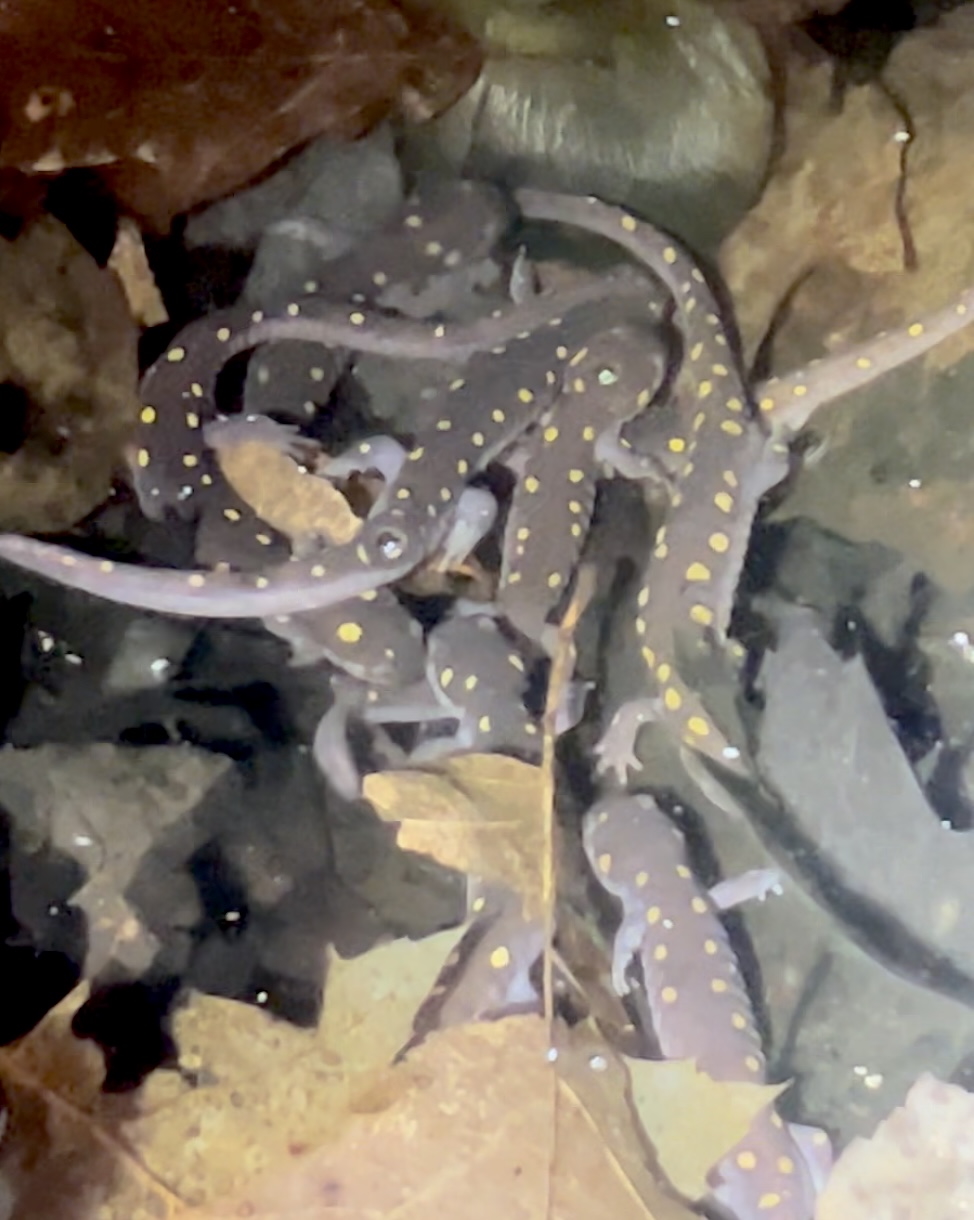
Another participant, Corrie Ann Borges, described witnessing one of the migration events volunteers hope to encounter.
“On one of the first warm, rainy nights this spring, I witnessed many spotted salamanders swimming together in clusters,” Borges said.
“The conditions were just right, and timing is everything for these amphibians,” she said.
“For millennia, these salamanders have emerged from beneath the frost line and migrated to vernal pools and ponds to mate and lay their eggs.
“They remain in the water only briefly, typically a few weeks, before returning to the surrounding forest. It’s a reminder of how important even small bodies of water can be for amphibians and how sensitive these species are to environmental conditions.”
She also noted that even small amounts of pesticides or fertilizers can be extremely harmful to amphibians.
Maine Big Night also provides equipment support for volunteers who need it. Certified participants can borrow reflective vests, headlamps, clipboards and identification materials from organizations around the state, including the University of Maine at Farmington.
After three nights out, I still have not experienced a true “big night” filled with dozens of crossing amphibians.
But the frog calls continue every time the rain starts.

We invite you to add your comments. We encourage a thoughtful exchange of ideas and information on this website. By joining the conversation, you are agreeing to our commenting policy and terms of use. More information is found on our FAQs. You can update your screen name on the member's center.
Comments are managed by our staff during regular business hours Monday through Friday as well as limited hours on Saturday and Sunday. Comments held for moderation outside of those hours may take longer to approve.
Join the Conversation
Please sign into your CentralMaine.com account to participate in conversations below. If you do not have an account, you can subscribe here. Questions? Please see our FAQs.