

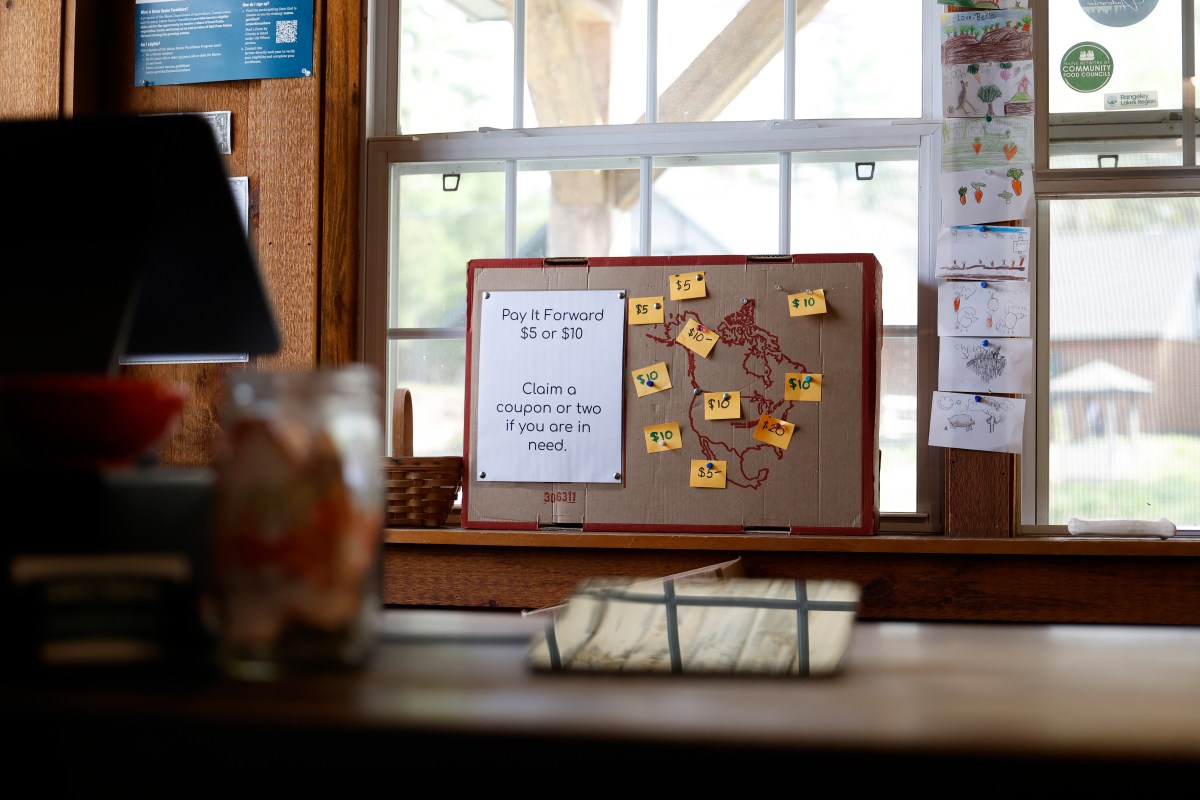
Last year, as thousands of Mainers were losing their food stamp benefits, the owners of The Farmer’s Daughter grocery store in Oquossoc village in Rangeley saw a need in the community they felt they could fill.
Doris Santoro and her husband, Toby Alves, decided to help customers who are impacted by cuts in the federal Supplemental Food Assistance Program. Their answer came in two parts. First through a food box, then through a pay-it-forward program.
The Farmer’s Daughter focuses on providing the Rangeley area with produce sourced from local producers, many from Maine. Santoro said their mission is community-driven and focused on “food justice.”
To use the pay-it-forward system, customers can shop as usual, but pull funds from a board at checkout. To give money, customers can tack any amount onto a purchase. Some give an extra $5 or $10, while others give less or more. It is a no-questions-asked system with no restrictions on what the funds can be applied to.
Santoro said the idea came from Sabrina Castle, who worked at the grocery store last year. She had seen pay-it-forward programs working at other private stores and shops and thought it could help locally.
Along with the pay-it-forward system, The Farmer’s Daughter also has a food box system, where shoppers can take a box filled with goods from the store with no questions asked. Last October, they put out multiple boxes at a time at their own expense, with some help from the Sargent Family Community Fund. Since then, it has been reduced to one box, since the pay-it-forward board helps make up for demand.
“Between the board and the boxes, we moved probably about $2,000 in food assistance,” Santoro said.
Although she and Alves stock the box, some customers will still contribute food items.
“The other day someone bought some pasta and sauce and dropped it in the box,” Santoro said.
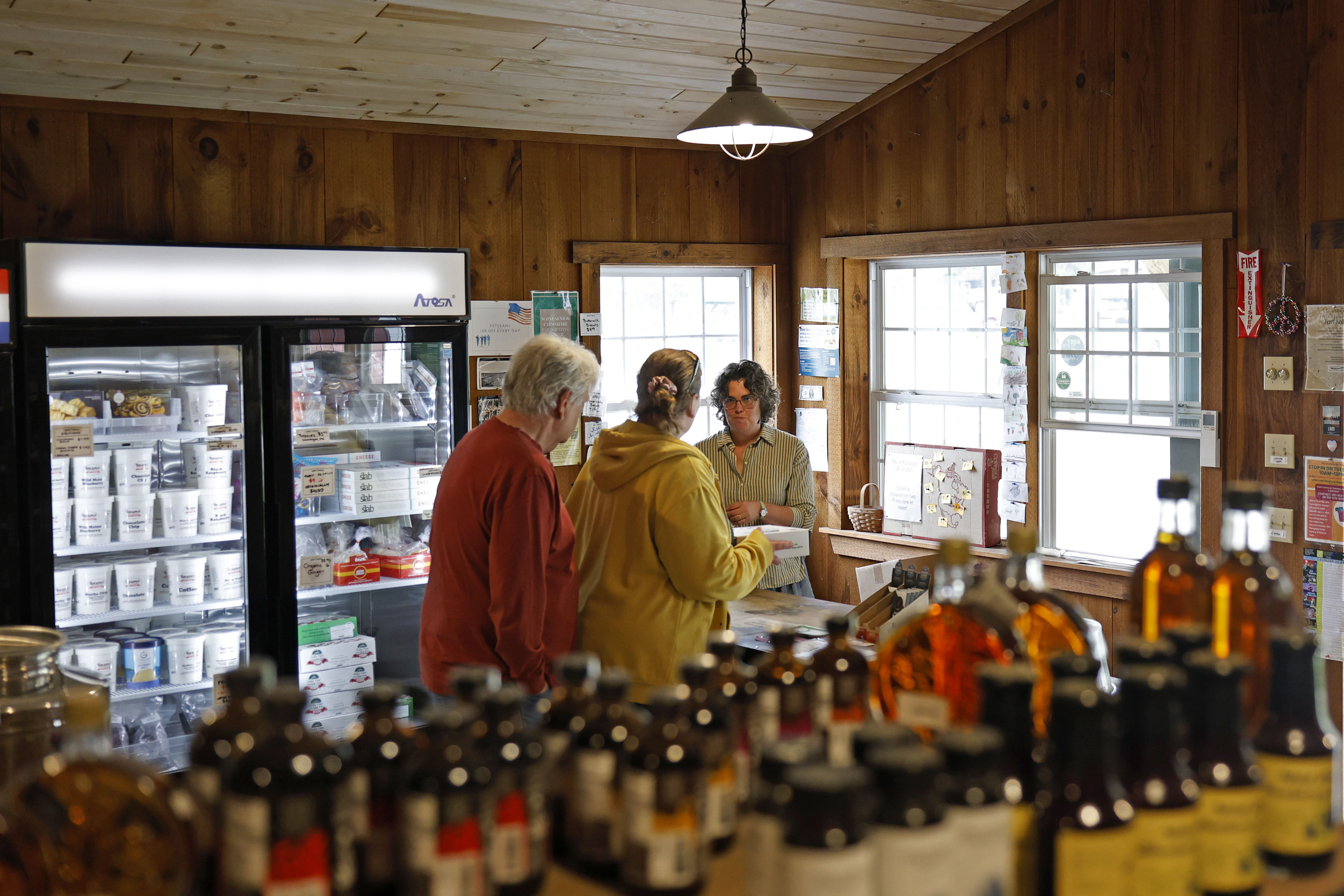
Santoro said payment assistance is important to their mission, but the fees to offer a federal program like SNAP had become a strain on their business.
“In a place like a convenience store, the processing fees might be a drop in the bucket,” Santoro explained. “For us, there were times where our processing fees exceeded the amount (purchased).”
One customer, who asked not to be named, has used the board multiple times. She said that amid all of the cuts to food stamps, the assistance helped to keep her food costs down.
“Living on a limited income is horrible in the wintertime here,” she said. “Paying for heat or food or gas for the car, and now the prices are skyrocketing. It’s just ridiculous. I honestly am grateful I’m not trying to feed a family.”
While the store has seen consistent use of the board, employees say they would love to see it grow. They said that some people might be uncomfortable or embarrassed to use a service like SNAP or a community-based one — but the more people that use it, the less of a stigma there will be.
“If I put it on the board, I’d want someone else to use it,” said Abby Gulick, a worker at The Farmer’s Daughter. “I think more people should be taking advantage of it. I think people are a little shy to use it, honestly.”
“I think that trying to break that stigma would be key for having more use of the pay-it-forward board,” the anonymous customer said.
Santoro said that one of the best parts of starting the program has been seeing the community come together to provide for one another.
“It’s pretty beautiful to see what happens when giving and receiving are unrestricted,” Santoro said.

Comments are no longer available on this story