

Housing is expensive and hard to find. Healthcare is costly, and with some health centers closing, difficult to access. Across Maine, residents worry about rising property taxes.
These are some of the issues Maine’s next governor will seek to address.
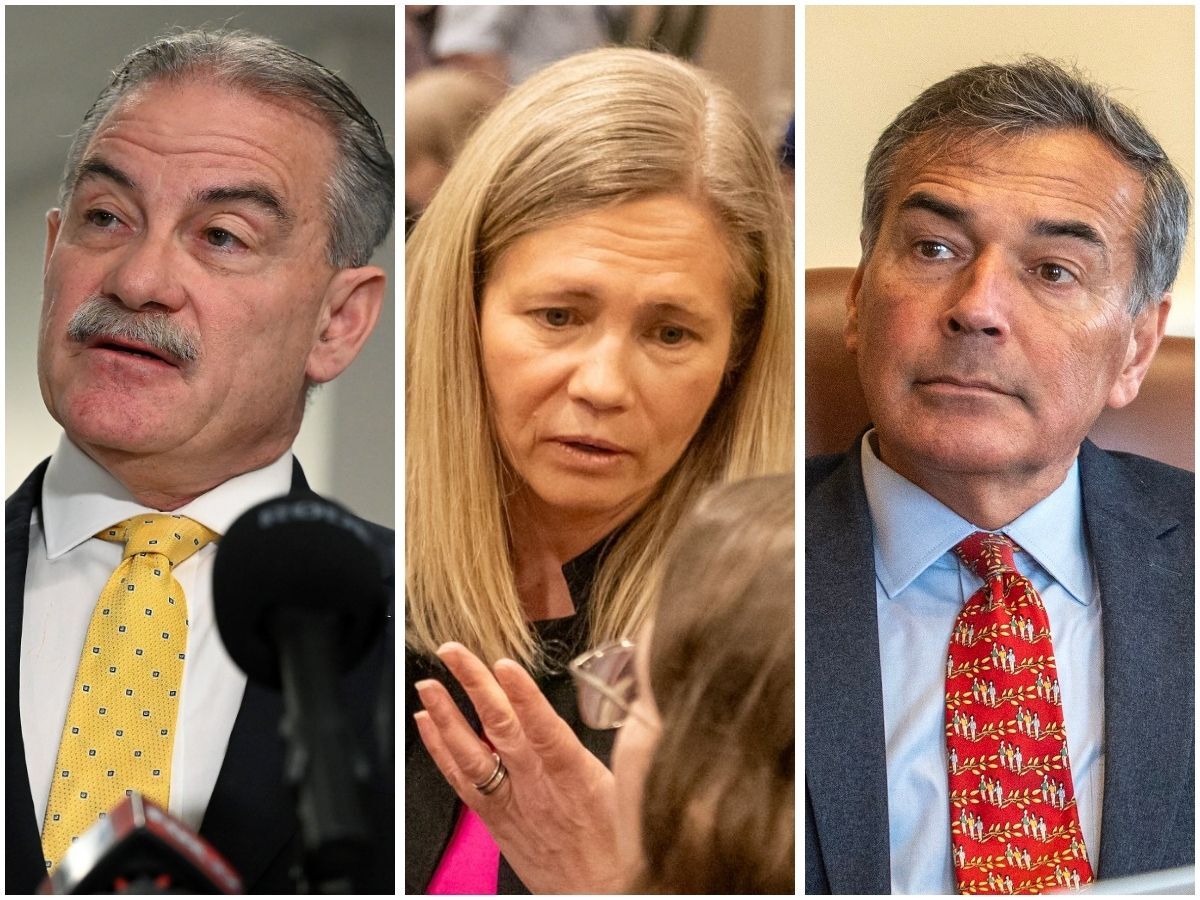
The race features Democrat Hannah Pingree, Republican Bobby Charles and independent Rick Bennett, all of whom are vying to replace Gov. Janet Mills, who is term-limited.
With affordability top of mind for many Maine voters, here’s what each had to say about how they would address housing, healthcare and taxes.
HOUSING
Charles, an attorney and former federal official, tied housing costs to taxes, saying that if the state can bring down property and income taxes, it will help people afford housing. He has pledged to eliminate the state’s personal income tax over four years. And he says he’d lower property taxes by reducing state mandates on municipalities and cutting administrative and bureaucratic costs in schools.
Charles is also proposing tax incentives for prefabricated housing, for the construction of low-cost housing and for companies that will build small affordable homes. And he said that working to lower energy costs and accelerate building permits are also priorities. Charles’ energy plans include reforming Maine’s Public Utilities Commission and embracing a variety of energy sources including natural gas, hydro and nuclear energy.
Pingree, who worked on housing issues as director of the Governor’s Office of Policy Innovation and the Future under Mills, said Maine needs to go “bigger and bolder” to ensure affordability.
She has released a detailed housing plan that includes a $100 million annual investment by the state in housing production. She wants to hold private equity and corporate landlords accountable through tenant protections and to invest in apprenticeships and Maine’s community college system in order to support the construction industry.
Pingree’s plans also call for streamlining the permitting and approval process, and prioritizing eviction and homelessness prevention programs.
Bennett’s housing plans call for state support to reduce down payments for first-time homebuyers and a mortgage assistance program in which the state would cover a portion of a homeowner’s monthly payment in exchange for a share of future appreciation.
He is also proposing incentives for manufacturers of factory-built housing. He wants to expand a state program offering grants for repairs of existing homes and says he’d launch a statewide audit to identify and fix issues in the construction permitting process.
HEALTHCARE
Pingree is calling for a public health insurance option where the state would negotiate plans that individuals and businesses who are not eligible for MaineCare could opt into at affordable rates. While she also supports Medicare for All at the federal level, Pingree said a public option is a good step toward ensuring that Mainers have access to healthcare they can afford, especially in light of federal cuts to the Affordable Care Act.
Other priorities for Pingree include incentivizing and expanding access to primary care, as well as maternal and reproductive care, and supporting Maine’s rural healthcare system by working with hospitals in those areas and ensuring that federal resources are used effectively.
Bennett said the state needs to commit to a path to universal healthcare, arguing this can be achieved using the groundwork laid in a 2021 law that requires the state to cover all medically necessary healthcare services for residents. The law is contingent on federal action.
Bennett opposed the Democrat-sponsored law in 2021 because he said it wasn’t actionable given its contingency on the federal government. As governor, he said he would seek to issue an executive order to implement the part of the law establishing a state board to oversee planning and implementation of a universal healthcare plan, without federal action.
His plans also call for launching a medical debt relief program modeled off of similar programs in other states, such as Vermont, and revamping MaineCare, the state’s Medicaid program, to ensure accountability and that providers are paid fairly and on time.
Asked for his plans to increase insurance access and affordability, Charles said he wants to ensure that the state budget is efficient, to encourage hospitals to stay open with tax incentives and to work on healthcare employee retention.
“We don’t want our system to be run by the state because the state has run it into the ground,” Charles said. “What you need to do is incentivize the delivery of healthcare by bringing the private sector back into the equation again.”
He has called for eliminating fraud, waste and abuse in MaineCare and ensuring that the state pays MaineCare providers at proper reimbursement rates and on time.
TAXES
Bennett wants to expand Maine’s property tax fairness credit, which provides tax relief to income-eligible residents, and to increase the homestead exemption for older residents. Maine’s homestead exemption program currently provides up to a $25,000 reduction in the value of a home for tax purposes, and is only applicable to primary residences.
In other tax-related proposals, Bennett said he wants to “demand value” and ensure that money isn’t wasted in the state budget. He also would conduct a review of tax credits and exemptions to ensure they’re meeting state goals and providing a public benefit.
Charles wants to lower property taxes by rolling back “unfunded mandates” — requirements the state has passed on to towns without state funding behind them — and by cutting administrative costs in schools. Charles listed certain programs in schools and certain staffing requirements in jails as examples of unfunded mandates that could be eliminated.
He is also proposing an increase to the homestead exemption, and said lowering energy costs will help reduce property taxes by reducing costs for municipalities and schools.
Pingree is proposing a doubling of the homestead exemption and an expansion of the property tax fairness credit. She has also proposed increasing property taxes on the second homes of non-Maine residents to a higher rate, though that would require a change to the Maine Constitution and approval from Maine voters, she said.
Pingree supports the new “millionaire’s tax” passed by the Legislature that imposes a 2% surcharge on taxable income over $1 million annually.
“I think we need to continue to look at broader mechanisms to reform Maine’s tax system and ensure it’s fair, especially for working middle-class Mainers,” she said.
OTHER PRIORITIES
Pingree cited affordable childcare, the economy and tribal sovereignty as other key issues for her. She wants to increase state subsidies for affordable childcare so that income-eligible families are not waitlisted, and has pledged to implement broad reforms to give Maine’s tribes the same rights as other federally recognized tribes.
Bennett wants to lower energy costs, and has released plans that call for lowering the authorized returns available to investor-owned utilities. He wants to ensure businesses can access affordable energy, and to utilize the Efficiency Maine program to build on weatherization and efficiency efforts.
Charles is targeting drug trafficking and addiction, saying he wants to work on reducing both. He said he is committed to supporting law enforcement and wants to “get illegal aliens out of the state in a legal and due process way.”

We invite you to add your comments. We encourage a thoughtful exchange of ideas and information on this website. By joining the conversation, you are agreeing to our commenting policy and terms of use. More information is found on our FAQs. You can update your screen name on the member's center.
Comments are managed by our staff during regular business hours Monday through Friday as well as limited hours on Saturday and Sunday. Comments held for moderation outside of those hours may take longer to approve.
Join the Conversation
Please sign into your CentralMaine.com account to participate in conversations below. If you do not have an account, you can subscribe here. Questions? Please see our FAQs.