

Beachgoers who spot a sandy-gray bird darting across the shoreline on bright orange legs may be looking at one of Maine’s biggest conservation success stories.
After wintering along the southern Atlantic coast, endangered piping plovers returned to Maine’s beaches this spring and are nesting in record numbers. As of Wednesday, Maine Audubon reported 185 nesting pairs statewide — surpassing the previous record of 174 pairs set in 2025.
Maine Audubon biologists have documented 207 chicks so far, including 92 that have reached fledging age, meaning they have survived roughly 25 days and can fly.
This year’s nesting season, which lasts from April through August, is the state’s strongest showing yet — a sign of successful beach stewardship, according to Laura Minich Zitske, associate director of conservation at Maine Audubon.
Zitske said the numbers reflect decades of conservation work by state and federal wildlife agencies, nonprofit organizations, volunteers and private landowners. Reduced to just seven nesting pairs in Maine by 1981, piping plovers have steadily recovered since their endangered species designation in 1986, according to the Maine Department of Inland Fisheries and Wildlife.
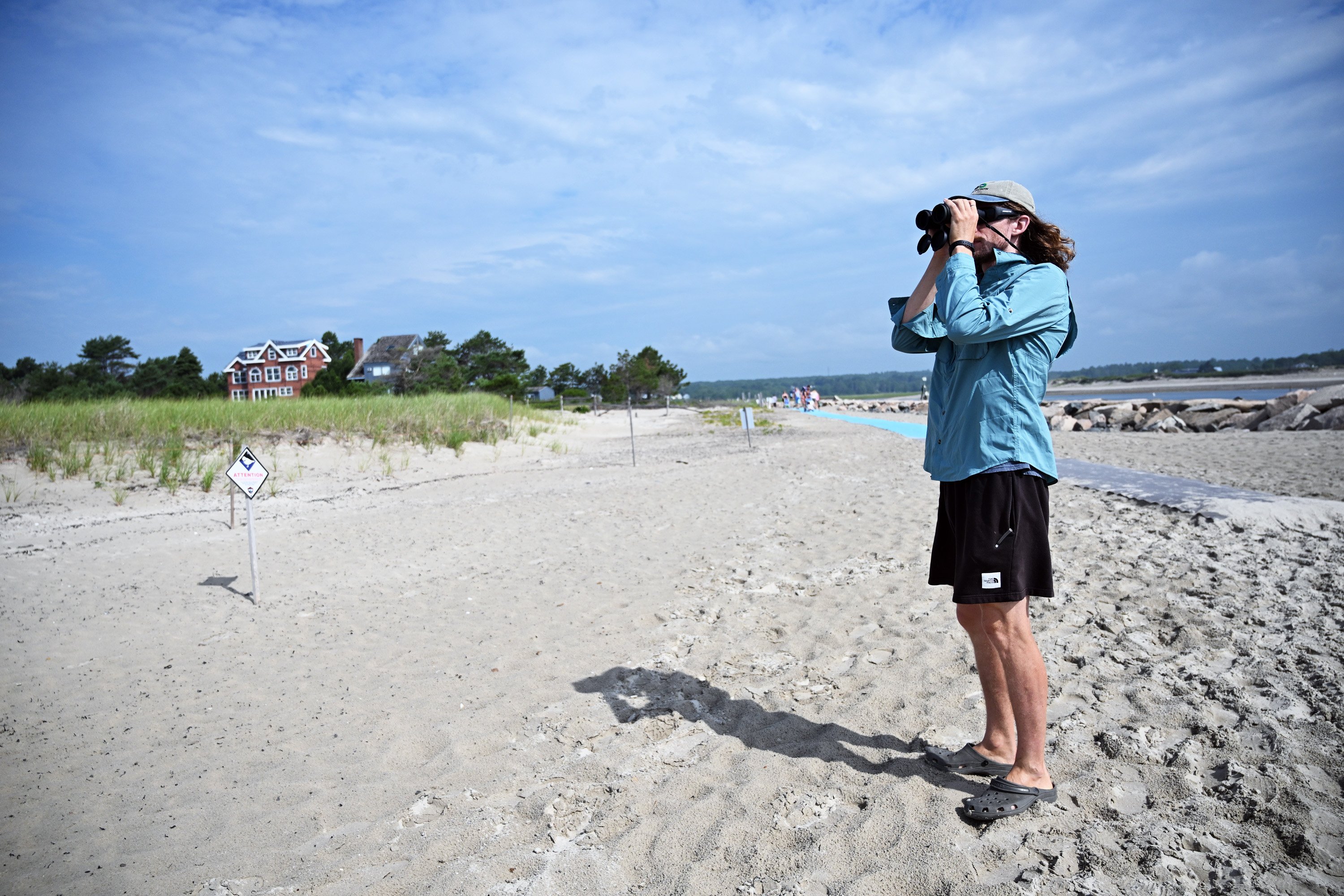
On Wells Beach — Maine’s second-largest piping plover site after Seawall Beach in Phippsburg — Maine Audubon coastal bird biologist Samuel Wells spends much of the nesting season monitoring birds, educating visitors and maintaining protective fencing around the habitat, which he noted is also home to a colony of endangered least terns.
“The most important thing we can do is just be here as much as possible,” Wells said, as he surveyed a plover chick through binoculars on Wednesday.
Wells said volunteers are a crucial part of statewide awareness efforts.
Wells Beach plover coordinator Beth Goodwin is among roughly 40 plover-monitoring volunteers who help watch over nesting areas throughout the season. Goodwin, who has been volunteering for five years, walks the beach almost daily, checking access points, clearing debris and talking with visitors about the birds.
“More than anything, I hope to be an approachable resource and a strong presence,” she said, pointing to her neon yellow “monitor” shirt.
Wells said volunteers also work with Maine Audubon’s coastal birds seasonal outreach coordinator to maintain contact with landowners whose property may host a nest. Because much of this recovery happens on privately owned stretches of shoreline, those relationships have been critical to the species’ recovery, the biologist said.
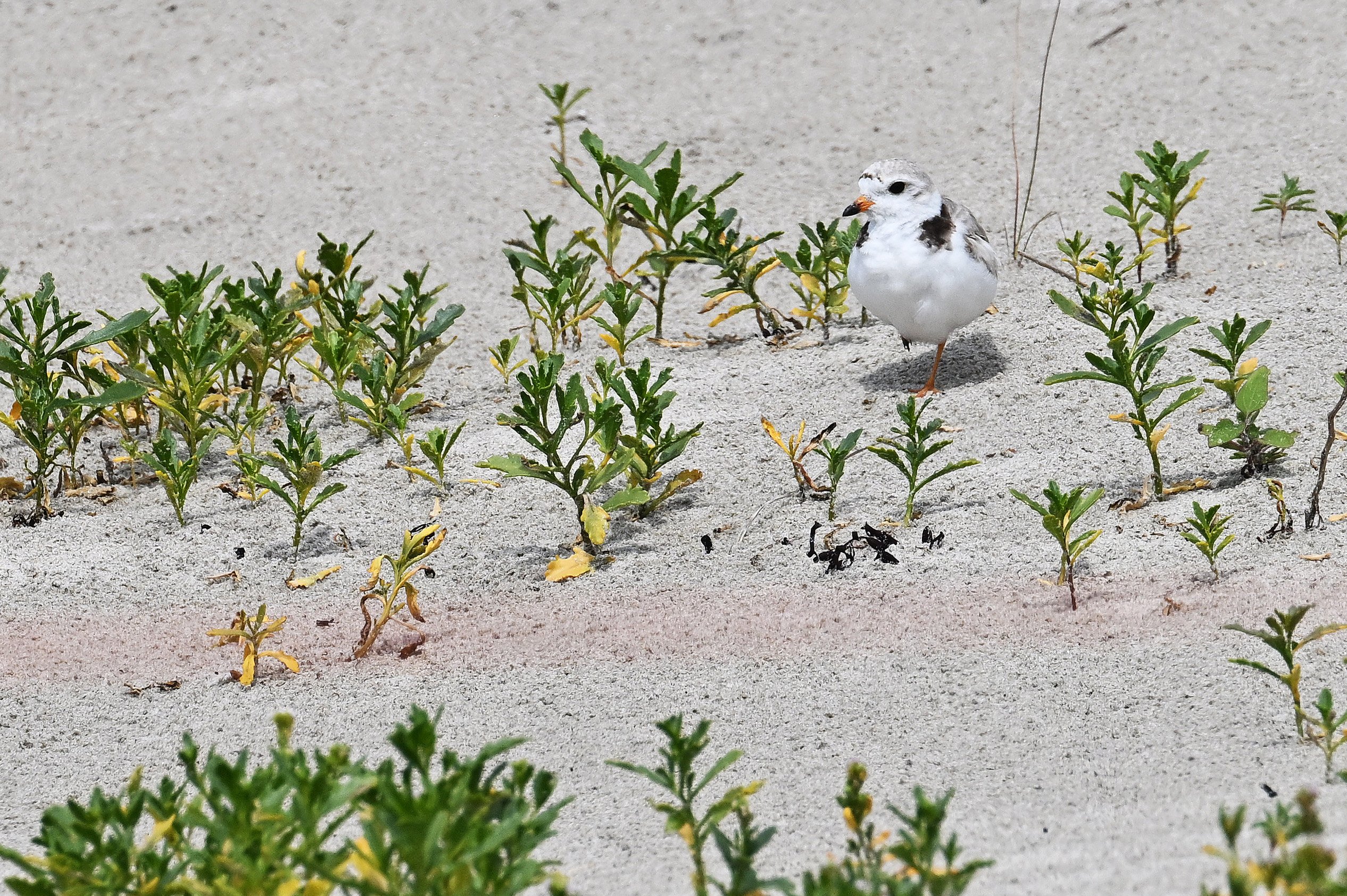
This season’s success is especially notable because young plovers face steep odds, Goodwin and Wells agreed. Before fledging, chicks can’t fly and spend their days foraging across open stretches of beach, leaving them vulnerable to predators, storms and accidental disturbance from people, they explained.
Wells said those risks become more pronounced during the busy Fourth of July holiday. He said Maine Audubon will be stationed at several beaches over the weekend to answer questions and encourage visitors to watch their step, fill in sand holes and keep dogs leashed near nesting areas.
“It will be an all-hands-on-deck situation,” Wells said.
Despite the challenges, conservationists remain optimistic. Zitske said sites that appeared unsuitable for piping plovers a decade ago are now occupied, and birds continue to establish themselves in new areas. Plovers’ geolocation means they often return to places where they have nested before, she said.
Goodwin emphasized this exponential expansion, saying each successful recovery season can help strengthen future populations. It is about more than a census sheet, she said.
“We know these numbers, we’re here every day. So when we do lose a chick, we feel that loss,” she said. “It becomes personal, which is why I am so happy to help people understand the importance and presence of these birds in our backyards.”
Sharing the beach with piping plovers has become one of the most rewarding parts of her work.
“It’s like living next to a dinosaur,” Goodwin said. “It’s a gift to share the beach with them for these months.”

We invite you to add your comments. We encourage a thoughtful exchange of ideas and information on this website. By joining the conversation, you are agreeing to our commenting policy and terms of use. More information is found on our FAQs. You can update your screen name on the member's center.
Comments are managed by our staff during regular business hours Monday through Friday as well as limited hours on Saturday and Sunday. Comments held for moderation outside of those hours may take longer to approve.
Join the Conversation
Please sign into your CentralMaine.com account to participate in conversations below. If you do not have an account, you can subscribe here. Questions? Please see our FAQs.