


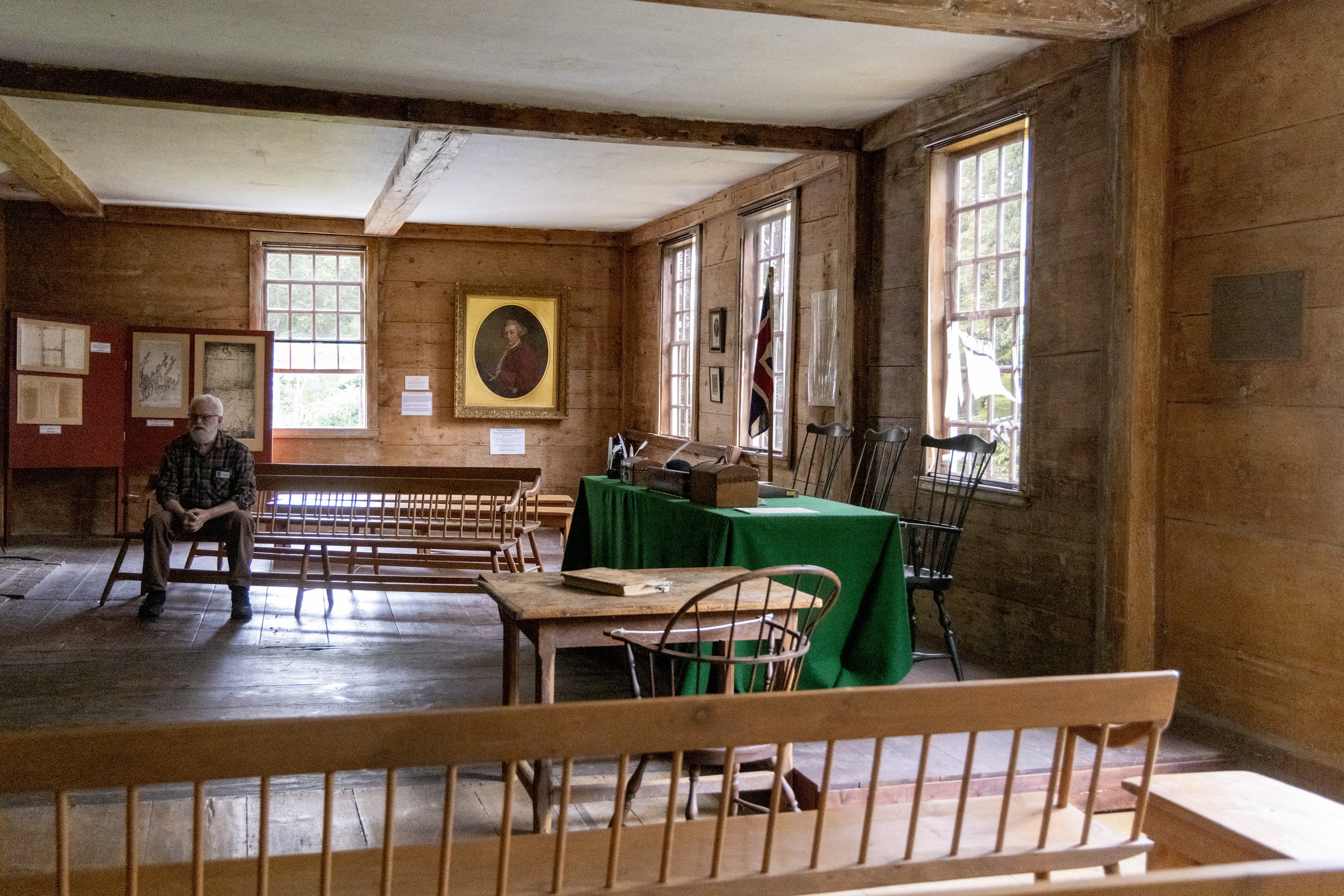
The Pownalborough Court House in Dresden has survived 265 years hosting, in turn, the region’s only courthouse, a tavern, a post office, a family home, an auction hall, a church and a dancing school.
It’s one of scores of buildings across the state and central Maine that has stood for a century or more, shaping the popular imagination of what the region should look like.
With the nation celebrating the 250th anniversary of the signing of the Declaration of Independence this year, what are the odds the old, historic properties that help define Maine and its distinct communities and provide a window into its past will survive another 250 years?
Dave Probert, a docent who also volunteers to maintain the riverside courthouse that predates the United States and serves on the board of trustees of the nonprofit group that owns it, thinks the odds are good.
WHAT’S THE FUTURE OF MAINE’S PAST?
Kirk Mohney, director of the Maine Historic Preservation Commission and the state’s historic planning officer, believes the state’s historic buildings are well equipped to survive because they’re generally built with wood or masonry.
“They need maintenance but they don’t necessarily wear out, not with these traditional building materials,” Mohney said. “Paint materials may need to be removed and redone, wooden trim and siding may need to be replaced over time, masonry needs to be repointed. But, if properly cared for, and the insects don’t get into the frame or things like that, these things are very durable.”
Mohney, leader of the state commission with a goal of preserving the architectural, historic and environmental heritage of the people of Maine, said Maine’s historic buildings are part of its identity and help define the character in communities shaped by the people who came before now.
“I look at historic buildings as telling us a lot about the past, what people’s aspirations have been, what their aesthetic choices have been. These buildings, in Maine for sure, substantially define the character of our downtowns and neighborhoods,” Mohney said. “The communities themselves are each really distinctive from each other. You know what Augusta looks like, what Gardiner and Hallowell look like; they’re all distinctive. To me that’s an important part of why we try to save these places. Because they tell us about those who were here before us. They’re the largest historic artifacts we have.”
But preserving historic buildings isn’t easy. Or cheap.
After the Pownalborough Court House, built in 1761 in what was later incorporated as Dresden, served for many years as the region’s courthouse, at the site of the former Fort Shirley, it became a family home, as well as home to the post office.
Eventually, the building fell on hard times and by 1954, when it was bought by the Lincoln County Cultural and Historical Association, it was “in a state of considerable disrepair,” the nonprofit association says on its website. The association gradually restored the building to its original state.
The museum offers tours in which Probert proudly shows off its wide wooden planks in both the walls and floors, original wainscoting, 12-over-12 wooden windows, and massive, hand-hewn 45-foot-long beams that make up its substantial structure.
Probert, the co-chairman of the courthouse’s stewardship committee, also points out the cracked and in some spots missing plaster. He said some of the building’s floor joists rotted out, likely as the result of well-intentioned 1980s-era foundation work that sealed off some of the basement, trapping moisture in the joists. Those now need to be replaced.
That’s going to take money, money that will need to be raised by the nonprofit association that owns the courthouse, as well as the 1811 Old Jail in Wiscasset and the 1754 Chapman-Hall House in Damariscotta.
Probert said when the courthouse needed to be repainted, raising the funds took the organization three years.
He’s currently looking for someone to repair and replace some of the home’s interior plaster.
“We’ve got some major work that needs to be done,” Probert said while giving a tour of the building in June. “It takes a lot of money to do these things, as a nonprofit, we rely on donations and fundraising.”
Finding someone with the old-school skills to work on historic structures can also be a challenge.
Mohney said Maine has some talented craftsmen who can do that kind of work. But that population is decreasing, and in general the trades have seen a decline in new workers to take the place of the aging current group.
He said Maine’s aging housing stock should provide a carpenter or other tradesmen with the skills to work on old, historic properties with plenty of work for the foreseeable future.
REPURPOSED OR PRESERVED
Many historic buildings get new lives, including in Augusta where the former city hall was converted into senior housing, as was the former Cony Flatiron building.
Others are maintained in their original state, such as the state-owned Major Reuben Colburn House in Pittston. The 1765 home, where in 1775 Col. Benedict Arnold launched his arduous and ill-fated trip to attack British troops in Quebec at the start of the Revolutionary War. Colburn, at his own expense, built 220 flat-bottomed bateaux to continue Arnold’s soldiers’ journey upriver.
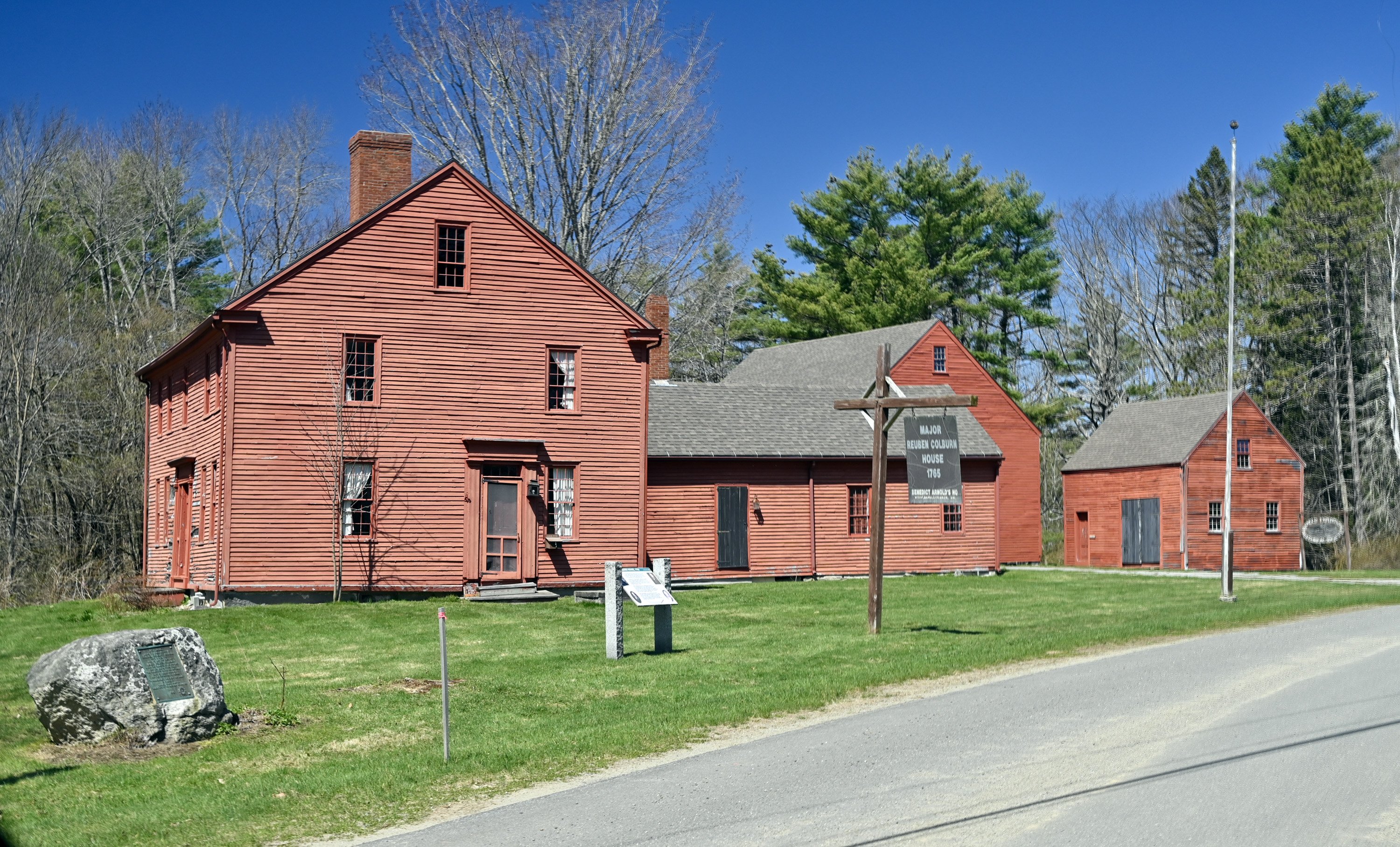
Colburn House is closed and needs substantial restoration. The state Bureau of Parks and Lands oversees the designated Maine Historic Site and opted to close the interior to public access and tours in 2019 due to safety concerns, said Jim Britt, director of communications for the state Department of Agriculture, Conservation and Forestry.
Those concerns include foundation instability, water infiltration and drainage issues, mold, flaking lead paint, structural deterioration, and damage from powder post beetles.
In 2022, the National Park Service awarded the project a $500,000 grant, which has paid for engineering planning, and will allow rebuilding the foundation to move forward.
Britt said the project addresses the most urgent structural needs but additional work is needed before it can reopen. The cost to complete the restoration has not yet been finalized.
The Arnold Expedition Historical Society helps where it can, with volunteer workdays, working on landscaping and minor repairs.
Sometimes when historic buildings are municipally owned, the expense of restoring and preserving them can be controversial.
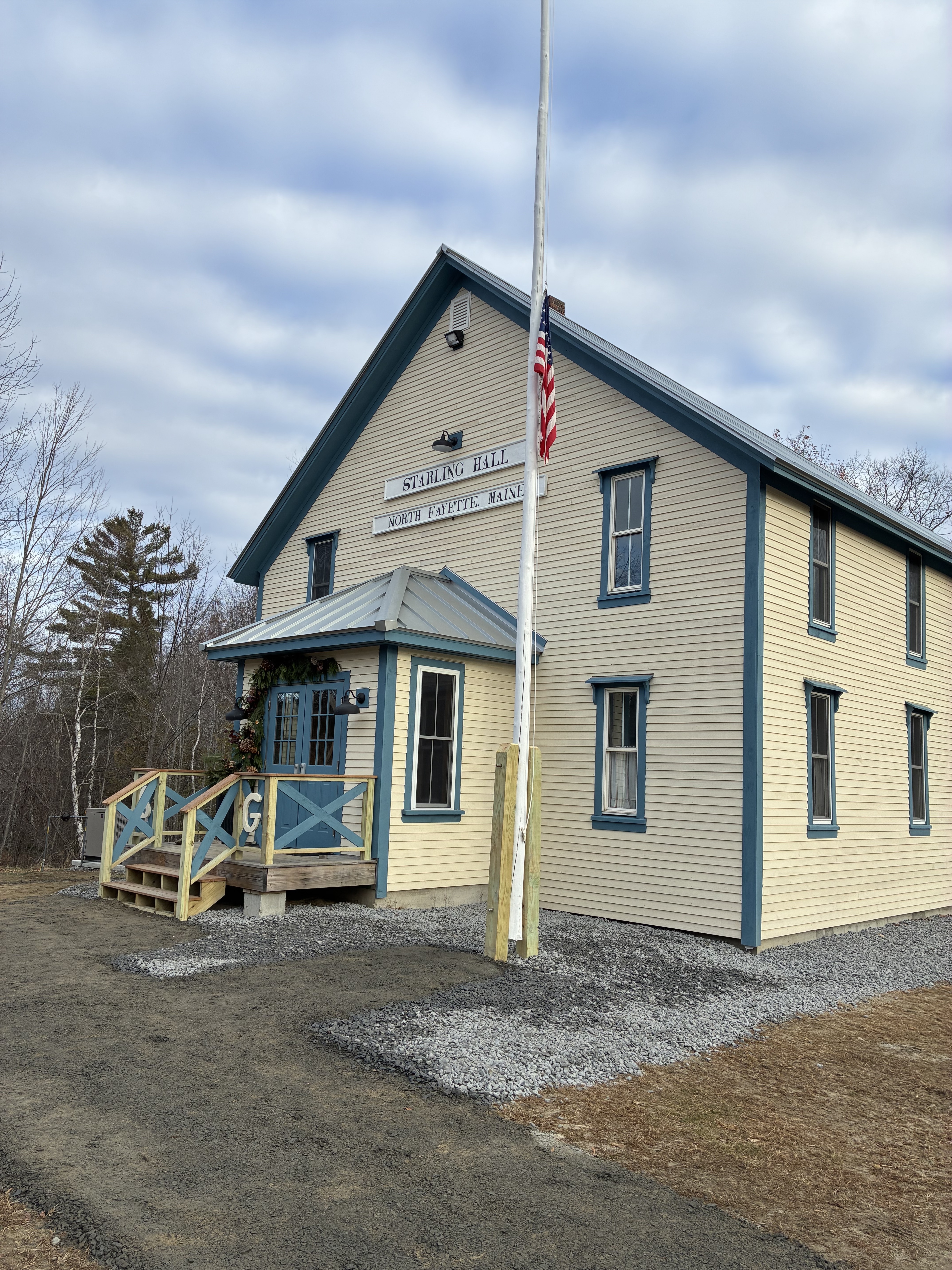
In Fayette, the restoration of Starling Hall, considered the oldest building in Maine to have been built as a Grange hall, was funded in part by the town, something some residents objected to.
The long-ongoing project got a helping hand earlier this year when the Maine Cabin Masters completed renovations to the exterior of the building and its entrance.
In Monmouth, a proposal to spend $187,000 in town funds toward the restoration of the former 1856 Monmouth Academy building was resoundingly rejected by voters at this year’s annual town meeting, as was a proposal for $6,000 to heat the building.
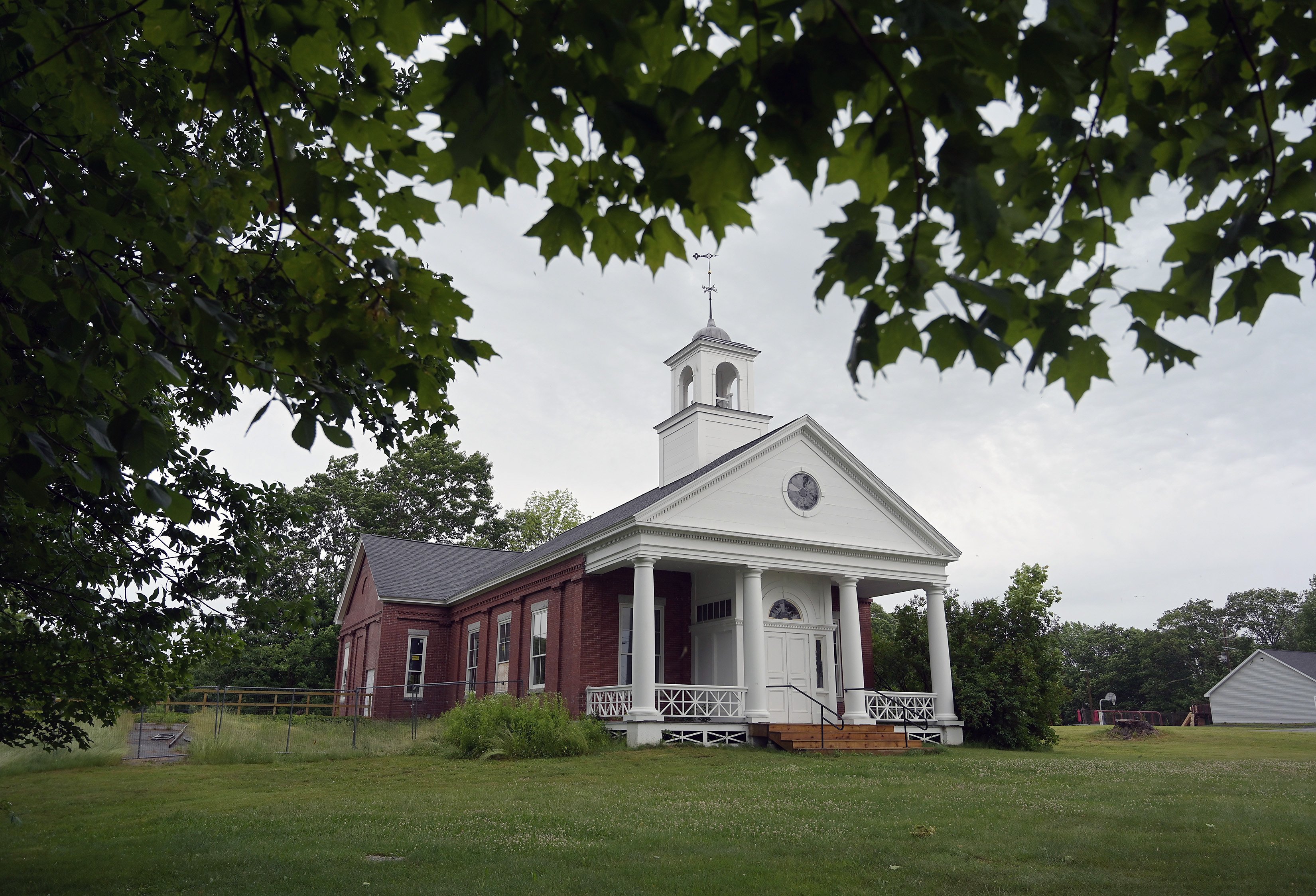
Town officials are trying to determine what to do with the building, which has already undergone about $1 million worth of work, including the demolition of newer sections of the building. Some residents still want to save the building, while others think the town should sell it.
In Pittston, the late Kenneth Tuttle, an antiques dealer, established Tuthill, essentially its own village, consisting of 21 structures, most of them old homes Tuttle had moved to the property over the years. The property, including a restored church built in 1825, is listed for sale at $6 million.
In Richmond, the town has struggled for years to find someone to restore the Hathorn
Block, a prominent downtown brick building, which has river views but, also a cost to restore that so far has stymied developers who’ve attempted it and failed.

Mohney noted not preserving historic buildings also comes with a cost. Historic buildings can be made to be fairly efficient while retaining the significant characteristics that help make them historic. Reusing buildings also means new buildings won’t have to be built to take their place.
“A lot of energy went into constructing these buildings, and as long as they continue to serve a purpose, let’s reuse them rather than tear them down and then have all that energy go into building something new,” Mohney said. “Part of what preservation achieves, is conservation.”
He said old wooden windows can be repaired, indefinitely, while modern replacement windows may last 30 or 40 years and then need to be replaced, because unlike wood windows they can’t be repaired.
Mohney said the federal government established a set of guidelines for how to treat historic properties, which provide a grounded and tested framework for people to follow.
So, theoretically, will buildings being built today, our schools, gas stations, and offices, be considered historic, or still be standing, 250 years from now?
Mohney said that remains to be seen as more modern building materials, and modern building methods, have yet to stand the test of time, the way their traditional counterparts have.
“The historic buildings here today, if they’re properly cared for, and as long as the knowledge and craftsmanship exist to take of them, should be fine,” Mohney said. ” I hope these buildings we identify as historic today, will still be with us, at least many of them, 250 years from now. But who knows what the world is going to look like in 250 years?”

Comments are not available on this story. Read more about why we allow commenting on some stories and not on others.
We believe it's important to offer commenting on certain stories as a benefit to our readers. At its best, our comments sections can be a productive platform for readers to engage with our journalism, offer thoughts on coverage and issues, and drive conversation in a respectful, solutions-based way. It's a form of open discourse that can be useful to our community, public officials, journalists and others.
We do not enable comments on everything — exceptions include most crime stories, and coverage involving personal tragedy or sensitive issues that invite personal attacks instead of thoughtful discussion.
You can read more here about our commenting policy and terms of use. More information is also found on our FAQs.
Show less