


The controversial smack boat is gone, the lawsuits and legal appeals are on hold and for the first time in weeks, a fragile 60-day peace has descended upon one of the most profitable but bitterly divided working waterfronts in Maine.
Attorneys for these side-by-side lobster rivals — the Spruce Head Fishermen’s Co-op and the Mazzetta Company — told the South Thomaston Board of Selectmen last week that they have agreed to a two-month cooling off period to negotiate an end to their turf war.
The ceasefire was welcomed by locals in the small lobster port who had worried a feud between these two lobster heavyweights, whose combined hauls made Spruce Head one of Maine’s most lucrative lobster ports, would only end with a boat torched or sunk.
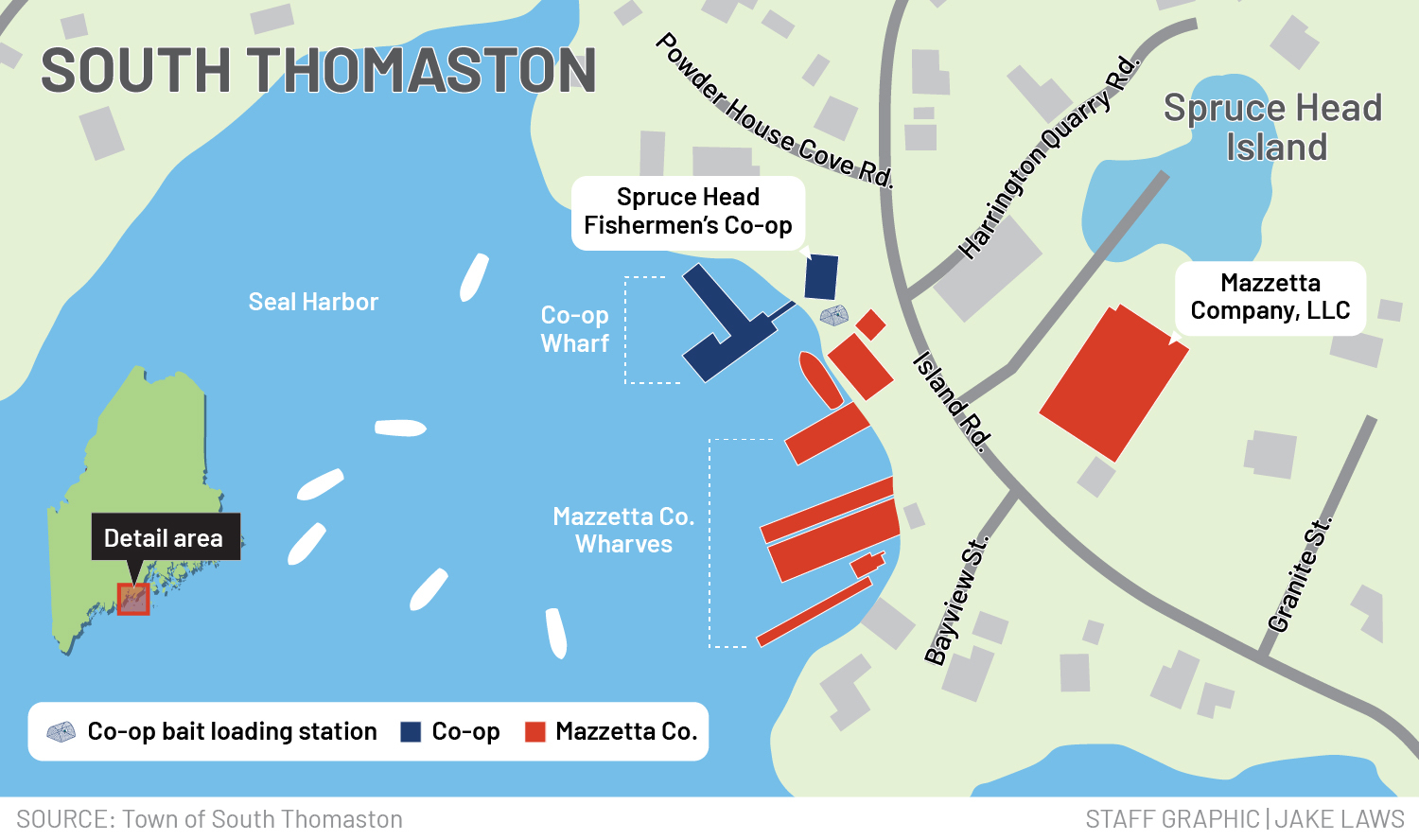
The most visible sign of the detente was the removal of the big lobster transport boat, Jack Black, that Mazzetta had moored at its wharf. For weeks, the “smack boat” acted as a strategic blockade, physically preventing the co-op’s largest boats from reaching their bait and trap loading stations.
The Spruce Head branch of Mazzetta goes by the name of the local lobster dealer, Atwood Lobster, that it acquired in 2011.
In exchange for the boat’s removal, the co-op has agreed to put its litigation regarding the vessel and its appeal of Mazzetta’s state wharf expansion permit on hold while the two parties attempt to mediate the dispute before retired Superior Court Judge William Anderson.
The truce has shifted the drama from the wharf to the fluorescent-lit meeting rooms of South Thomaston, where the feud has forced a reckoning over how the small town 6 miles south of Rockland governs its local waters.
Unlike nearly every other coastal municipality in Maine, South Thomaston does not employ a harbormaster, a quirk of local governance that has left the town largely toothless in the face of industrial-scale brawling.
The matter hit the board of selectmen’s agenda after co-op lawyer Patrick Mellor asked for a harbormaster to be appointed to mediate the dispute. The request has split the board and the community, which had turned down previous attempts to hire one.
Some officials voiced a deep-seated skepticism of new bureaucracy, fearing the harbormaster would be a waste of money that would inevitably lead to higher mooring fees and a thicket of unnecessary regulations for local fishermen and casual boaters alike.
However, supporters argue that South Thomaston’s harbors are long overdue for professional oversight. Settling a feud between multimillion dollar companies that provide a livelihood for more than 100 local fishermen is an essential investment in the local economy, they said.
“I don’t want to be in a position where six weeks from now the negotiations fail and we haven’t done a thing,” said First Selectman John Spear at last week’s meeting. He told the angry crowd: “I’m just trying to find a path forward to to untangle this Gordian knot.”
Spruce Head is the fourth most valuable lobster port in the state, according to 2025 Maine Department of Marine Resources data. Last year alone, local fishermen landed 3.3 million pounds of lobster with an dockside value of $19.5 million.
While some Maine harbormasters are paid annual salaries, some communities have opted for unpaid volunteers to police the moorings and settle waterfront disputes, and others pay them only when they are needed on a per diem basis.
Last week, the board of selectmen voted 3-0 to create a harbormaster position and begin the search for a qualified individual willing to settle the grudge match. No salary was mentioned. The board will appoint local fishermen to craft the ordinance detailing harbormaster duties.
While attorneys Tom Federle and Mellor agreed that the 60-day window is intended to “drop the temperature,” the future of the harbor remains uncertain. If mediation fails, the co-op is prepared to resume its legal fight, according to its president, David Cousens.
Cousens said any permanent expansion or tactical blockage would “functionally shut down” the 54-year-old cooperative. Mazzetta, which has not responded to interview requests, argued in court papers that delays could jeopardize its $1.6 million state grant to improve its working waterfront.
Editor’s note: This story was updated on May 6 to clarify that the Spruce Head branch of Mazzetta uses the name Atwood Lobster.

We invite you to add your comments. We encourage a thoughtful exchange of ideas and information on this website. By joining the conversation, you are agreeing to our commenting policy and terms of use. More information is found on our FAQs. You can update your screen name on the member's center.
Comments are managed by our staff during regular business hours Monday through Friday as well as limited hours on Saturday and Sunday. Comments held for moderation outside of those hours may take longer to approve.
Join the Conversation
Please sign into your CentralMaine.com account to participate in conversations below. If you do not have an account, you can subscribe here. Questions? Please see our FAQs.