

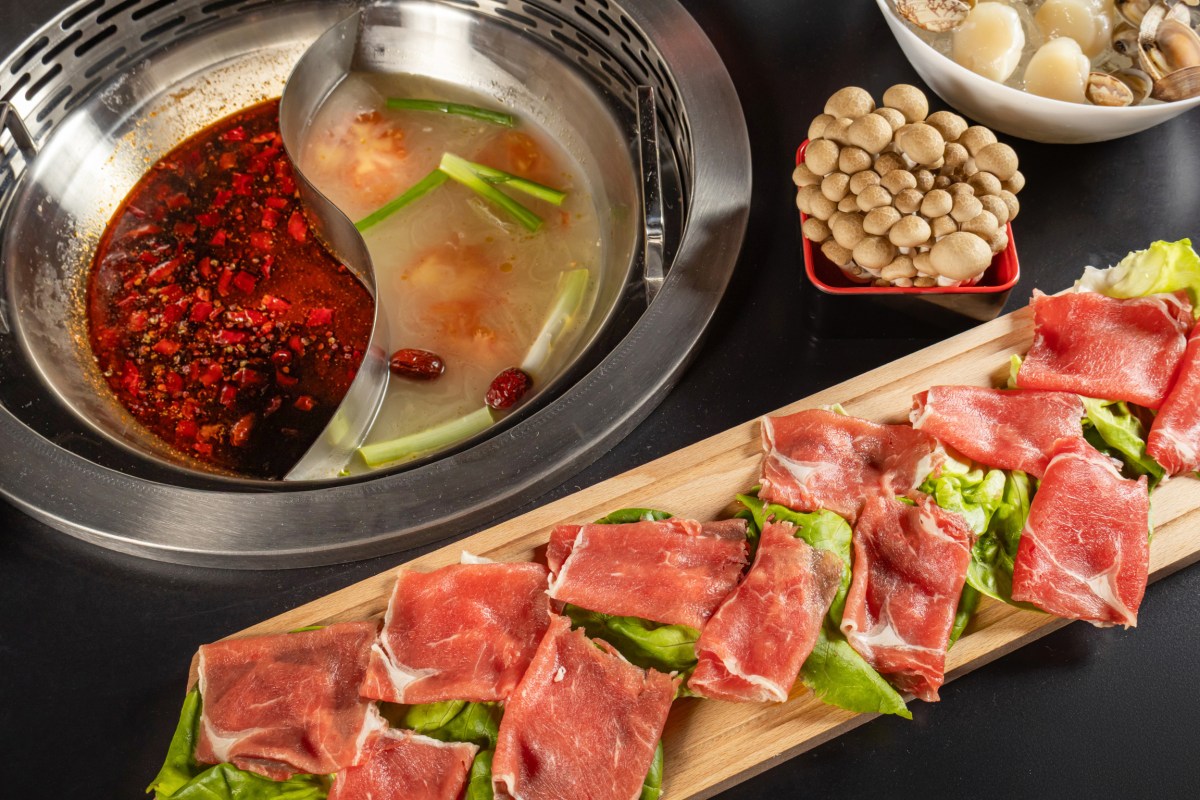
The communal cooking and dining experience of Asian hot pot is gaining traction in Greater Portland, with two restaurants specializing in hot pot — South Portland’s Sun Korean Ramen House and Tuan Yuan Hotpot on Forest Avenue — opening in the past three months.
But for adventurous foodies, hot pot, which originated in China and has variations across Asia, can be a delightful way to DIY a cozy evening with family and friends, as you prep the ingredients together and take turns cooking food in a simmering broth at the center of the table.
“Everybody’s cooking, drinking and chatting at the same time,” said Qi Shen, owner of Tuan Yuan Hotpot. “It’s fun. You spend more time with people this way, and it gets you closer.”
We talked with Shen and Sun Korean Ramen House manager Daniel Feng to gather tips on how to pull off your own hot pot party at home. You can do hot pot just for two, but with meals like this that rely on variety and abundance, the more the merrier. The menu details are entirely up to you.
BASIC GEAR
Hot pot meals are built around a simmering pot of broth at the center of the table, allowing guests to cook their own ingredients. Ideally, you’ll set the pot on a portable butane, electric or induction burner.
Shen has occasionally worked around this at home, however, by bringing her broth to a simmer on the stovetop, then placing the pot on heat-safe pads on the table, returning it to the stovetop to reheat as needed. You can also use a slow-cooker set to the hottest setting to maintain a simmer.

If you’re using just one broth to cook your meal, a simple stock pot or Dutch oven will work. Restaurant hot pot meals offer guests a choice of broths, one spicy and one mild, for instance. For this, you can find special two-compartment hot pot pans online or at retailers like Walmart for around $26-$45.
You’ll also want to have some tools on hand to dip and retrieve the ingredients from the broth. Chopsticks, tongs, spider strainers and slotted spoons will all work.
BROTH
Asian hot pot traditions use different broth bases from region to region. There’s the soy and gochujang-seasoned broth in Korean Jeongol, for instance, or subtly seasoned kombu broth in Japanese shabu-shabu. China’s Cantonese or Beijing hot pots use plain water seasoned with aromatics.
Tuan Yuan Hotpot and Sun Korean Ramen House offer mild chicken broth options, but also feature spicy and complexly flavored broth from China’s Sichuan province.
“In Sichuan hot pot, the broth flavor is key,” said Shen, a native of Chengdu, capital of the Sichuan province. Tuan Yuan’s mala Sichuan broth starts with a bone broth base flavored with chilies and dozens of seasonings like numbing Sichuan peppercorns and fermented bean paste.
For convenience, you can simply buy hot pot soup bases — spicy or mild, featuring meat broths like pork or chicken as well as vegetarian versions — at major retailers like Walmart and Target, Asian markets, or online.
Shen said you can also whip up a quick homemade broth using chicken or vegetable stock simmered with some fresh ginger, scallion, white pepper and soy sauce.
PROTEINS
Plan on serving 1/4 to 1/2 pound of total protein per person, depending on your crowd. For beef, the best cuts are fatty and flavorful, like ribeye and short rib. For pork, belly and shoulder are optimal cuts. Chicken thighs or breast meat will also work.
Hot pot meat is sliced very thinly, almost like prosciutto, so it can simmer to doneness in just about 10 seconds or so. You can often find a selection of thin-sliced meat specifically for hot pot at Asian markets. Feng also suggests asking the butcher at the supermarket to slice it for you.
If you’re slicing the meat yourself, partially freeze it first to make it firmer and easier to cut into thin strips.
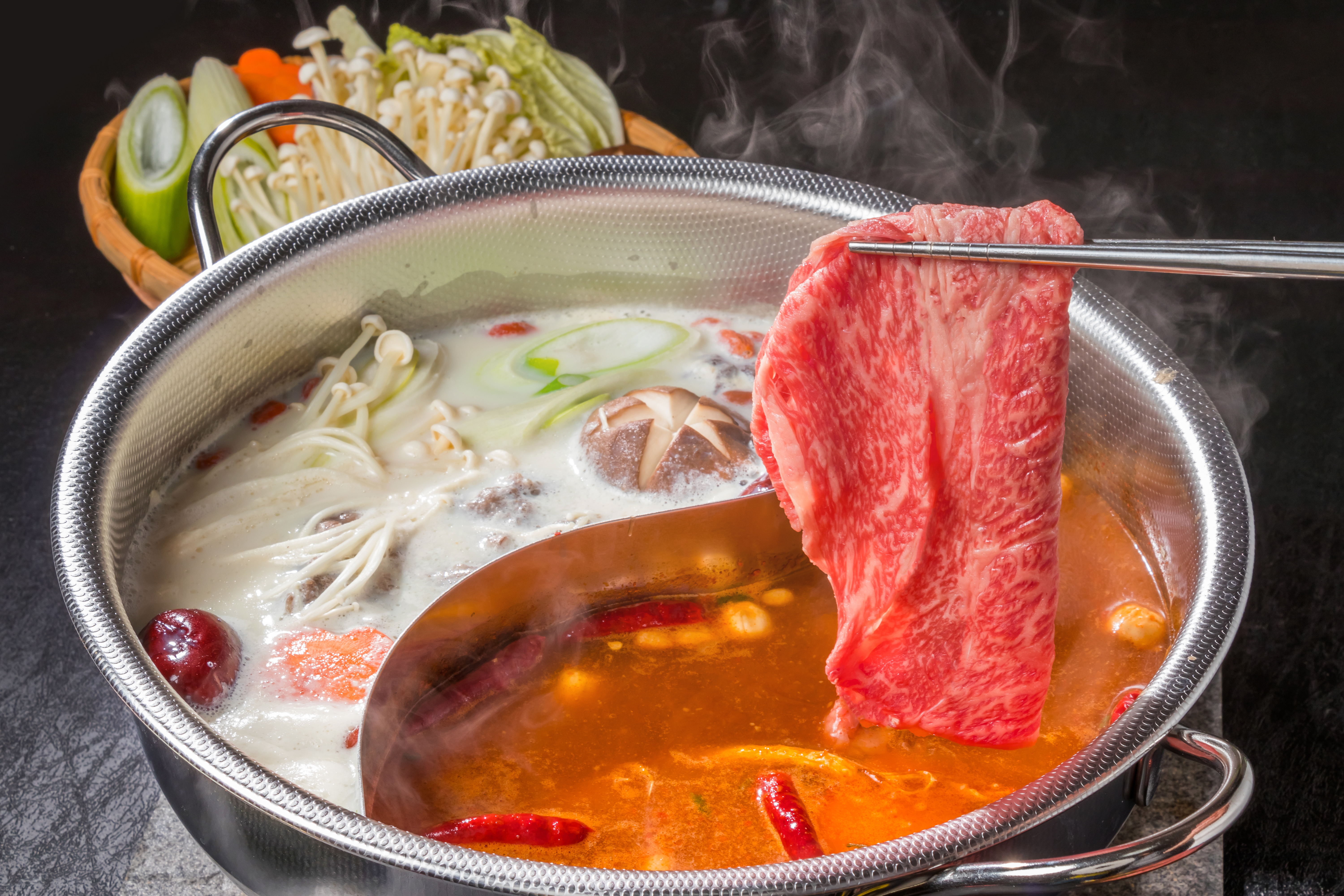
For seafood, go with firm finfish like salmon, halibut, seabass, monkfish or snapper — cut into thin strips or small cubes — or shellfish like mussels, clams, shrimp and lobster. More delicate fish like flounder and haddock tend to flake and break up quickly as they simmer, making them harder to retrieve from the broth.
Cubes or slices of tofu are a good plant-based option. To help the tofu soak up maximum broth flavor, drain and press it first before cooking. To make it extra absorbent, freeze the tofu, then press out the liquid once it’s thawed.
Other good protein hot pot dippers include meatballs, fish cakes or balls (available at Asian markets) or dumplings.
VEGGIES
Traditional hot pot vegetables include leafy greens like spinach, Chinese spinach, bok choy, napa cabbage, chrysanthemum leaves and watercress. These items usually cook within 1-4 minutes.
Hardy veggies include potato, sweet potato, winter squash, taro root and lotus root. These denser ingredients need longer to cook, from 5-10 minutes, depending how thinly you slice them.
But just about any vegetable you like or happen to have on hand — broccoli, cauliflower, carrots, green beans, corn — can work for hot pot, a meal that lends itself to improvisation. Shen also suggests including a mushroom or two, like noodle-thin enoki or subtly sweet oyster mushrooms.
STARCHES
Feng and Shen said most Asian-style noodles like udon, soba, ramen and rice noodles work well in hot pot. Cook time can run from 3-15 minutes depending on whether you’re working with dried or fresh noodles; check package directions to be sure.
You can also cook rice separately and top it with your fresh-cooked hot pot ingredients so the grains absorb all the tasty broth.
DIPPING SAUCE
Letting guests customize their own dipping sauce is part of the fun of hot pot. Feng said Sun Korean Ramen House lets customers make their own blend from a sauce bar that includes aromatics like fresh garlic, cilantro and scallions, and condiments like soy sauce, hoisin, oyster sauce, peanut butter and house chile paste.
Sun’s Instagram page features a post that suggests possible combinations for your own signature sauce. Feng advised adding a spoonful of hot liquid from the hot pot to your dipping sauce to soften the aromatics and meld the flavors.
Shen said some other good dipping sauce components include Chinese black vinegar, sesame oil or paste, and Thai bird chili for some fiery kick. She also noted that Sichuan hot pot broth is often so flavorful, no dipping sauce is needed.
THE MEAL
“There aren’t a lot of rules for hot pot,” Feng said. “It’s a very flexible, freestyle way to eat. It’s like a party.” You eat as you cook, item by item, casually and at your own pace.
Still, hot pot aficionados observe some general guidelines, like adding denser vegetables to the simmering broth first, to give them more time to cook. The temperature of your broth will drop when you add ingredients, so adjust the heat on your burner as needed to maintain a gentle simmer.
While the dense veggies soften, people often swish their thin-sliced meats and quick-wilting greens through the broth, eating them soon as they’re done.
Hot pot fans also tend to add their noodles last, when the broth has become fully flavored by all the ingredients that simmered in it over the course of the meal. If the bubbling broth has reduced significantly since you started and become over-salty, just stretch it back out with some hot water.
Hot pot makes for highly convivial meals. And while it may require a little extra work, especially if you’re going for maximum variety in your spread, Shen said having friends and family take part in the meal prep can be part of the event.
“We don’t do hot pot for business (meetings),” Shen laughed. “It’s for people you’re comfortable being close with and sharing.”
“The main idea for a hot pot is families and friends sitting together, and they’re cooking what they like and sharing it,” said Feng.

We invite you to add your comments. We encourage a thoughtful exchange of ideas and information on this website. By joining the conversation, you are agreeing to our commenting policy and terms of use. More information is found on our FAQs. You can modify your screen name here.
Comments are managed by our staff during regular business hours Monday through Friday as well as limited hours on Saturday and Sunday. Comments held for moderation outside of those hours may take longer to approve.
Join the Conversation
Please sign into your CentralMaine.com account to participate in conversations below. If you do not have an account, you can register or subscribe. Questions? Please see our FAQs.