


HOPE — It’s a pleasant Sunday afternoon in May. Bill McPherson is headed north on Interstate 295, with just a few hours to go before this job is done. He’s talking about his cargo, which he picked up on Friday evening 1,500 miles south of here.
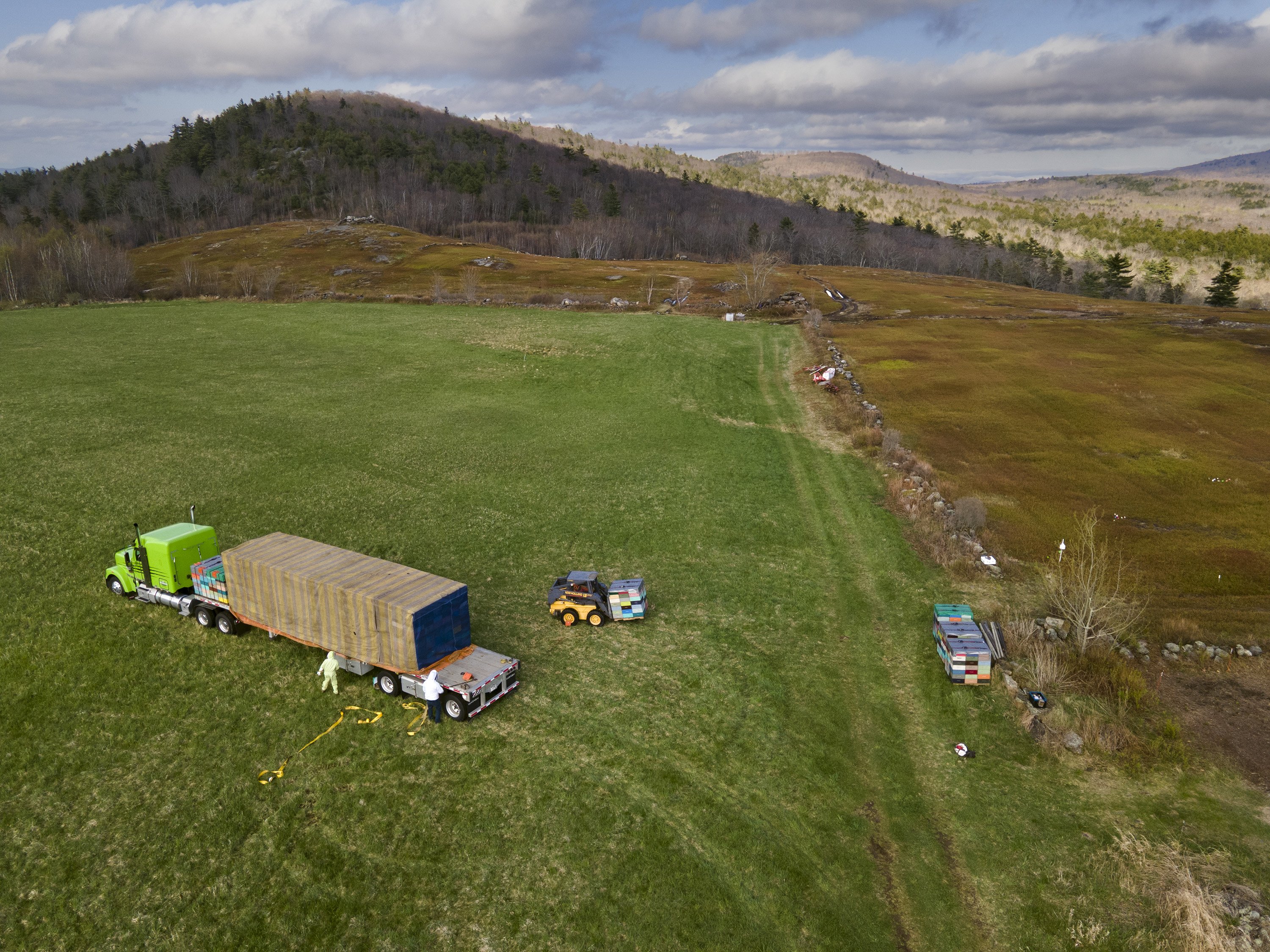
Most weeks, the burly, courteous McPherson hauls lumber between Maine and Pennsylvania. But once a year, he loads his neon-green 18-wheeler for a two-day drive from Florida with something else entirely: more than 21 million buzzing, vibrating honeybees.
“You can’t mess around. During daylight, you got to go. You can’t stop because if you stop too long and it’s hot, they’ll die.”
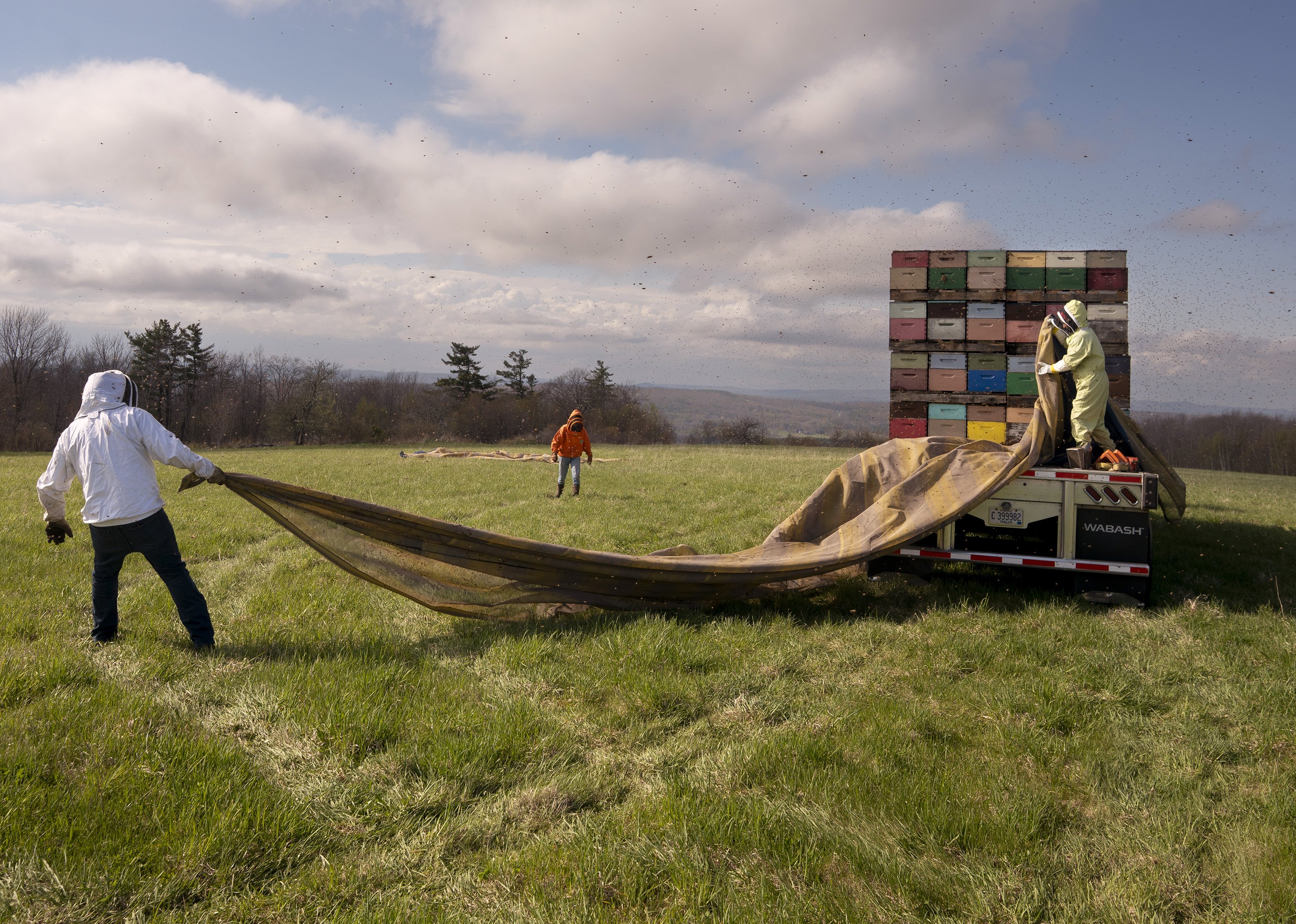
The insects, housed in 432 bee boxes stacked 48 high on his flatbed, belong to Maya’s Apiary, a small family business based in Sidney. Later that afternoon, they’ll be unloaded in the fields of a beautiful 18th-century farm in Hope, where, for the next three weeks, they’ll pollinate Maine’s most iconic crop: wild blueberries.
Once their work is complete, the bees will spend the summer and fall in beekeeper Peter Kucharski’s yards scattered across Kennebec, Lincoln and Waldo counties, producing the honey he sells to Renys, Rosemont Market and elsewhere.
Then, in November, McPherson will pick up the honeybees — snowbirds of sorts — to make the trip in reverse, returning to warm, sunny Florida for the winter.
BLOOMS, BERRIES AND BEES
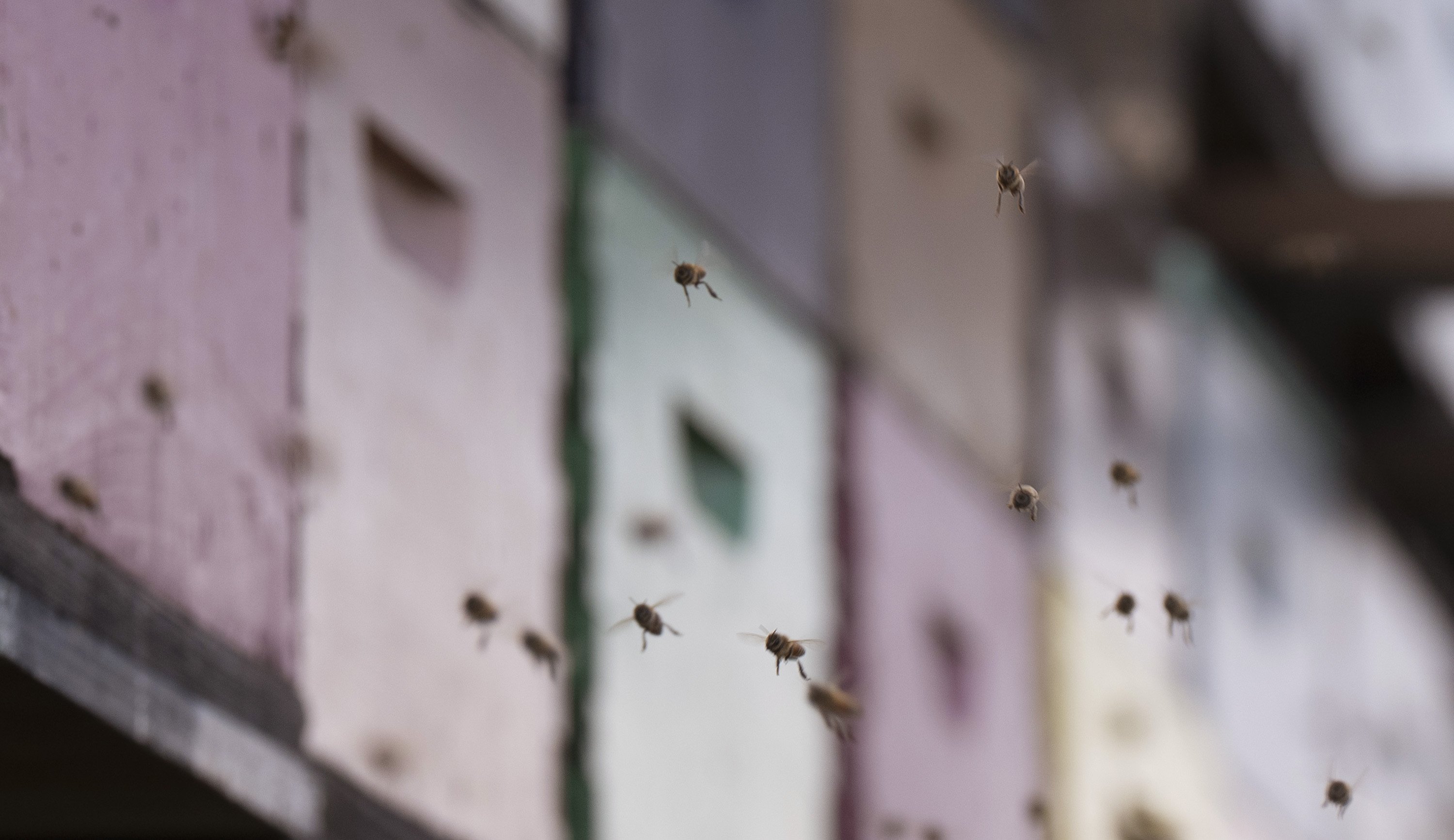
Wild blueberries are the only crop in Maine that depend on non-resident honeybees. The state has native wild bees, of course, which are perfectly capable of pollinating the low-bush berries, as they have for millennia.
But over the last 50 years, the state’s wild blueberry growers have increasingly relied on traveling honeybees working in tandem with the native pollinators for much higher yields.
“In most fields, there are not enough background native bees to fully turn every one of those wild berry blossoms into a fruit, which, of course, is our producers’ goal,” said Eric Venturini, executive director of the Wild Blueberry Commission of Maine. “A bee has to hit every one of those blossoms.”
Over time, the domestic honeybees, classified as livestock by the U.S. Department of Agriculture, the same as cattle or hogs, have helped produce harvests that have grown from an average of less than 300 pounds of berries per acre to as much as 5,000 per acre in good years. (Last year was a terrible year.)
For the short, concentrated pollination season — mid-May through mid-June — farmers will rent the bees from Kucharski, paying $110 to $130 per hive and placing up to four hives per acre. The price, which hasn’t budged in 15 years, is mostly set by big companies like Wyman’s and Cherryfield Foods, Kucharski said, and “for the most part everybody else has to obey by those prices” or risk their customers shopping around.
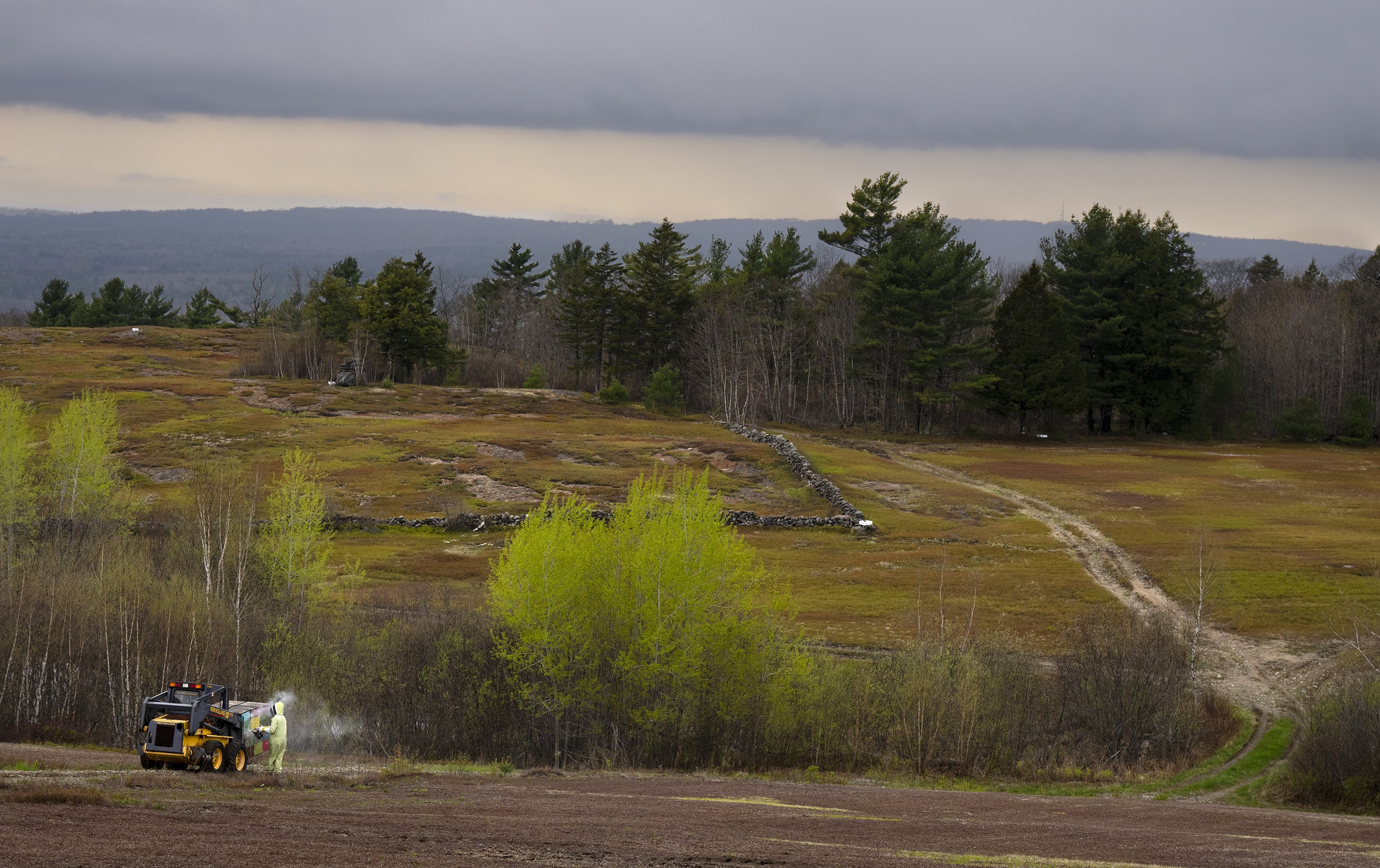
That’s just one of the many difficulties he and other commercial beekeepers face. Kucharski can’t make a living from just one blueberry pollination event per year, which is why he moves his bees to Florida in the first place.
Even when Maine is blanketed with snow, they can produce honey for Kucharski to sell. But in recent years, he’s also contending with cheap imported honey from places like India and Argentina as well as citrus greening, a disease that has devastated Central Florida’s orange industry. Because of it, for the first time in 25 years in business, Kucharski got no orange blossom honey at all this year.
Instead, he’s been trying something new: temporarily moving his bees north into Florida’s Panhandle, where they produce gallberry and tupelo honey before their trip home to Maine. “A really good-quality honey crop,” he said of the former, “a very, very nice table honey” of the latter.
“Honey production and agriculture — there’s nothing certain,” Kucharski said. “You’re trying to make the right decisions and hope they work out.”
A FAMILY AFFAIR
Kucharski, who grew up in Poland, comes from a long line of farmers. As a young man, he wanted to be a dairy farmer, “but that didn’t work out,” he said. He kept two hives for fun when he was a teen. Beekeeping was “a hobby that turned into a job.”
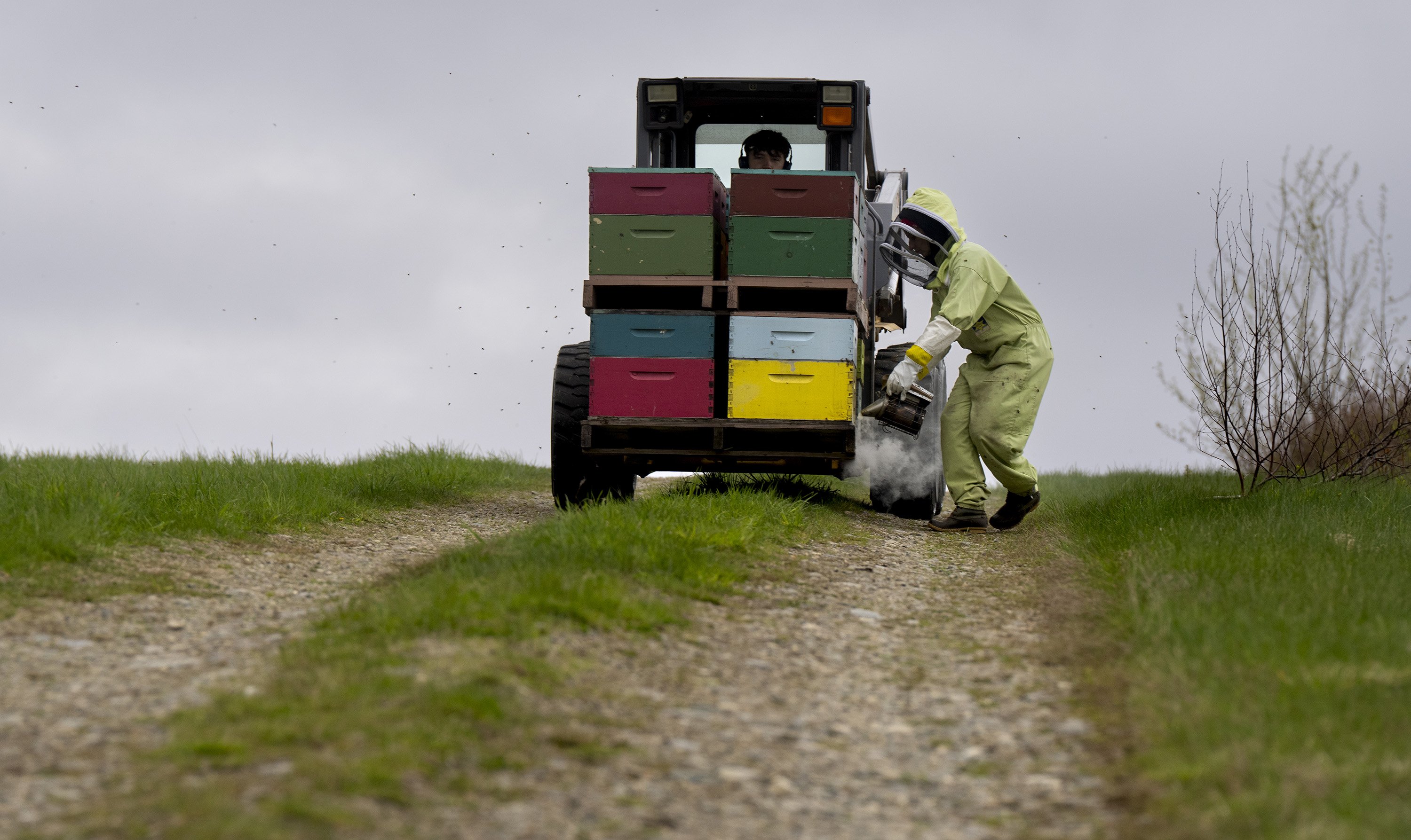
The whole family is involved, his wife Yelena; his 17-year-old son Oliver, a junior at Mid-Maine Technical Center in Waterville; and his 21-year-old daughter, Maya, for whom the business is named. She loves to work with her dad. Ditto, the bees.
“Sometimes I’ll be working with the bees all day, and then when I go to bed at night, I can still hear the hum,” she said.
On this Sunday, Peter Kucharski is still in Florida scrambling to get his hands on two trucks to carry the rest of his bees north in time to pollinate the berry bushes. In other words, right now.
The two trucks he’d originally arranged for “flaked out,” he said. Each truck costs him $6,500 for a one-way trip. So it’s Yelena and Oliver who will meet McPherson to unload the big rig when it arrives in the late afternoon at Brodis Blueberries.
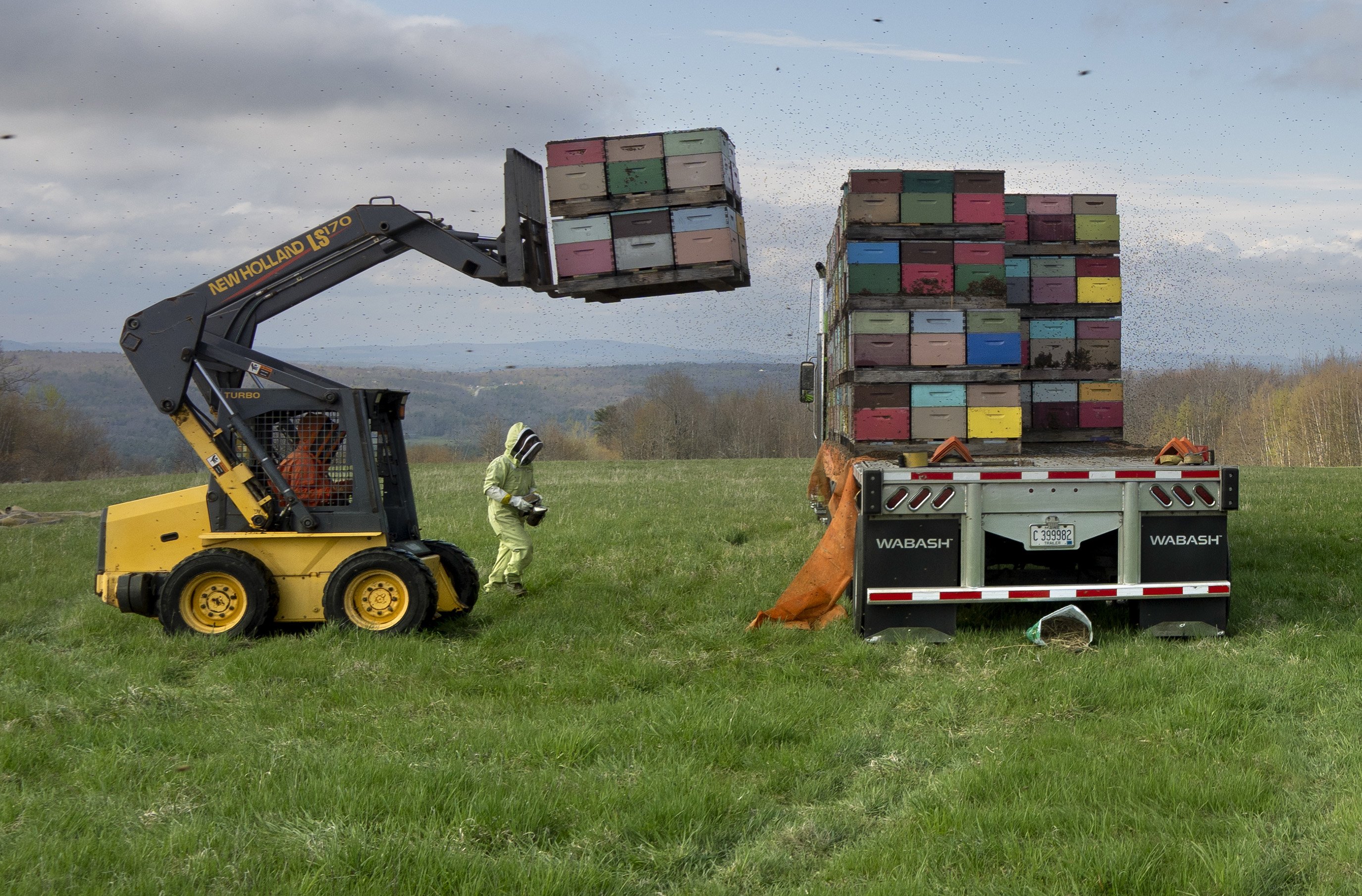
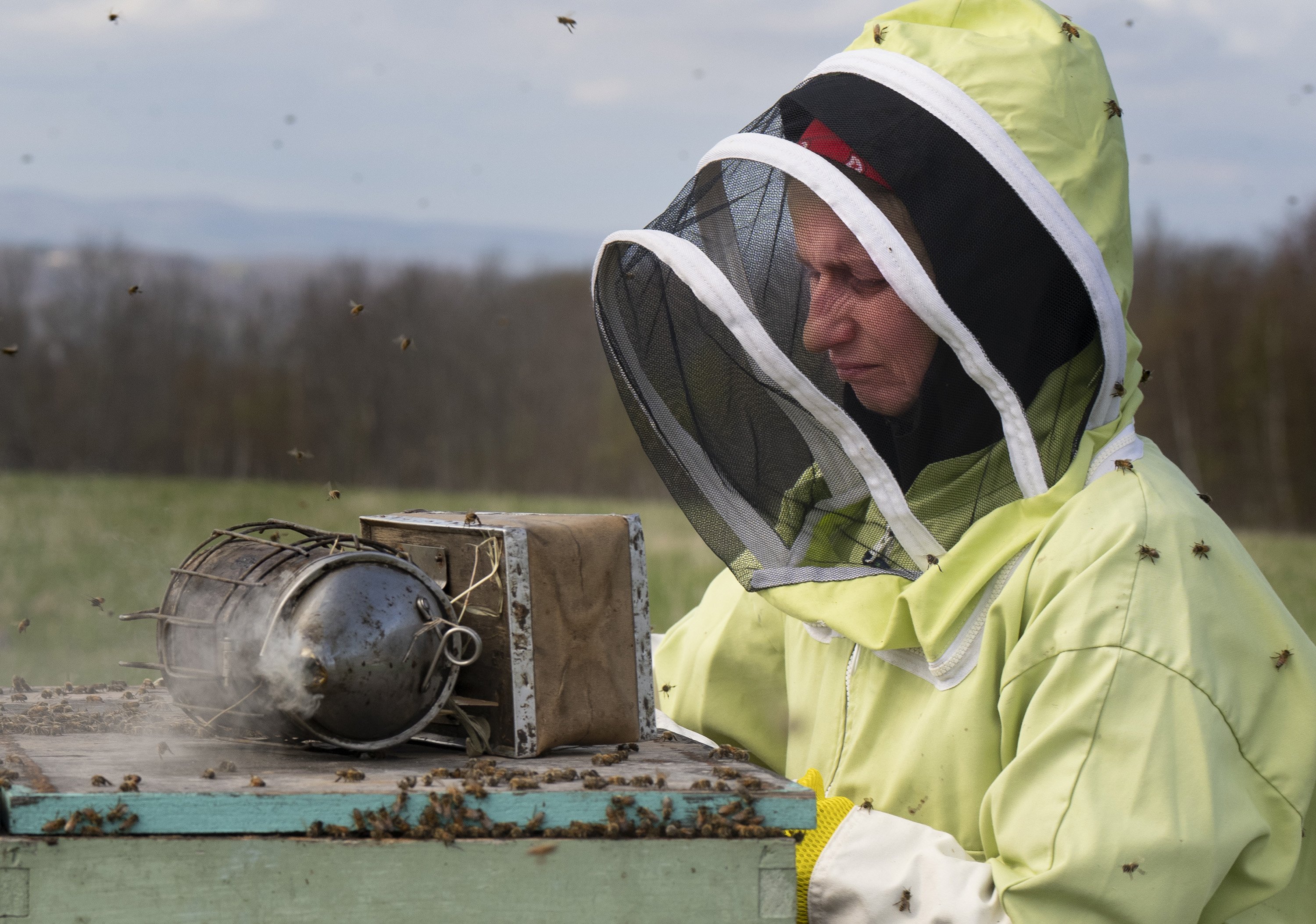
Oliver learned to drive a forklift from his dad — or really by osmosis, his dad said. His job is to unload the bees. The angle is important, his mother explained. Obviously, you don’t want the bee boxes to fall off the fork lift, but if Oliver angles the fork tines a bit to hold the hives more securely, he risks upsetting the bees. Needless to say, upset bees is not something you want. Meanwhile, Yelena blows smoke into the hives to keep the bees calm.
Maya, a senior studying liberal arts at Southern Maine Community College, finished the last class of her college career on Thursday and hopped on a plane to Florida that very evening to help her father.
This first load of honeybees reaches the state on Mother’s Day. Yelena and Oliver are making the one-hour drive from Sidney to meet the truck and will spend several hours helping the bees settle in. Would Yelena rather be at home celebrating the day in a more traditional way, say with flowers and brunch?
“Sometimes we spend Easter like that,” Yelena said, good-humoredly. “Mother’s Day is nothing. And our anniversary, same: We were loading.”
EN ROUTE
As a teen, McPherson learned to drive trucks on a potato farm. He got his commercial license at age 20. But though he’s been hauling for decades now, he picked up bee cargo for the first time just six years ago. “They needed someone to haul, and I said, ‘Well, I’ll try it.'”
Two years ago, honeybees that he was transporting near the Canada-New York state border stung him 60 times, despite the bee suit he was wearing.
“Never again. That’s it,” he told himself.
The only beekeeper he’ll work with now is Kucharski. McPherson likes Peter, he likes the whole family, and “Peter’s bees are awesome.” (The feeling is mutual. “He’s a super nice guy,” Kucharski said of McPherson.) This trip, he hasn’t been stung once. The bees, he said, have been “very mellow.”
“Somebody told me one time, if the beekeeper is an asshole, the bees are going to be assholes,” McPherson said about that painful, stinging load. “And he was right.”
Before heading to Florida, McPherson gives his truck an exacting check-up. In the best of times, breakdowns on the road are expensive. With a truckload of bees, they’re a disaster.
Before leaving Florida, he stopped at the state agriculture station with paperwork to prove the bees he’s hauling have been inspected and are disease-free. Then he pulled in to a weigh station. Legally, the truck can’t weigh over 80,000 pounds, but calculating the weight of this particular cargo is tricky.
“Bees, we have to wing it,” he said, an inadvertent pun. “It depends how much honey is in the hives. There’s a lot of variables.” When McPherson goes through the weigh station, “I’ve got the bees trained to fly so I’m not overweight,” he jokes.
By law, truck drivers must take a break after a specified number of hours. Because he is carrying livestock, he gets a few bonus hours — the “livestock exemption.” McPherson has mapped out his route north to avoid the gridlock around Atlanta and the sometimes sweltering I-95 corridor.
As he heads north — through Georgia, North Carolina, Virginia’s Shenandoah Valley, Pennsylvania — McPherson sleeps in his truck. It’s immaculate and equipped with a bed, fridge, microwave and TV. Massive as his rig is, it feels awfully constricting after hours in the cab.
He’ll make quick stops for gas, coffee, bathroom breaks and the occasional baloney-and-cheese sandwich, taking care to park his 21 million bees some distance away from any other trucks. But by and large, if it’s daylight, and he’s got bees on board, McPherson is moving.
One time, he was driving north in a small convoy with another truck. The other driver got in an accident — nobody was hurt, but that barely lessened the tension as the truck waited for a police officer to make a report. The honeybees need the ventilation created by the wind of a vehicle in motion.
The anxious driver phoned the trucking company dispatcher, who asked him to hand the officer his phone, McPherson recalled. “She says, ‘I’m not trying to tell you how you do your job, but I am going to tell you the situation you’ve got: You got $250,000 worth of bees sitting on that trailer and it’s 85 degrees, and if they set there two hours, they’re going to die. ‘”
Thirty minutes later, the truck was back on the road.
FROM THE BEES’ PERSPECTIVE
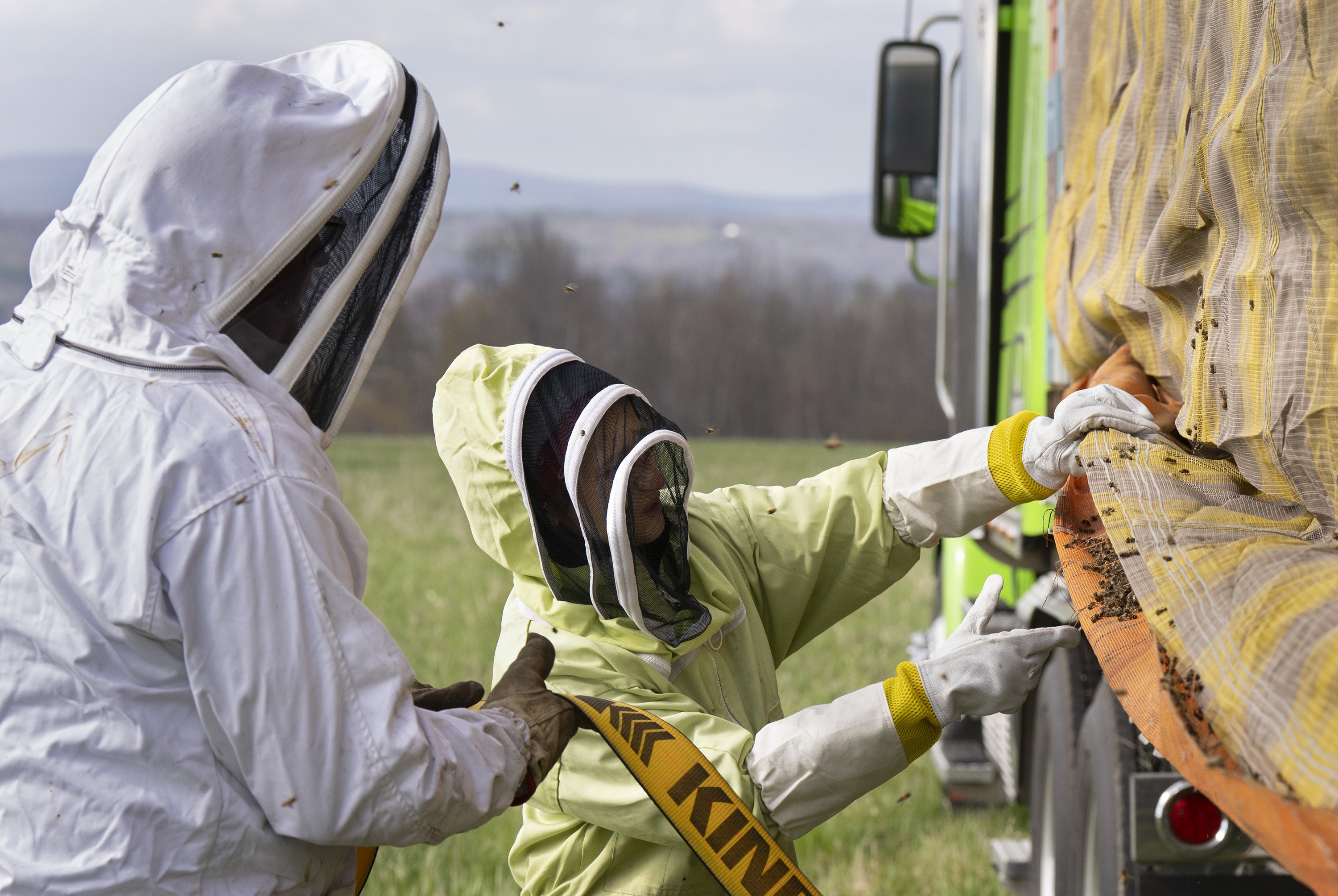
If moving bees from Florida to Maine can be stressful for Kucharski and McPherson, it’s worse for the bees. The rule of thumb is, if there’s only one five-gallon bucket’s worth of dead bees at offload, you’ve done well, Kucharski said.
“I don’t think through millions of years, bees were ever meant to be put on the bed of a truck and transported miles,” he said. “They’re meant to stay in a hollow trunk of a tree and pollinate the neighboring plants and swarm.”
Overheating and suffocation are ever-present dangers. Also, the honeybees dislike the vibrations of truck travel, and a displeased bee can grow murderous. “If bees don’t like it, then we kill the queen,” Yelena Kucharski said. “Whatever happens in the hive, it’s her fault. She gets blamed.”
During the trip, some of the bees manage to escape the truck netting, and fly off. It seems like the right thing to do. It’s daylight. It’s warm out. The bees are biologically programmed to fly around looking for water, nectar and pollen.
Unfortunately, there is no going back, and no finding a new home, either. The guard bees at any area hive they happen upon would make sure of it. “The other bees will say, ‘Don’t come,'” Yelena Kucharski said.
Losing bees pains Kucharski. You can hear it in his voice. He is both a honey producer and a pollinator for hire. He’s a grower, too.
He recently bought a few blueberry fields of his own in Dresden and he’s trying to figure out how to make the economics work in a tough business. When you’re a honey producer, not just a pollinator for hire, “To me, you have a more intimate relationship with your bees,” he said. “You care for your bees.”
The trip south in November is easier on the bees. The days are colder and shorter. Before McPherson gets on the road next fall, his truck and his honeybee cargo will be blessed by Kucharski’s priest. Meanwhile, this trek north has been a success.
“We lost less than usual,” Kucharski said. “You know, some things can work out.”

We invite you to add your comments. We encourage a thoughtful exchange of ideas and information on this website. By joining the conversation, you are agreeing to our commenting policy and terms of use. More information is found on our FAQs. You can update your screen name on the member's center.
Comments are managed by our staff during regular business hours Monday through Friday as well as limited hours on Saturday and Sunday. Comments held for moderation outside of those hours may take longer to approve.
Join the Conversation
Please sign into your CentralMaine.com account to participate in conversations below. If you do not have an account, you can subscribe here. Questions? Please see our FAQs.