


“Hallo! A great deal of steam. The pudding was out of the copper. A smell like a washing-day! That was the cloth. A smell like an eating-house and a pastrycook’s next door to each other, with a laundress’s next door to that! That was the pudding. In half a minute Mrs Cratchit entered — flushed, but smiling proudly — with the pudding, like a speckled cannon-ball, so hard and firm, blazing in half of half-a-quartern of ignited brandy, and bedight with Christmas holly stuck into the top. Oh, a wonderful pudding. Bob Cratchit said, and calmly too, that he regarded it as the greatest success achieved by Mrs Cratchit since their marriage.”
Laundry references aside, there really is zero possibility that a former English major (me) would not be enchanted by Charles Dickens’ description of the plum pudding at the Cratchits’ Christmas table. Most of you probably recognize the passage from his “A Christmas Carol.” Each year at holiday time, do literate cooks and Dickens fans everywhere wonder idly, as I do, where did steamed puddings go?
I am not British. I don’t even celebrate Christmas, though my partner’s family does. I am merely an enthusiastic, curious baker (soon-to-be steamer?) who wondered what the technique of steaming would bring — had ever brought — to the dessert table. Four tasty steamed puddings later, but nary a boozy, match-lit plum pudding among them, I have some preliminary answers.
Before we get to those, though, it’s clear that the holiday season brings out the ambitious Martha Stewart project cook in many of us, also cuddly feelings of nostalgia. We decorate gingerbread men, construct gingerbread houses, fashion elaborate buche de noels, and break out the marzipan to make stollens. Which makes it exactly the right season to try your hand at a warming steamed pudding.
PUDDINGS PAST
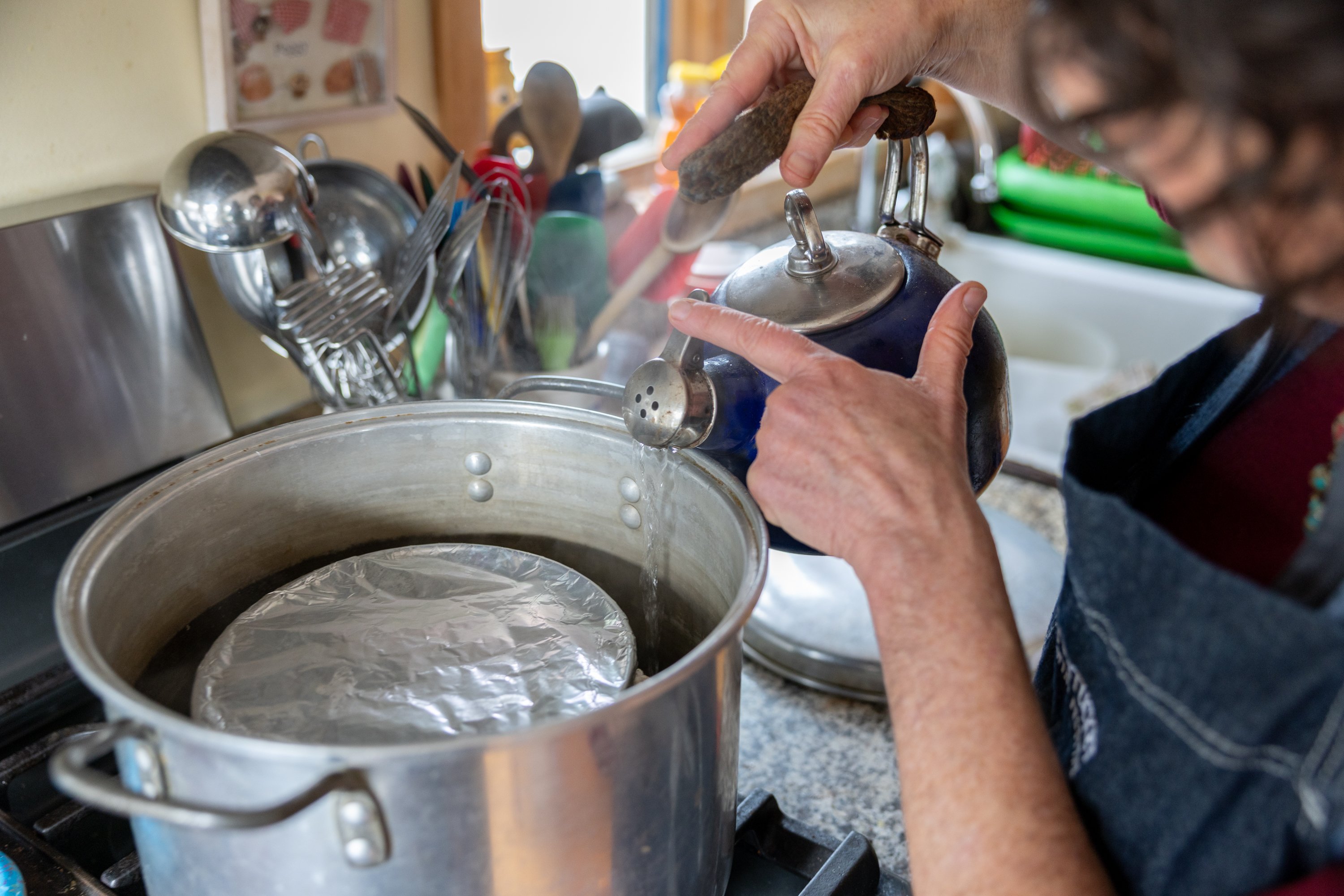
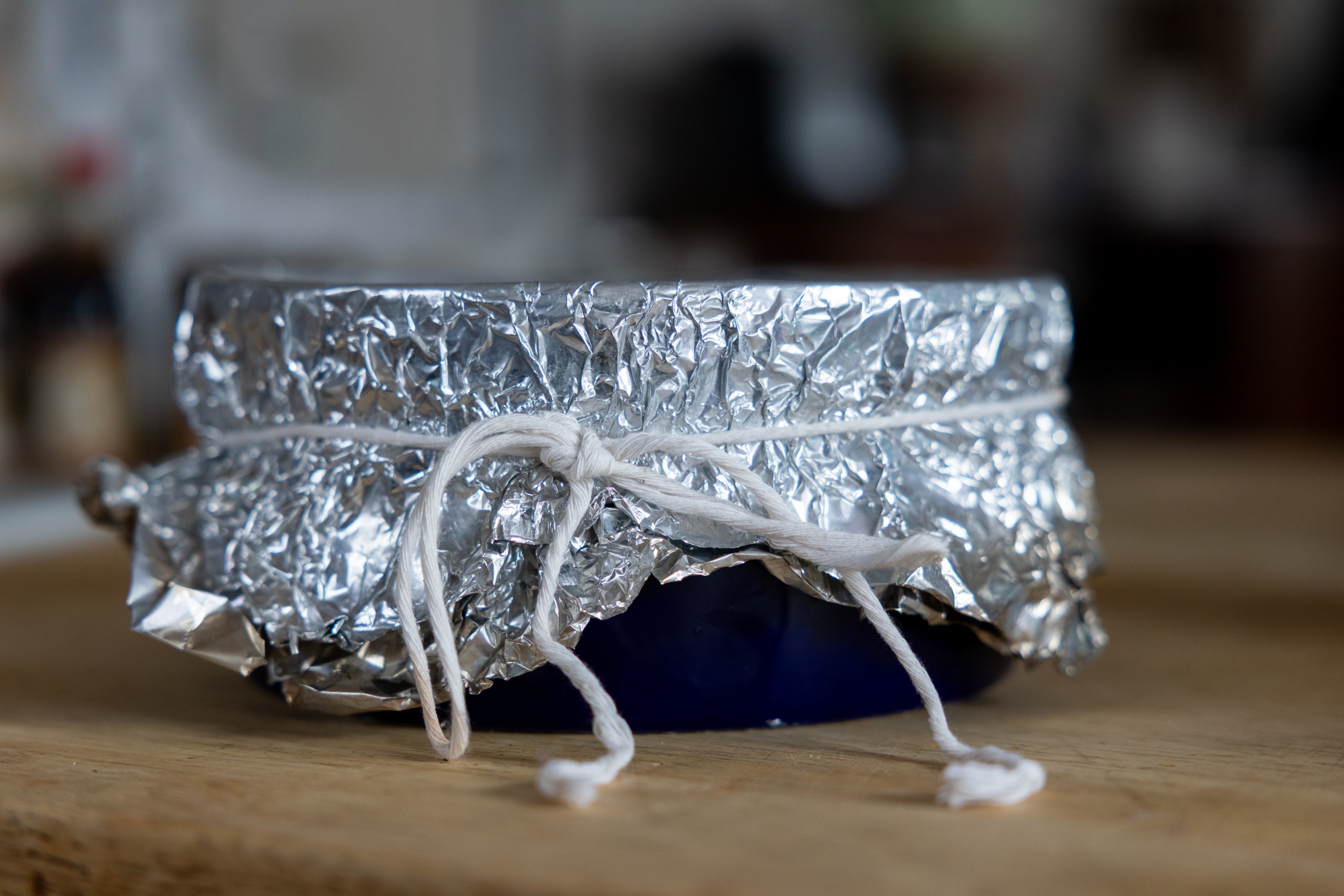
To clarify, these recipes use “pudding” to mean a dessert generally, as the English use the word. We’re not talking about chocolate, vanilla and butterscotch puddings, as we Americans mean by the term (no shade on those, though). The batter goes into covered molds or ceramic dishes —historically, these puddings were tied up in cloth — which are lowered onto a cake rack set inside a big pot. Hot water is added to the pot, the lid secured, and the dessert cooks in the steamy environment.
I thumbed through many pages of my many baking books, only to read the words, “preheat the oven to 350”; I found almost no references to “cover tightly and steam.” There was the very occasional brown bread recipe, and a Nigella Lawson recipe for Steamed Syrup Sponge in “How to be a Domestic Goddess.” No surprise there. The British have, to some extent, anyway, retained the technique, especially at holiday time.
The only proper attention paid I could find in my cookbook collection was in “The Wooden Spoon Dessert Book” from 1990. Marilyn M. Moore devoted a short chapter to steamed puddings, titled, tellingly, “A Heritage of Recipes.” “These carry the cozy warmth of prairie farm kitchens,” she wrote, giving four recipes that sound like they’d live up to her description: Aunt Jakie’s Graham Pudding, Mabell’s Carrot Pudding, Steamed Date Pudding, and Fudge Cake Pudding. Hashtag oldtimey.
But not so very long ago, New Englanders were quite familiar with steamed puddings. In its 1918 printing, “The Boston Cooking-School Cook Book,” known better today as Fannie Farmer, included at least 15 steamed pudding recipes, among them blueberry pudding, cranberry pudding, and St. James Pudding, which was flavored with cloves, allspice, nutmeg, dates and molasses.
Browsing her collection of Maine community cookbooks, culinary historian and Islesboro resident Sandra Oliver found that in 1895, the number of steamed and baked puddings in the Augusta Universalist Cookbook were roughly equally split. Even as late as the 1940s and ’50s, Oliver thinks Mainers regularly employed the technique. The recipes that call for it often skew toward heavier ingredients, she said, like suet, molasses, bread crumbs and prunes. Oliver thinks steaming was at least partly doomed by the stodgier flavors.
“These are extremely pronounced flavors,” she said. “They’re very strenuous. It’s not what we’re into anymore. “
By the time we get to the Maine Bicentennial Community Cookbook, compiled and edited by Margaret Hathaway and Karl Schatz in 2020, except for brown bread, “I don’t recall any steamed puddings” among the submissions, Hathaway wrote in an email.
Steamed puddings go back many centuries. They often were savory and made up the main meal (think haggis). When I called Oliver to ask about them, she replied to my query with her own question: “How far back do you want to go?”
NOTES FROM A SMALL SAMPLE
I read online that while British Christmas puddings make up the majority of what remains of the genre, I ought to be able to steam any old cake recipe. I attempted a blueberry pudding that was designed for steaming from Linda Greenlaw’s and Martha Greenlaw’s “Recipes from a Very Small Island” as well as two cakes that were meant to be baked, one a gingerbread, the other a basic chocolate cake into which I folded fresh raspberries and cocoa nibs. All came out excellently, eliciting texted “yummies” from neighbors who tasted them and a recipe request.
I learned that it takes at least twice as long to steam a cake as it would to bake it. Meanwhile, I missed the wonderful fragrance of a baking cake. And while I’m an experienced baker, without the glass oven window and an interior oven light, I was flying blind.
On the flip side, little I’ve encountered in baking is as set-it-and-forget-it as a steamed pudding. The window on doneness is huge. A typical cooking time is 2 to 4 hours. Imagine if you let your favorite banana bread go an extra two hours. Steaming, I learned, is a very forgiving technique.
“It’s really, really hard to overcook a steamed pudding,” said my friend Andrea Geary, who lived in Scotland for seven years, learned to steam puddings while cooking there at the world-famous Three Chimneys and who, as deputy food editor at the Boston-based Cook’s Illustrated magazine, developed a recipe last year for Marmalade Pudding.
She also taught me a really cool trick. “Put a penny in the bottom of the pot,” she said. That lets you monitor the cooking without opening the pot, which would let all the steam escape and halt or considerably slow down the cooking. “You want sort of like a light rattle, but if it’s rattling like crazy, it’s probably boiling too hard. If it stops rattling, that’s probably a bad sign, too, because then (the pot) is dry.”
We were talking the very day the U.S. Mint ceased production of pennies, so now you’ve got something to do with the ones rattling around in your pockets. You’re welcome.
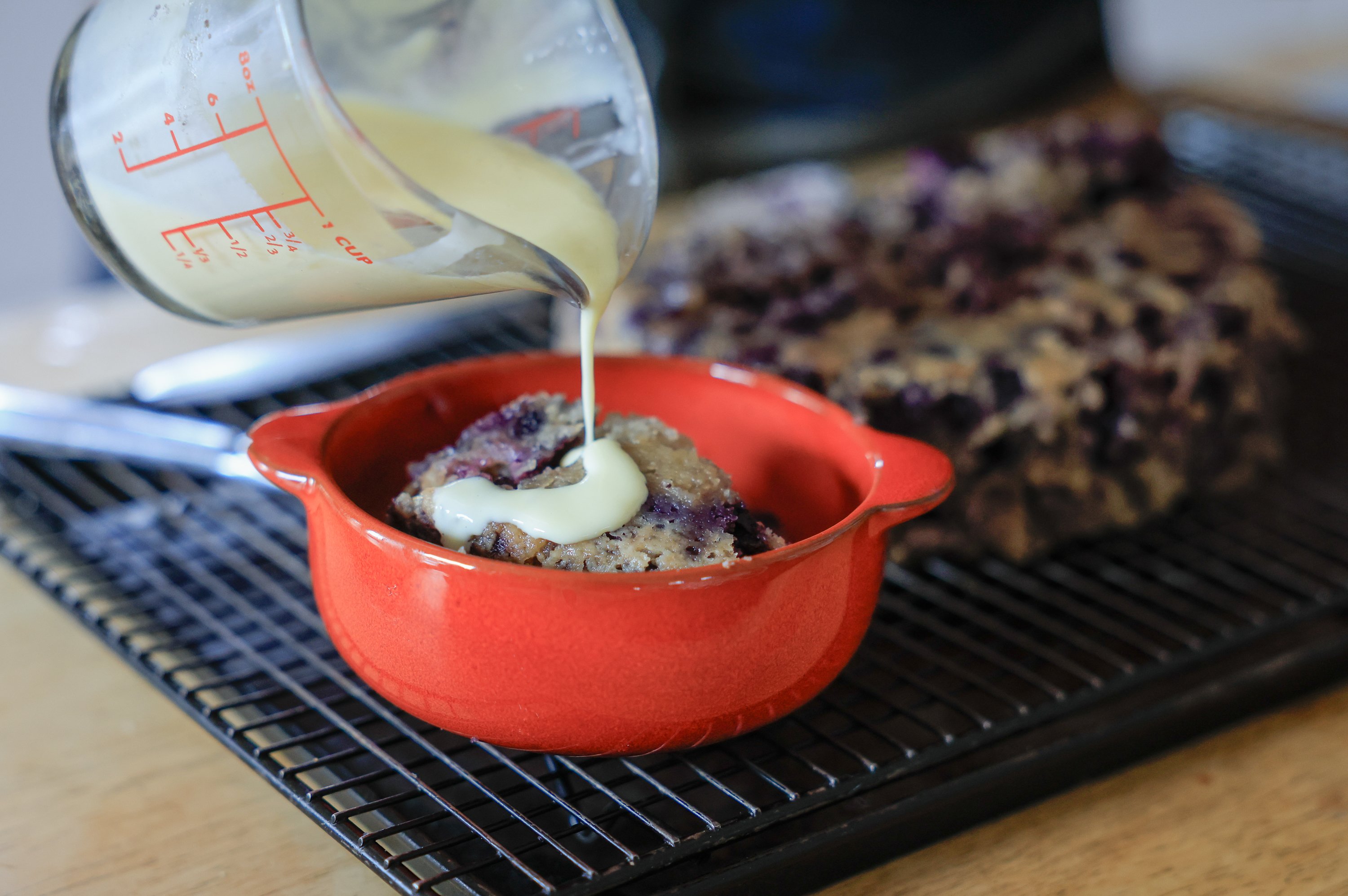
The nicest thing about steaming, though, may be that the resulting cake is guaranteed to be comforting and exceptionally moist. So moist, in fact, it seems surprising these puddings are typically served with a runny custard sauce or hard sauce, accoutrements which otherwise can be clever tricks to disguise dry, overbaked cakes.
“I think that custard is just for joy,” Geary said.
STEAMED BLUEBERRY PUDDING
This recipe is adapted from Linda and Martha Greenlaw’s “Recipes from a Very Small Island.” Press Herald photographer Brianna Soukup tried a helping of the pudding after photographing it. “It tastes like the inside of a blueberry muffin,” she said happily, “which is the best part.” You can use all white flour to make the pudding, or you can mix it with a little wheat flour, as I did, to fool yourself into thinking the dessert is healthy.
Feeds about 5
1 cup granulated sugar
4 tablespoons butter, softened
Zest of 1/2 lemon
1 teaspoon vanilla extract
1 egg
3/4 cup all-purpose flour
1/4 cup while whole-wheat flour (King Arthur calls its offering “Golden Wheat Flour”)
1½ teaspoons baking powder
1/2 teaspoon cinnamon
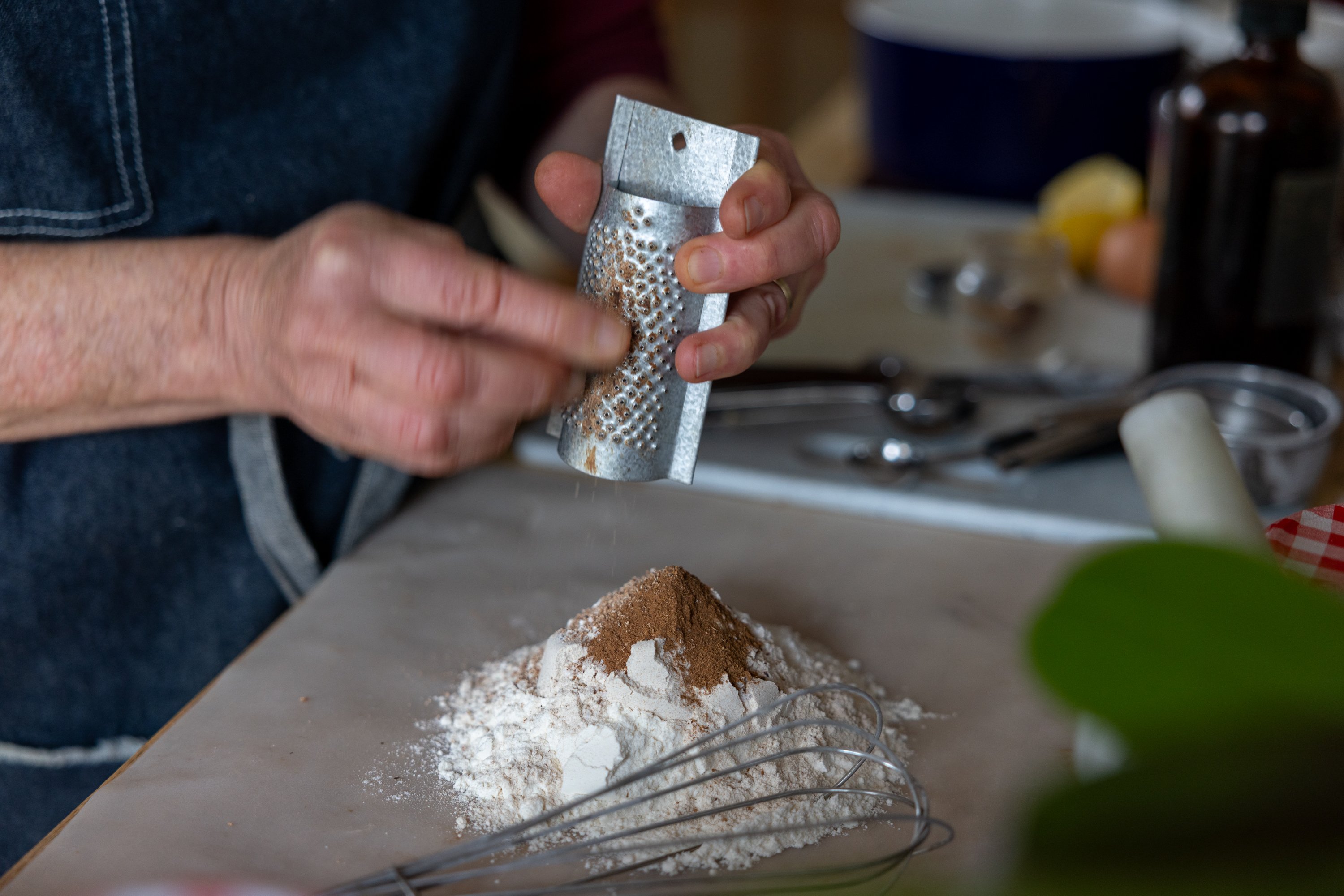
Freshly grated nutmeg, to taste
1/4 teaspoon salt
1/2 cup whole milk
1 generous cup wild Maine blueberries
Generously grease a one-quart pudding mold or a ceramic or heatproof glass bowl (a deep-dish 8-inch cake round will also work), then lightly dust it with flour. Bring a kettle of water to boil so the water will be quite warm when you are ready for it; you may need more than one kettleful, depending on the size of your pot.
Beat the butter and sugar together in a mixer. When they are creamy, add the lemon zest, then the vanilla, then the egg and beat until combined.
Whisk together the dry ingredients to combine. Alternately add the flour mixture and milk to the mixing bowl, starting with one-third of the dry mixture, then half of the milk, another third of the dry, the rest of the milk and finish with the dry ingredients. Stir just to combine. Gently fold the blueberries into the batter and transfer to the prepared pan.
Cover the mold or bowl tightly with tin foil (I double-wrapped it because my tin-foil seemed thin.) Tie it with string to hold the foil in place; to keep it tight, it helps to have a second person hold down the string while you make the bow, as you might when wrapping a Christmas present.
Place the pudding on a rack or folded dish towels inside a large pot; I used the same pot I used to can jam. Pour boiling water at the edge of the pot (not on top of it!) until the water comes up about halfway up the sides of the pudding mold. Drop in a penny and cover the steamer pot.
Bring the water to a boil, then turn it down to a simmer and simmer for 1 ½ to 2 hours or until firm, a skewer in the center comes out clean and it has a little color. Add more water if necessary while cooking to keep it halfway up the pot (think bain marie), but try not to open the steamer or the pudding will never get done. To test it, remove the mold from the pot, undo the string, lift the lid or foil; if the pudding is not done, recover, retie and return it to the steamer.
Cool in the covered pot for 15 minutes, then remove , unmold and eat warm with custard sauce.
CUSTARD SAUCE
The recipe is from Good Housekeeping “Baking: More than 600 Recipes for homemade Treats,” but I replaced the whole milk it called for with half-and-half.
Yield: About 1 ¾ cups
1¼ cups half-and-half
4 egg yolks
1/4 cup sugar
1 teaspoon vanilla extract
In a 2-quart saucepan, heat milk to boiling over medium heat. Meanwhile, in a medium bowl, whisk egg yolks with sugar until smooth. Gradually whisk a little of the hot milk into egg-yolk mixture to temper it.
Return the mixture to the saucepan; cook over medium heat, stirring constantly (do not boil or mixture will curdle), just until the mixture thickens slightly and coats the back of a wooden spoon. (A finger run across custard-coated spoon should leave a track.)
Remove saucepan from heat. Strain custard through sieve into a clean bowl. Stir in vanilla. Use warm or refrigerate for up to 2 days to serve chilled.

We invite you to add your comments. We encourage a thoughtful exchange of ideas and information on this website. By joining the conversation, you are agreeing to our commenting policy and terms of use. More information is found on our FAQs. You can modify your screen name here.
Comments are managed by our staff during regular business hours Monday through Friday as well as limited hours on Saturday and Sunday. Comments held for moderation outside of those hours may take longer to approve.
Join the Conversation
Please sign into your CentralMaine.com account to participate in conversations below. If you do not have an account, you can register or subscribe. Questions? Please see our FAQs.