
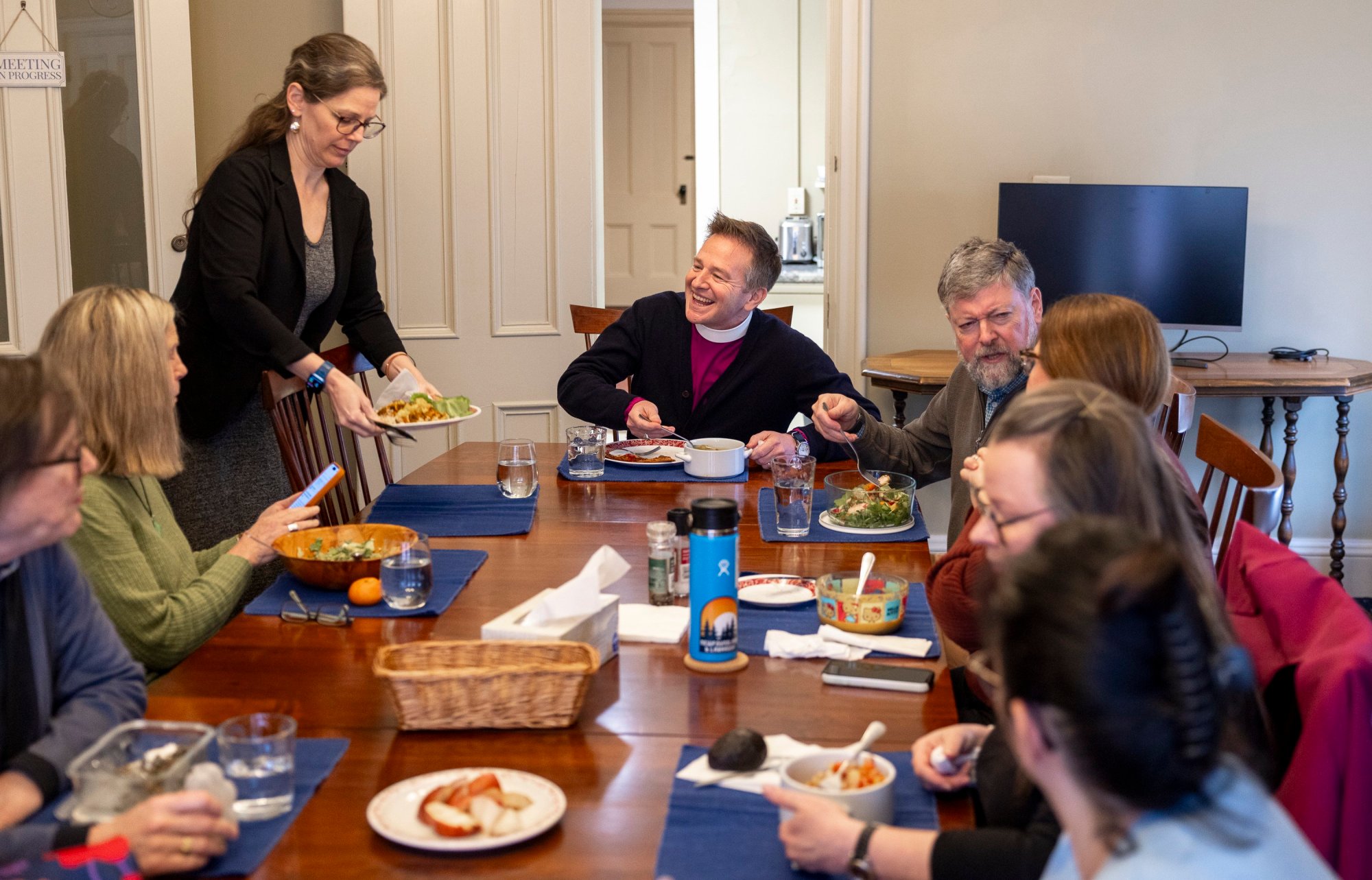

The Right Rev. Thomas Brown, Episcopal Bishop of Maine, enjoys talking about food. He can wax eloquent about his grandmother’s Cornish pasties and her skill at — insistence on —properly “chipping” the rutabaga and potato for the filling. He has opinions about cooking shortcuts like canned soup and cake mixes (They have their place). He was an early and longtime subscriber to Cook’s Illustrated magazine (now he’s a Milk Street man), and he can speak about cookbooks he likes, including Vermonter Virginia Bentley’s cookbooks, with pleasure and familiarity.
“She’s got all this commentary,” Brown said one morning in March while thumbing through his copy of the “Bentley Farm Cookbook” searching for an example. He paused at her recipe for Viennese goulash. “Play Viennese waltz records, softly, in the background,” he read. “You will feel like dancing.”
But a culinary conversation with Brown is never merely about his favorite restaurants in Portland. His standbys — and he fears he is in a rut — are Woodford Food & Beverage, near his home; Scales, where he knows the bartender; and Bruno’s. Nor is it merely an exchange of treasured recipes, among them, The Silver Palate’s Chicken Marbella, or a comparison of transcendent bites. “I really do think it’s one of the best things I’ve ever eaten in my life,” Brown says about the breakfast sandwich at Tandem bakery. “It’s in the top 25 food experiences.”
For Brown, food and hospitality are integral to the church, from the many mentions of food in the Bible to Holy Eucharist.
“We celebrate a meal every time we gather,” he said. “There’s bread and wine as part of our worship.”
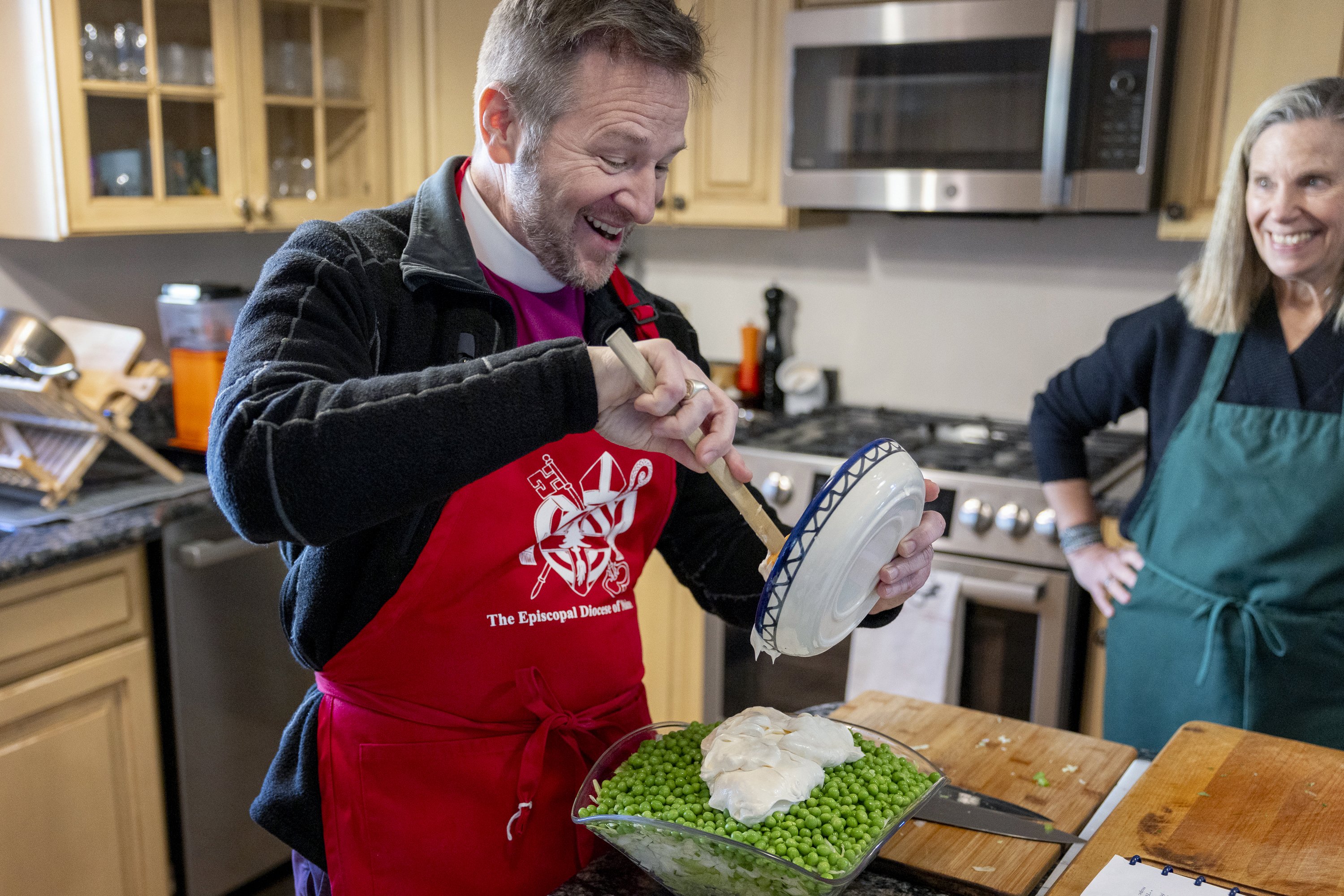
Church potlucks and turkey pie suppers bring people together and fundraise, he said, and the church plays a big role in nourishing and comforting those in sorrow and in want. That means spiritually, of course, but also materially. Hence, food for families who are grieving or hungry, and he recently encouraged his parishioners to make chicken stew for terrified immigrants.
“When you think about Jesus teaching his disciples to pray, “Our Father who art in heaven, hallowed be thy name,” Brown paused, “and then, ‘Give us this day our daily bread.’ Hospitality, for me, it’s such a foundational principle of what it means to be a spiritual being.”
Boyhood to Bishop
Brown grew up in a tiny town in Michigan’s Upper Peninsula with “22 houses and four bars and two churches and a post office and a hardware store and the snowmobile store.” Aroostook, he said, reminds him of his hometown. His grandparents ran the funeral home; his parents had a dairy farm. The two lunch ladies at school — he can still tell you their names — made everything from scratch, including homemade donuts, which were a special danger and a special joy to a boy who struggled with his weight.
He was close with his grandmother. “But I wouldn’t say my interest in cooking is from her as much as I would say that without her I would not be a person of faith,” Brown wrote in an email.
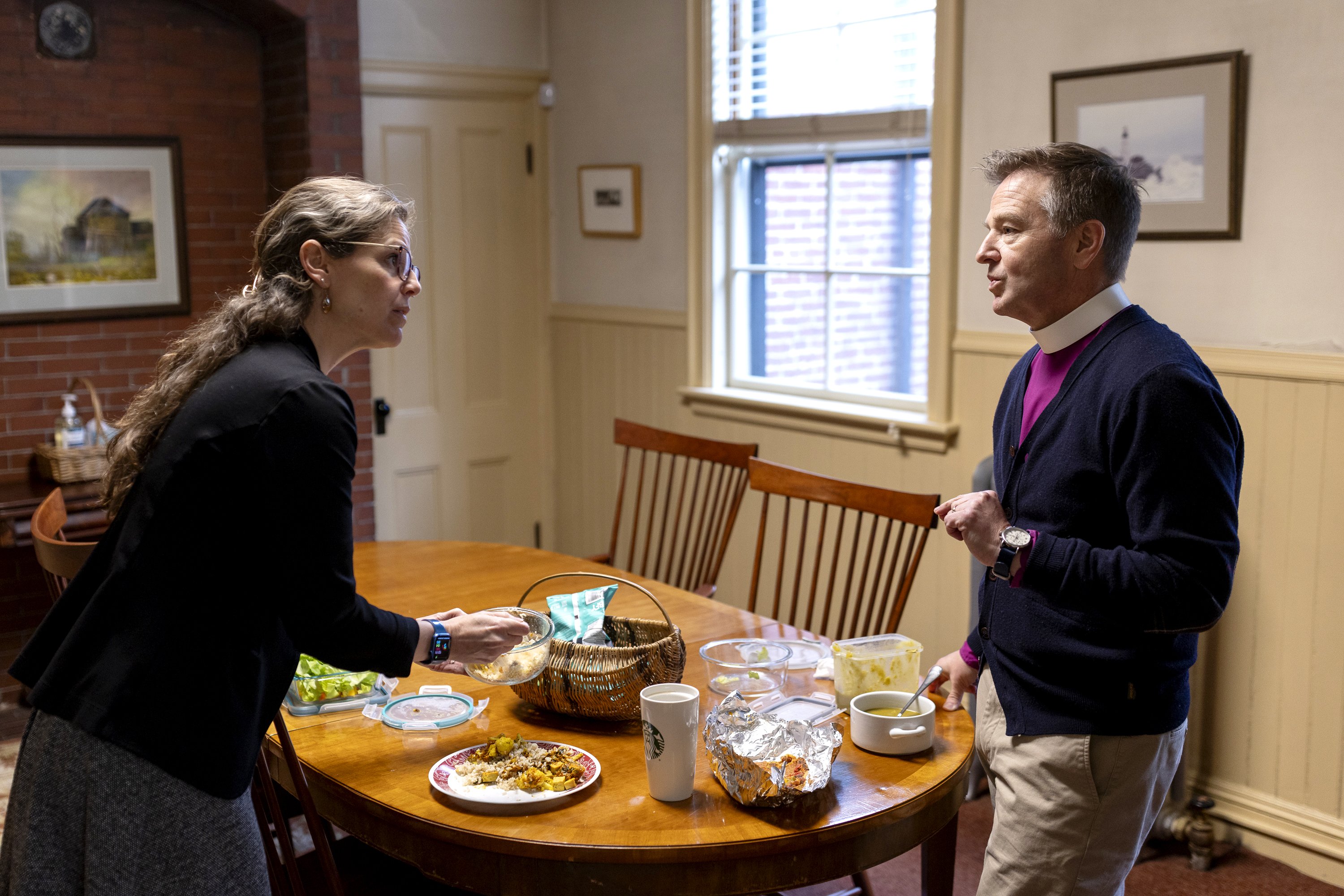
“What she really gave me was the gift of knowing God in Jesus Christ. Her cooking and baking were signs of that — she was generous, and opened wide the doors of her home and heart, cooked delicious food, made people feel loved and desired.”
Raised Methodist, Brown felt called to ordination as a boy. Two of his great-grandfathers had been Methodist bishops. At college, though, he came out as gay, which put a wrench in the works. One day, he drove the two-plus hours from Kalamazoo to Detroit to discuss his hopes with the state’s Methodist bishop. I can’t ordain you, she told him gently.
“I drove back and I really should have pulled over,” he recalled. “When you think about crying versus sobbing? I was sobbing.” (In 2024, after much internal turmoil, the Methodist church lifted its ban on gay clergy.)
With her help, though, he eventually found his way to the Episcopal Church, which did permit the ordination of gay priests. Brown earned his master’s in divinity in 1997 and early the next year was the first openly gay priest to be ordained in Kalamazoo. He worked at seminary school, and served as curate in San Francisco, then rector in Brattleboro, Vermont, where he met his spouse, Tom Mousin, also an Episcopal priest.
“The blessing of their civil union, in 2003, was an occasion for the Diocese of Vermont to help lead The Episcopal Church to full inclusion of LGBTQ+ people,” Brown’s biography notes. The couple married in Massachusetts in 2005. He is the first openly gay man to serve as bishop of Maine.
But if Brown has been a trendsetter in church policy, his cooking persona skews traditional. For lunch, he favors chili and meatloaf. Tomato aspic from “The Virginia Bentley Cookbook” is among the recipes on repeat at home.
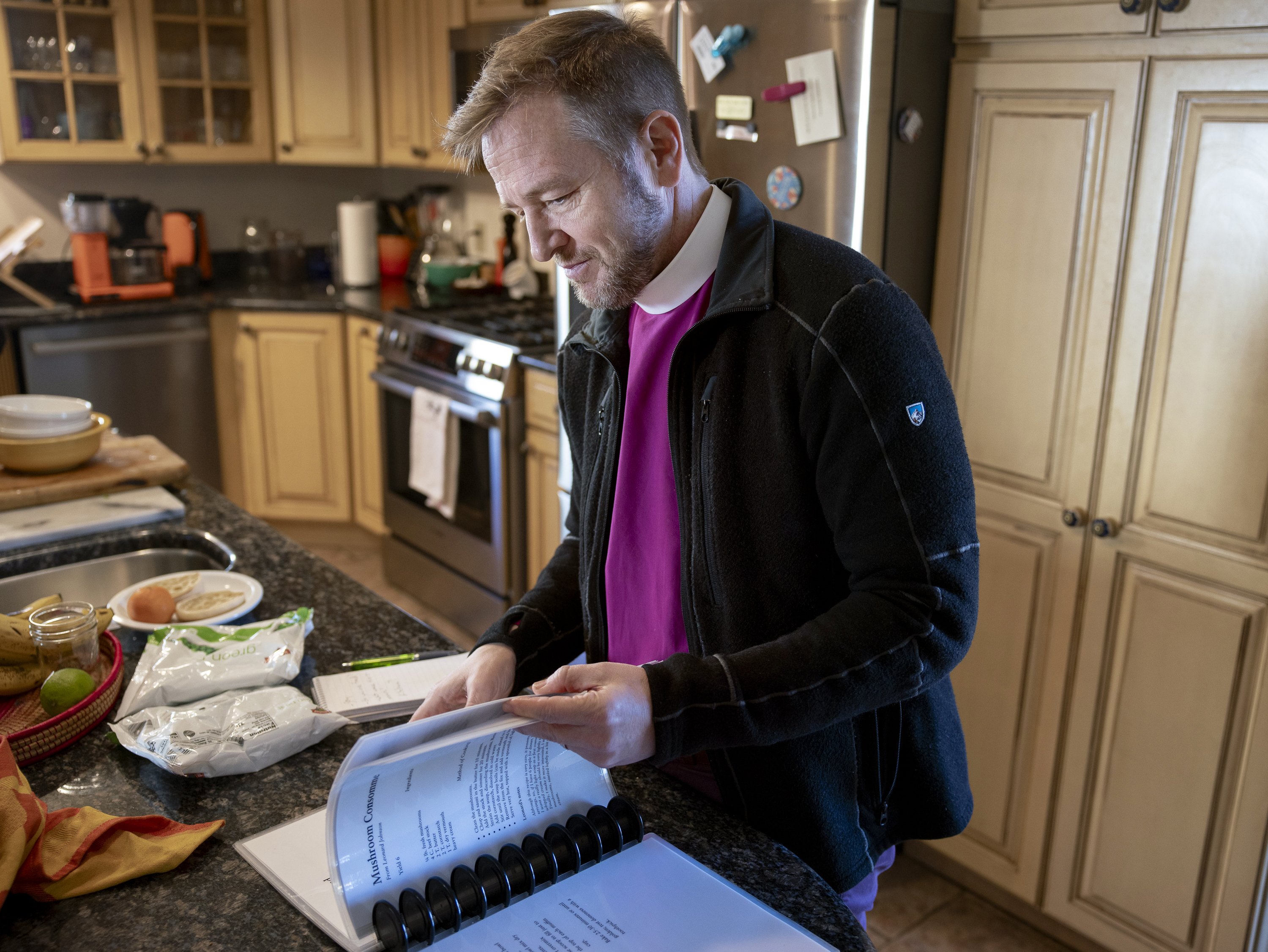
The recipes he reaches for most often live in a binder he’s put together in alphabetical order — pristine, neatly typed in uniform font, credited to their original source and kept in protective plastic. They include creamed spinach, Tater Tot Breakfast Casserole and Strawberry Icebox Pie (also Tarte Tatin with pears and walnuts, and Souffle). Without a moment’s hesitation, Brown describes his own cooking style as “Midwest meets Cooks Illustrated.”
MANY LAYERS
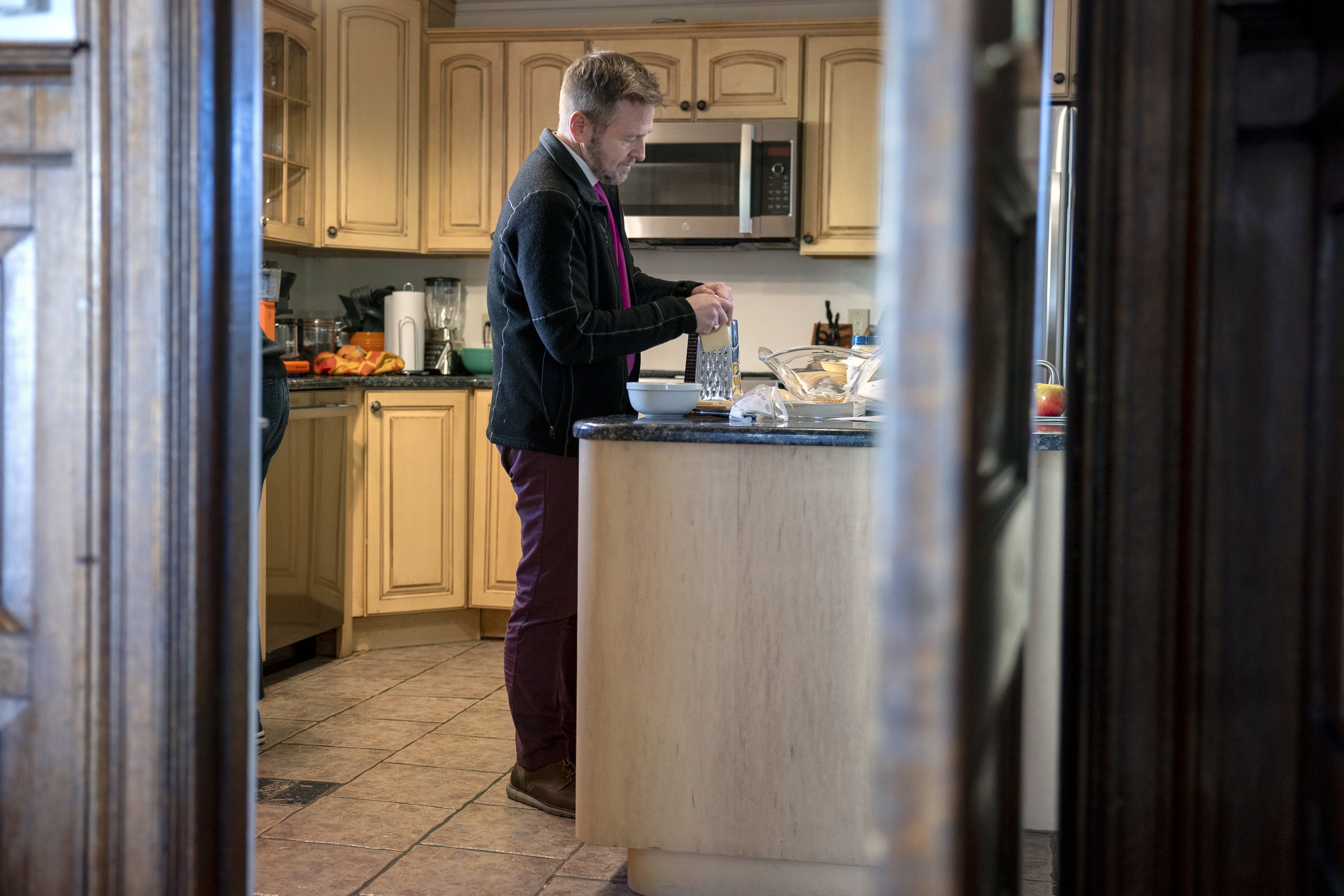
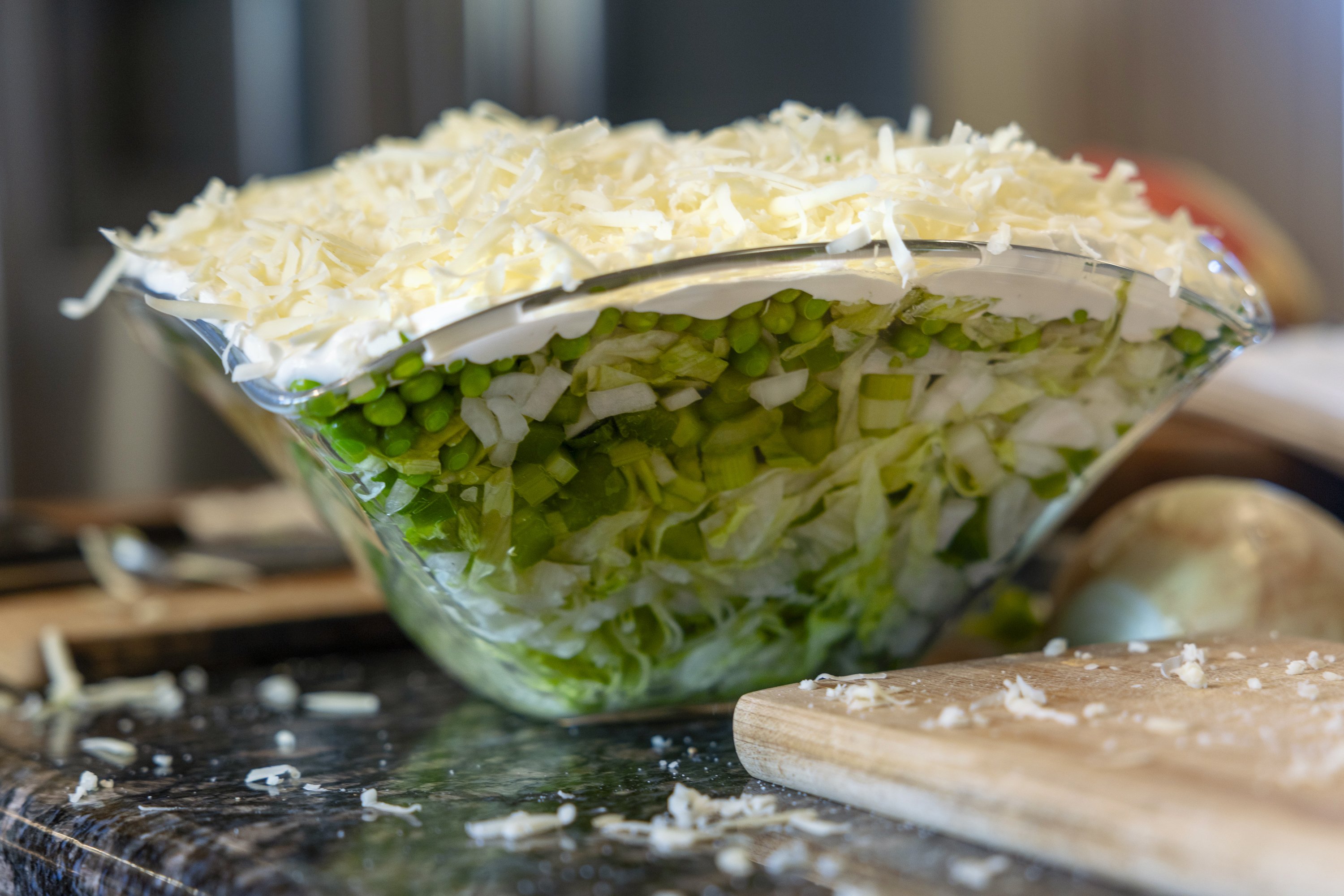
On a recent afternoon in Brown’s spacious kitchen (the diocese owns the house), he and Susan Sherrill Axelrod, the church’s communications director and a former Press Herald editor, made salad, layering frozen peas, green peppers and iceberg lettuce in a glass dish and capping it with a mayonnaise-sour cream dressing. Brown and Mousin would be serving the dish at an open house for Mousin’s congregation on Sunday.
The pair used to entertain regularly. For the 10 years they lived in Massachusetts, they hosted a standing Tuesday dinner with a rotating roster of parish guests. They had it down to a science, with four or five meals they could put together in their sleep and a minute-by-minute schedule on the refrigerator so they could efficiently prep and set the table after the day’s work (Brown likes to play a game with himself, trying to beat the timing on his schedule for each item by at least one minute).
Church people are never late, he said, smiling. “We learned to be ready.”
The pandemic, though, got them out of the habit of entertaining. Also, because Brown’s responsibilities now extend from Fort Fairfield to Cape Neddick and from Rangeley to Calais (57 congregations and 17 summer chapels), hosting his expanded flock is a logistical challenge. As for hosting the clergy, it can be awkward: As bishop, he supervises them.
Their Easter shindig is also a thing of the past. In Massachusetts, 70 to 80 parishioners used to stop by on Easter Sunday for layered salad, glazed ham, from-scratch Parker House rolls, homemade carrot cake and one especially ambitious year, homemade petit fours. Holy Week is their busiest time of the year, but Brown and Mousin did all the shopping, all the cooking and all the cleanup.
“I think we needed our heads examined,” Brown says now, using rather more colorful language.
If the title “bishop” conjures characteristics like formal, solemn or stern, in this case you’d have the wrong guy. Neighbor Elizabeth Pope calls Brown the Energizer Bunny. His friends at the gym call him “the bish.”
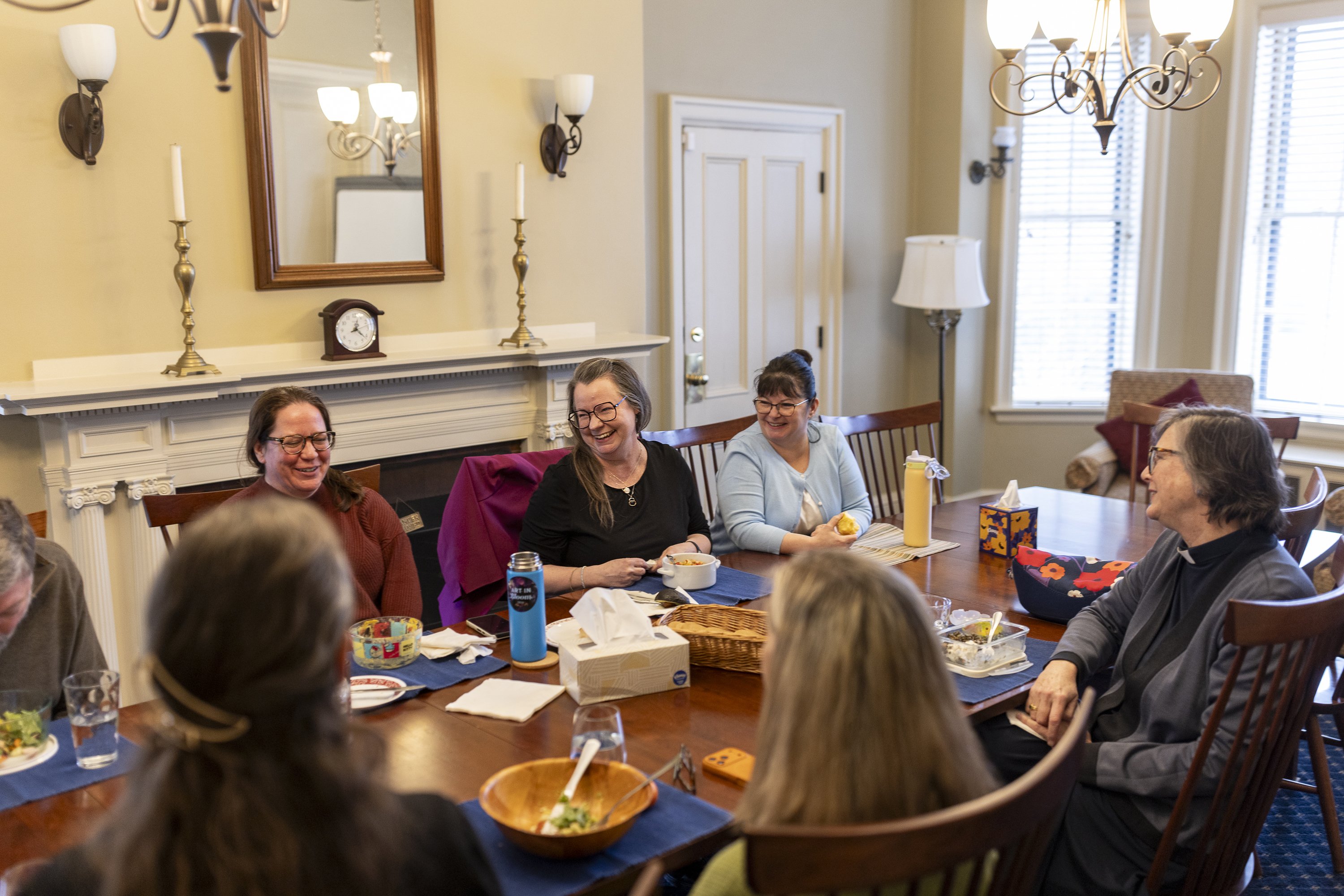
“It’s really a very serious job. He has tremendous responsibility statewide,” Pope said, “but he just doesn’t take himself that seriously.”
Axelrod describes him as both “deeply serious and a hoot.”
On Easter Sunday, Brown will preach and say Mass at both services at the Cathedral Church of St. Luke in Portland. Then he and Mousin will host a small group of great-nieces, great-nephews and other relatives, serving the same menu they used to make for a crowd. He’s not the kind of cook who needs to dazzle with a trendy new holiday menu every year. For him, food traditions carry deeper significance.
“When we can enter into tradition and to memory, there is something holy that happens,” Brown explained. “And food, I think does that.”
He expanded on that idea in an email: “Memory becomes sacred because the magic of tradition, what I might say, ‘the beauty of holiness’ transports us from this place to one that’s often beyond description, yet with a power to change and bless.”
LAYERED SALAD FOR EASTER
The recipe is from Virginia Williams Bentley. “This dish must be made 24 hours before you plan to serve it, making it ideal for a party, Bentley writes. “Being almost salt free (salt would make the greens weep), it is especially good with ham. Though I am inclined to downgrade iceberg lettuce, it has its place, and this is an ultra-special recipe.”
Serves 10-12
FOR THE SALAD:
1 head iceberg lettuce, quartered and cut fine
Several stalks celery, in small pieces (about 2 cups)
2 green peppers, chopped
1 onion, chopped or ringed
1 (10-ounce) box frozen peas
FOR THE DRESSING:
1 cup sour cream
1 cup mayonnaise
TO FINISH:
1 ½ tablespoons sugar
1/4 pound grated cheddar cheese
To make the salad, cook the peas ever so slightly in a little salted water. Reserving half the lettuce, place the layers in the order listed — lettuce, celery, peppers, onion and peas — in your best glass bowl. Top with the remainder of the lettuce.
To make the dressing, mix together the sour cream and mayonnaise and spread over (not in) the salad.
To finish assembling the salad, sprinkle the sugar on top of the dressing and sprinkle the cheese over that as the top layer. Cover the bowl with plastic wrap and refrigerate for 24 hours before serving.

We invite you to add your comments. We encourage a thoughtful exchange of ideas and information on this website. By joining the conversation, you are agreeing to our commenting policy and terms of use. More information is found on our FAQs. You can update your screen name on the member's center.
Comments are managed by our staff during regular business hours Monday through Friday as well as limited hours on Saturday and Sunday. Comments held for moderation outside of those hours may take longer to approve.
Join the Conversation
Please sign into your CentralMaine.com account to participate in conversations below. If you do not have an account, you can subscribe here. Questions? Please see our FAQs.