
The “Missing Pathways to 1.5°C” report is part of a wider body of scientific research connecting the dots between eating animals and our rapidly changing climate. Report co-author and College of the Atlantic professor Doreen Stabinsky, Ph.D., told me that climate scientists are not so much frustrated as “really freaked out” by the inaction of policy makers and the general public, who continue to eat animal-based diets.
I too find today’s Standard American Diet distressing. Here in the U.S., we all know many people who eat meat once a day, and some (the heaviest meat eaters who contribute an outsized portion of greenhouse gases to the atmosphere) who eat animal products at every meal.
But this is today. What about tomorrow?
According to recent marketing data and trend reports, a tsunami of dietary change is beginning to wash ashore.
For instance, the Good Food Institute released Nielsen sales data for the 12 months prior to August showing purchases of plant-based foods grew 17 percent while overall retail food sales grew only 2 percent during the same period. Plant-based meat sales showed added traction, jumping 23 percent during the year.
Caroline Bushnell, senior marketing manager at the Good Food Institute, expects to see plant-based food sales continue their upwards trajectory.
“Plant-based milk is the most developed plant-based category,” Bushnell told me, “and accounts for about half of all plant-based sales.”
She notes that fewer people buy plant-based meat compared to those who buy plant-based milk. Bushnell said this creates a “clear upside for plant-based meat to be purchased by three times as many households.”
Rather than a crystal ball to predict the future, Bushnell tends to use the rear view mirror. She points out that soy, almond and other plant-based milks became more widely adopted once they were stocked in the “refrigerated milk case.” A mere two years ago, the Beyond Meat burgers broke a similar barrier, becoming the first plant-based meat to be sold in major supermarket meat cases.
As a result, 86 percent of people buying Beyond Meat products are meat eaters, according to its distributor.
A Gallup poll released in August found that the number of vegans in the United States has jumped 50 percent since 2012, while the percentage of vegetarians is holding steady at 5 percent. Young people continue to have the highest rates of veg eating, according to the poll.
Gallup also discovered that 11 percent of liberal Americans identify as vegetarians and vegans while just 2 percent of conservatives do. This means cities like Portland are home to a great many more vegetarians and vegans than national data had previously suggested.
Coupled with the recent sales figures for plant-based foods, Gallup concludes that its poll results indicate more Americans are reducing their purchases of meat and dairy.
I remember the days when people used to compare vegan food to cardboard, so I was surprised to learn that, in 2018, the No. 1 reason people buy and eat plant-based foods is because of its taste, according to market research firm Mintel.
Meanwhile, another market research firm, Brandwatch, analyzed the feeds of people on their “foodie influencer” lists and found that in 2018, 54 percent of those accounts were talking about vegan food. Among the same group, 24 percent mentioned gluten-free food.
Taken together, these numbers show that vegan food is no longer just for vegans. Nowadays, vegan food is also for anybody reducing his or her meat consumption. And here at the end of 2018 that needs to be all of us.
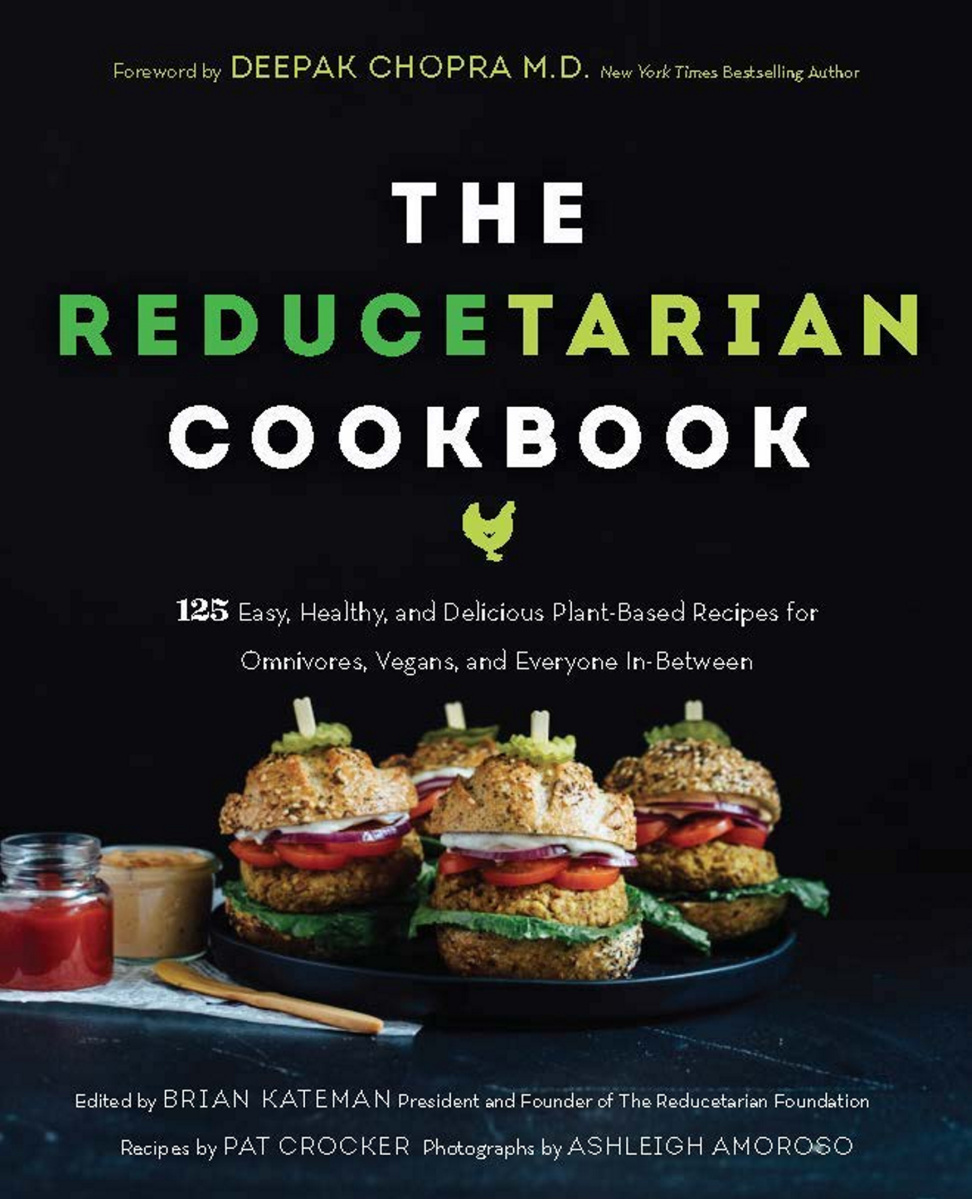
‘The Reducetarian Cookbook’
THIS NEW RELEASE makes a great starting point for reducing meat by offering up plant-based dishes that can be made instead of traditional dishes. Edited by Brian Kateman, president of the Reducetarian Foundation, with recipes from best-selling cookbook author Pat Crocker, it serves up 125 basic, plant-based recipes with simple ingredient lists, easy- to-follow cooking instructions and lots of color photos. Recipes include beer-battered nuggets, lentil sliders, mac ‘n’ cheese, falafel, sweet potato enchiladas and veggie pot pie, as well as the recipe below. $21.99
Roasted Beets with Quinoa and Spiced Walnuts
Reprinted with permission from “The Reducetarian Cookbook”
Makes 4 servings
6 medium beets, trimmed and quartered
2 medium onions, quartered
5 tablespoons extra-virgin avocado oil, divided
1 tablespoon Mediterranean Herb Blend (page 147), or store-bought
1 cup whole or coarsely chopped walnuts
1 cup quinoa, rinsed
2 cups Vegetable Broth (page 125), or store-bought, or water
¼ cup Vegan Parmesan Cheese (page 39), or store-bought (for optional garnish)
Preheat oven to 375°F. Line a rimmed baking sheet with parchment paper.
Toss together beets, onions, 3 tablespoons of the oil and herb blend in a large bowl. Spread evenly in one layer on prepared baking sheet. Bake for 40 minutes. Stir and add walnuts. Bake for another 10 minutes, or until beets are tender when pierced with the tip of a knife.
Meanwhile, cook quinoa: Heat remaining oil in a saucepan over medium-high heat Add quinoa and toast, stirring frequently, for two minutes or until lightly browned. Add broth and bring to a boil. Cover, reduce hea, and simmer for 15 to 20 minutes, until quinoa is cooked through. Remove lid, fluff with a fork, and set aside.
Scrape roasted beets, onions, herbs, walnuts and juices into a serving bowl. Add quinoa; toss to combine. Sprinkle vegan Parmesan (if using) over the top. Or you can divide quinoa evenly among four bowls and top with equal portions of roasted beet mixture.
Comments are no longer available on this story