


Next to salt, pepper, olive oil and garlic, there may be no ingredient I reach for more often in my kitchen than vanilla.
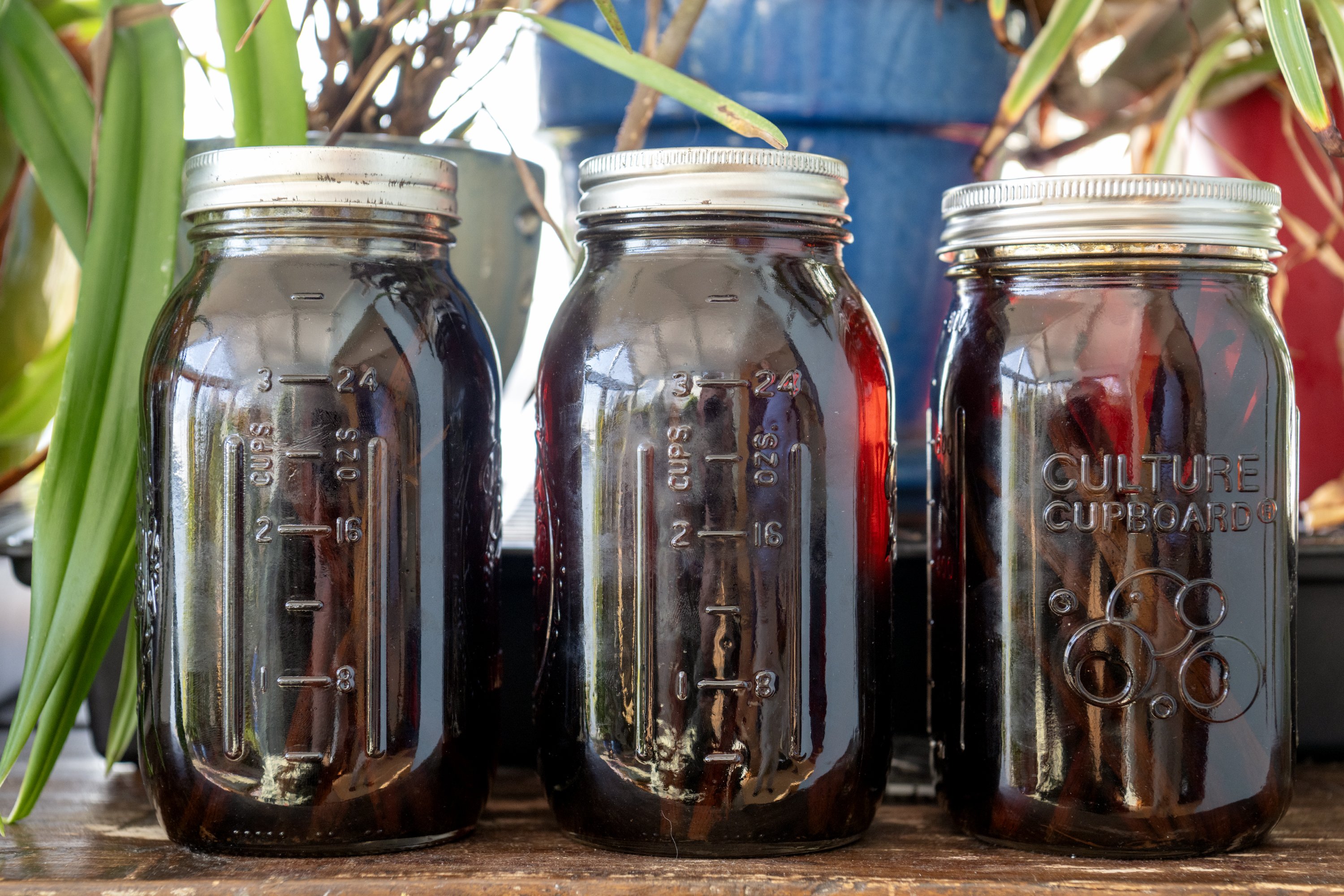
An avid baker, I make my own extract, which is to say I buy vanilla beans at the supermarket, stick them in a jar, pour liquor over them and let the beans infuse.
Compared to David Soley, this makes me a lightweight (my word, not his). Soley is a Portland attorney but more to the point here, a grower of orchids at his home in Freeport, some 200 plants including vanilla planifolia. Of the roughly 25,000 varieties of orchids, the vanilla planifolia species is the only one you can eat. When Soley makes vanilla extract, he doesn’t start at the grocery store. He starts with a blossom.
Though grown around the world — in Tahiti, Madagascar, Indonesia and Freeport, Maine — the orchid is native to Mexico, the only place on the planet besides a corner of northern Guatemala that its only pollinator, the stingless melipona bee, lives. Vanilla planifolia orchids grown anywhere else must be hand-pollinated.
The extraordinarily labor-intensive process accounts for the high price of beans and extract. (At Hannaford in Portland, three Rodelle beans were selling for $18.99 while 4 ounces of the same brand of extract cost $16.29). Well that, and the fact that these orchids bloom just once a year (“if I’m lucky,” Soley said), for just a single day – actually just the morning of a single day.
“If you are out of town and your vanilla blooms, you are in a lot of trouble,” said Soley, who travels a week every month for work. Once his travels took him to Chicago. At the Lincoln Park Conservatory, he happened to notice the vanilla orchids were in bloom.
“And I said, ‘You know guys, you’ve got to pollinate that right this minute.’ And they said, ‘How do you do that?’ And I said, ‘Give me a ladder.'”
Grown out of doors, vanilla planifolia vines can grow to 75 feet tall. (Soley lets his twine around lattice, wood or often ordinary tomato cages.) Soley spent the next 30 minutes hand-pollinating the conservancy’s orchids. It later sent him “a beautiful tree” as a thank-you.
Some people hand-pollinate the orchids with chopsticks. Soley uses a toothpick. He rubs the toothpick inside the blossom to connect the blossom’s stamen and ovaries, then he gently holds the flower closed and rubs it together for a few seconds.
“Most of the time when I pollinate it, it’s successful but not always,” he said. “You don’t really know for a little while.”
The flowers wither and fall off. If fertilization has occurred, a large, green string bean-like pod slowly begins to develop. It can take months. When the tips turn slightly yellow, the pods are ripe.
At that point, Soley picks and “sweats” them, a process that involves putting the pods in freezer bags and sticking them in a cooler with jugs of warm water for a few weeks, changing out the water as it cools. “I’m calling it a cooler, but it’s really a warmer,” Soley said. Travelling in Tahiti, he once saw commercial growers sweat the pods by wrapping them in blankets. Either way, the the idea is to ferment the beans.

“So much of what we eat is fermented,” Soley said. “Vanilla’s fermented. Coffee’s fermented, tea’s fermented, chocolate’s fermented.
“I tried growing chocolate,” he continued. “Don’t try that. That’s too hard. That was a complete failure.”
Soley has always had plants and always liked to garden. “It balances with law actually very, very well. Law is very high stress and lots of screaming and yelling. I’ve done over 200 trials. But when you deal with (plant) people, (they) are nice and polite and quiet. It’s a very different world.”
Through sweating, the vanilla pods lose roughly half their moisture and gain flavor. “If you don’t sweat it right, your flavor is going to be gone, and your fragrance is going to be gone,” Soley said.
Next, Soley dries the beans. The professionals do so under lights. Soley puts the pods from his orchids on racks in the sun for a month or two, turning them occasionally for even drying. “This is where your beautiful green bean is going to turn into the black stringy thing that you buy at the stores,” he said.
The last step is to infuse the beans in alcohol. Soley uses good vodka with a glug of black rum. (Bourbon, brandy and all-rum also work.) He lets the pods infuse for a few months.
“Some of the vanilla I’ve made has not been very exciting,” Soley said, “but sometimes it’s really full of flavor and energy.”
When it’s finally ready, he gives what is in all probability the state’s only blossom-to-extract vanilla to his wife, Debra Coppinger. “Small-batch, home-grown vanilla is the best,” she wrote in an email. “It has an amazing, rich aroma and a heavenly flavor. Baking with it is magic!”
Said Soley: “It’s hard to get vanilla to bloom indoors. Growing vanilla beans in Maine is not cost effective. It’s simply, only fun.”
VANILLA BEAN SHORTCAKES
What type of vanilla extract should you buy if you don’t have a ready-made supply of Maine-made vanilla? I love this description of their various flavors from Alice Medrich’s “Pure Dessert”:
“Tahitian has the most floral aroma, like exotic tropical flowers, with flavor notes of cherry, licorice and raisins. It is a lovely flavor to feature rather than use as a background flavor in cookies or custard or ice cream. Mexican vanilla has some aromas of rum and caramel and very ripe fruit. Bourbon vanilla (also called Madagascar)…is most difficult to describe because it smells and tastes like…well, vanilla.”
This recipe for shortcakes, from “Standard Baking Co. Pastries” by Alison Pray and Tara Smith, uses vanilla in two ways, as both extract and as bean — and it calls for a lot. They recommend serving the shortcakes with local berries and freshly whipped cream. Use the spent pods to make your own extract or grind pieces of the pod with your coffee beans in the morning.
Makes 12 shortcakes
2/3 cup buttermilk
1/3 cup half-and-half
1 egg
1 tablespoon plus 2 teaspoons vanilla extract
1 vanilla bean
3 ¼ cups all-purpose flour
1/4 cup plus 1 tablespoon dark brown sugar
1 teaspoon salt
1 tablespoon plus 1 ¼ teaspoons baking powder
10 tablespoons unsalted butter, cut into 1/2-inch cubes, chilled
1/4 cup coarse white cookie decorating sugar
Position a rack in the center of the oven and preheat the oven to 375 degrees F. Line a baking sheet with parchment paper.
In a small bowl, whisk together the buttermilk, half-and-half, egg and vanilla extract. With the tip of a sharp knife, split the vanilla bean lengthwise. Scrape the seeds into the egg mixture and stir together.
In a large bowl, whisk together the flour, brown sugar, salt and baking powder.
Add the cubed butter and work it into the flour mixture with your fingertps until a few pea-size chunks of butter remain.
Add the egg mixture to the flour mixture and combine them using a fork or your hands until the dry ingredients are fully moistened.
Using an ice cream scoop or a 1/4-cup measure, gently fill teh scoop and drop the mounds, evenly spaced, onto the baking sheet. Sprinkle each one lightly with decorating sugar.
Bake for 22-24 minutes, rotating the baking sheet halfway through for even baking. The shortcakes will have golden spots and feel firm in the center.
Remove from the oven and transfer the shortcakes to a wire rack to cool slightly. These are best served while still warm from the oven.

We invite you to add your comments. We encourage a thoughtful exchange of ideas and information on this website. By joining the conversation, you are agreeing to our commenting policy and terms of use. More information is found on our FAQs. You can update your screen name on the member's center.
Comments are managed by our staff during regular business hours Monday through Friday as well as limited hours on Saturday and Sunday. Comments held for moderation outside of those hours may take longer to approve.
Join the Conversation
Please sign into your CentralMaine.com account to participate in conversations below. If you do not have an account, you can subscribe here. Questions? Please see our FAQs.