

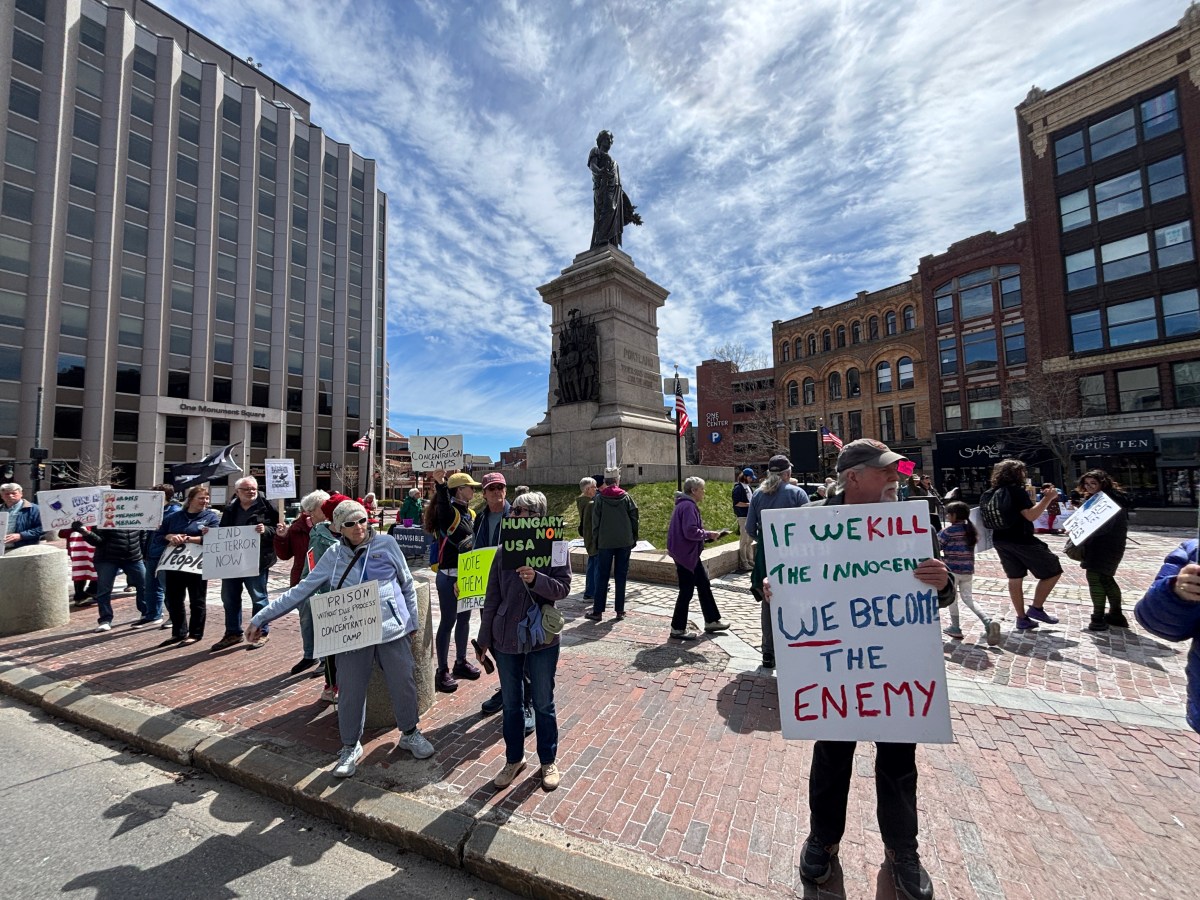
PORTLAND — Protesters gathered in Monument Square on Saturday to call for the release of Olivia Mabiala Andre, 19, who was arrested alongside her family by U.S. Immigration and Customs Enforcement in November.
An estimated 80 people showed up to event, which is held weekly by Indivisible and aimed at resisting myriad policies and decisions of President Donald Trump and his administration.
The protest was just the latest addition in a pressure campaign aimed, organizer Jacob Ellis said, at bringing continued attention and “consistent public outcry” to Andre’s case.
The 19-year-old is being held at an ICE facility in Dilley, Texas. Her mother, Carine Balenda Mbizi, and two high school-age siblings were released from the facility last month.
Her younger brother, Joel Andre, was warmly welcomed back to Portland’s soccer fields upon his release.
The family, originally from the Democratic Republic of the Congo, was ordered to leave the country in February 2025 after they crossed into the U.S. illegally in 2022, according to U.S. Customs and Border Protection.
Andre’s continued detention has previously drawn calls for her release from figures including U.S. Rep. Chellie Pingree, a Maine Democrat, and children’s YouTube star Rachel Griffin Accurso, known as Ms. Rachel.
At the protest Saturday, Kirsten Cappy, speaking on behalf of the immigrant advocacy group Project Relief Maine, said Andre has lost 20 pounds while in custody and cannot see because she doesn’t have access to contact lenses.
“She’s desperate to come home,” Cappy said.

Comments are not available on this story. Read more about why we allow commenting on some stories and not on others.
We believe it's important to offer commenting on certain stories as a benefit to our readers. At its best, our comments sections can be a productive platform for readers to engage with our journalism, offer thoughts on coverage and issues, and drive conversation in a respectful, solutions-based way. It's a form of open discourse that can be useful to our community, public officials, journalists and others.
We do not enable comments on everything — exceptions include most crime stories, and coverage involving personal tragedy or sensitive issues that invite personal attacks instead of thoughtful discussion.
You can read more here about our commenting policy and terms of use. More information is also found on our FAQs.
Show less