


SACO BAY — The sun broke through the clouds on Thursday as a small crew of students from the University of New England hauled up about a thousand pounds of brown kelp. Over the next week, they will turn that bounty into about 5,000 salty-sweet nutrition bars.
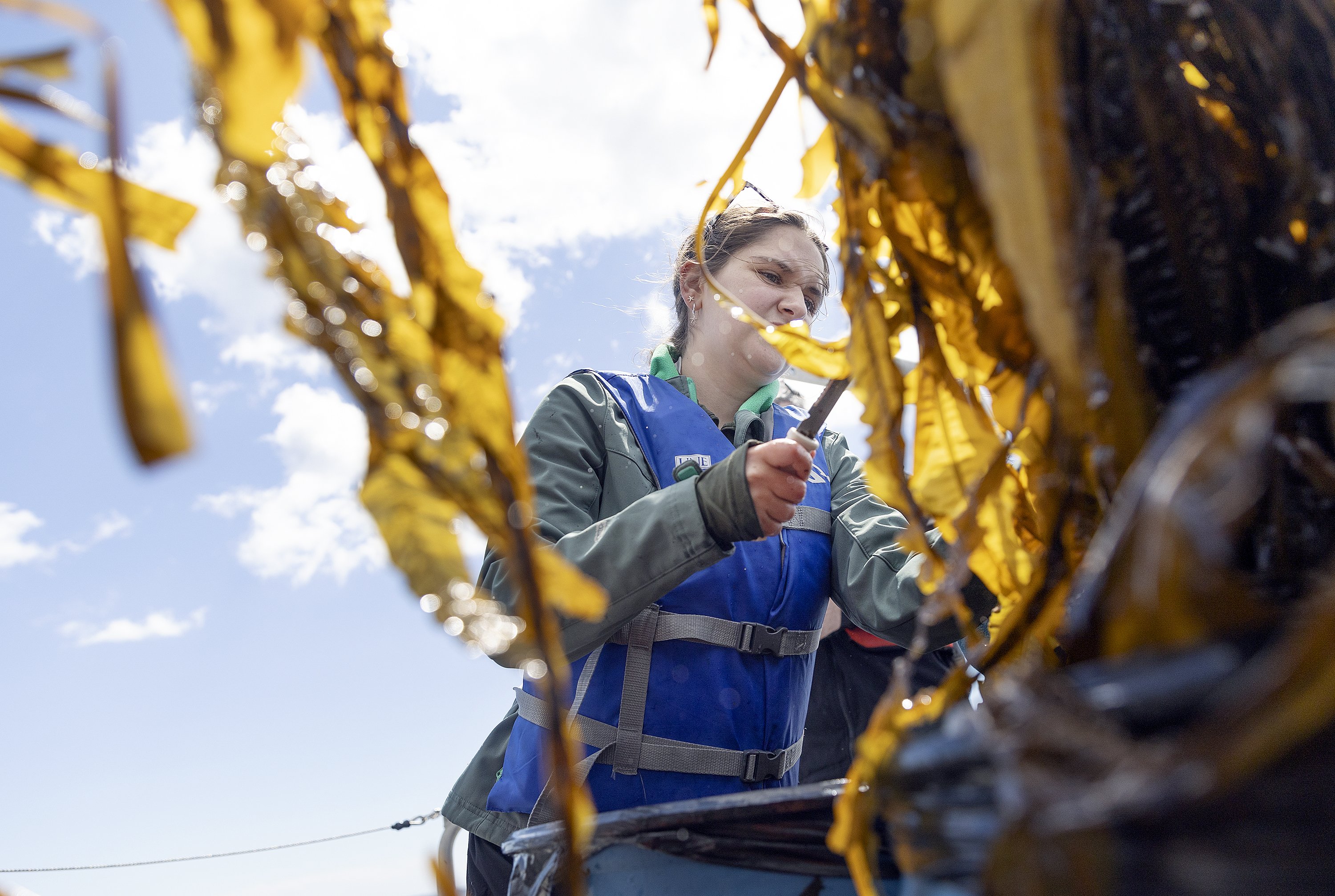
“This is what I came here to do,” said Julianne Manlove, a 19-year-old freshman marine science and biochemistry major from Rhode Island. “Learning about sea farming is one thing. Learning to do it, that’s just so much better. This was easily the highlight of my year.”
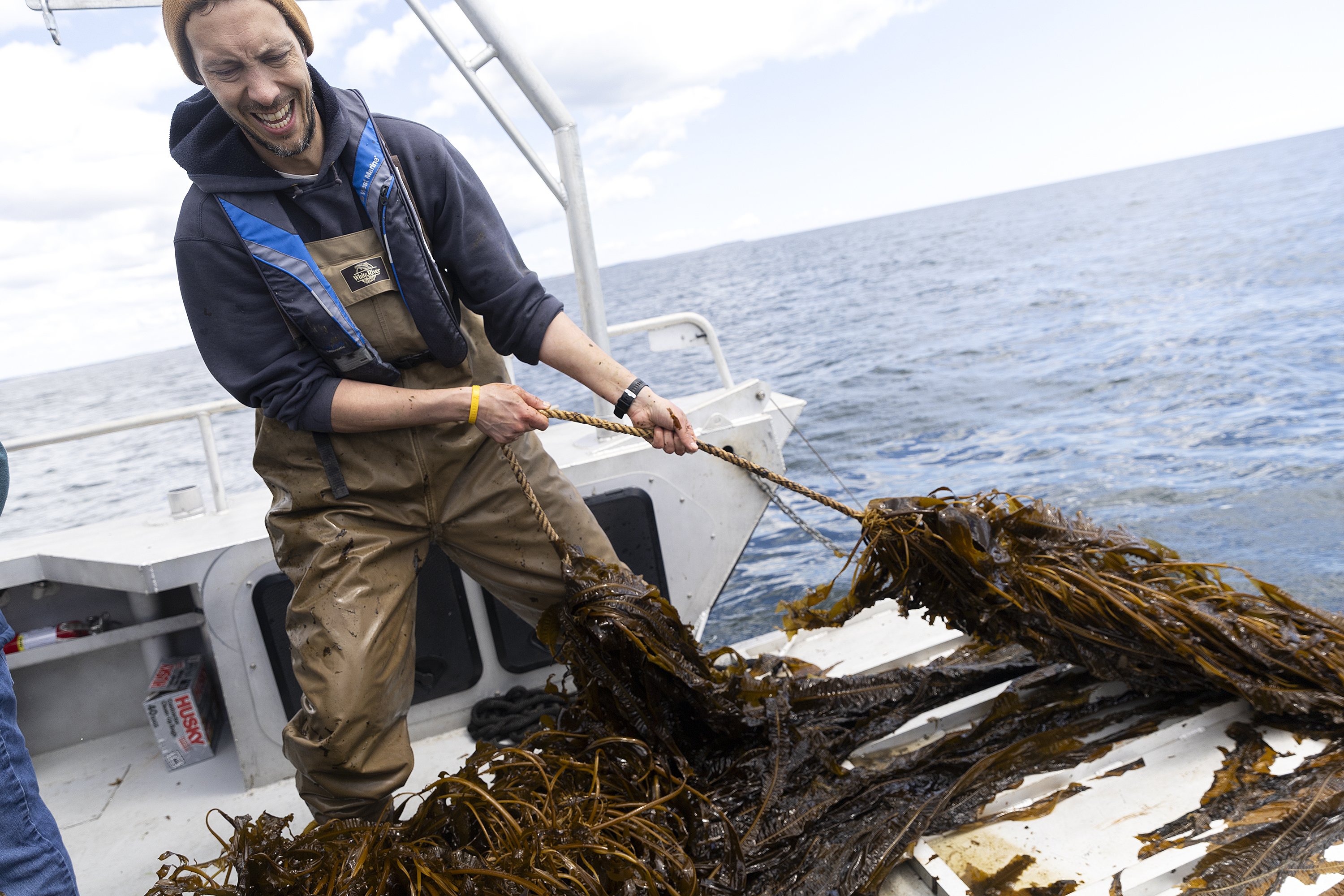
The first kelp harvest of the season proved so bountiful that it was almost unmanageable. The submerged longlines were heavy with the “skinny” seaweed — long, glistening ribbons that had grown far more densely than researchers anticipated.
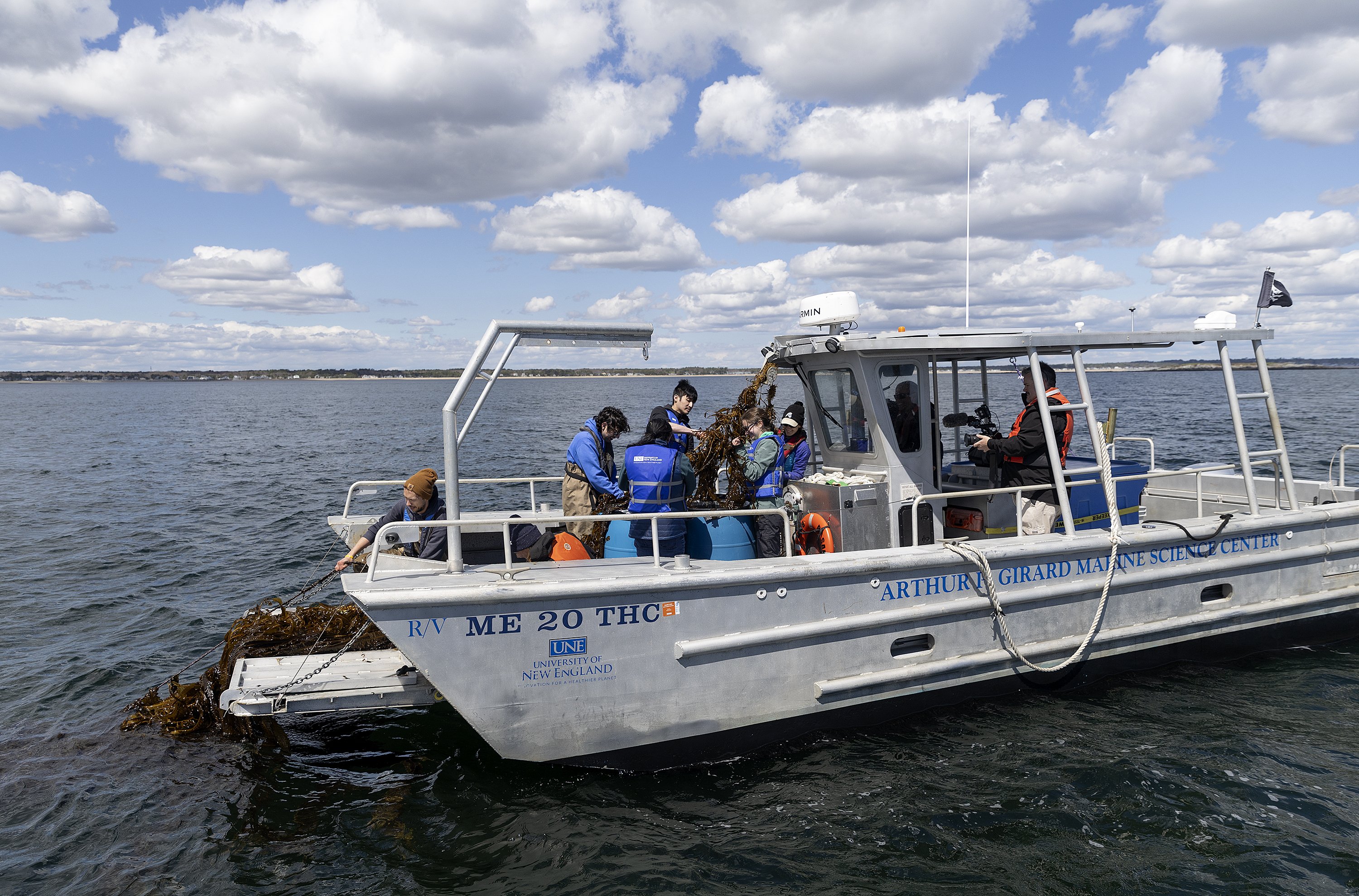
In some sections, the growth was so thick that the hold-fasts were invisible, and the sheer weight of the 100-foot lines meant they could not be lifted by hand alone. “We’re on the boat saying, ‘Oh, my gosh,'” said Matt Duddy, the senior marine science tech who runs the university sea farm.
The most significant part of this harvest is not the weight; it’s the destination. At least a quarter of it will be cleaned, cooked and made into SeaMade nutrition bars, a student venture aiming to turn a niche aquaculture crop into a cafeteria staple.
The project is an experiment in vertical integration for Maine’s burgeoning seaweed industry, which harvested 1.5 million pounds of kelp in 2024 but struggles to find a footing in the market. Manlove is not just learning to slice seaweed; she is dipping her toes into a new blue economy.
Finding a commercial application for kelp remains the industry’s hardest hurdle. Kelp’s market value fluctuates wildly. In 2024, 29 kelp harvesters earned just over $1 million, according to the most recent state data.
SeaMade was originally a private business, but its founders donated the company to UNE in 2024 after realizing they could not bridge the gap between handmade production and the massive industrial scale required for profitability.
The student-run enterprise produces bars flavored with locally sourced honey, cranberries, blueberries and, soon, dark chocolate. The business plan is only possible because the kelp is free, grown on UNE’s 4-acre experimental lease northeast of Ram Island.
Even with the donated kelp, and the free student labor often involved in the harvest, each bar costs about $2.25 to make, according to university officials. Because the kelp is grown in UNE’s experimental lease, it cannot be sold — so the profitability of the enterprise is currently moot. The snack bars are distributed for free in the cafeteria and at events.
That changes if the state Department of Marine Resources grants UNE’s bid to convert the experimental lease into a commercial one, which would allow students to sell the bars. The university is in the final stages of that process, Duddy said. It has already held a public hearing and is awaiting a Department of Marine Resources site visit, he said.
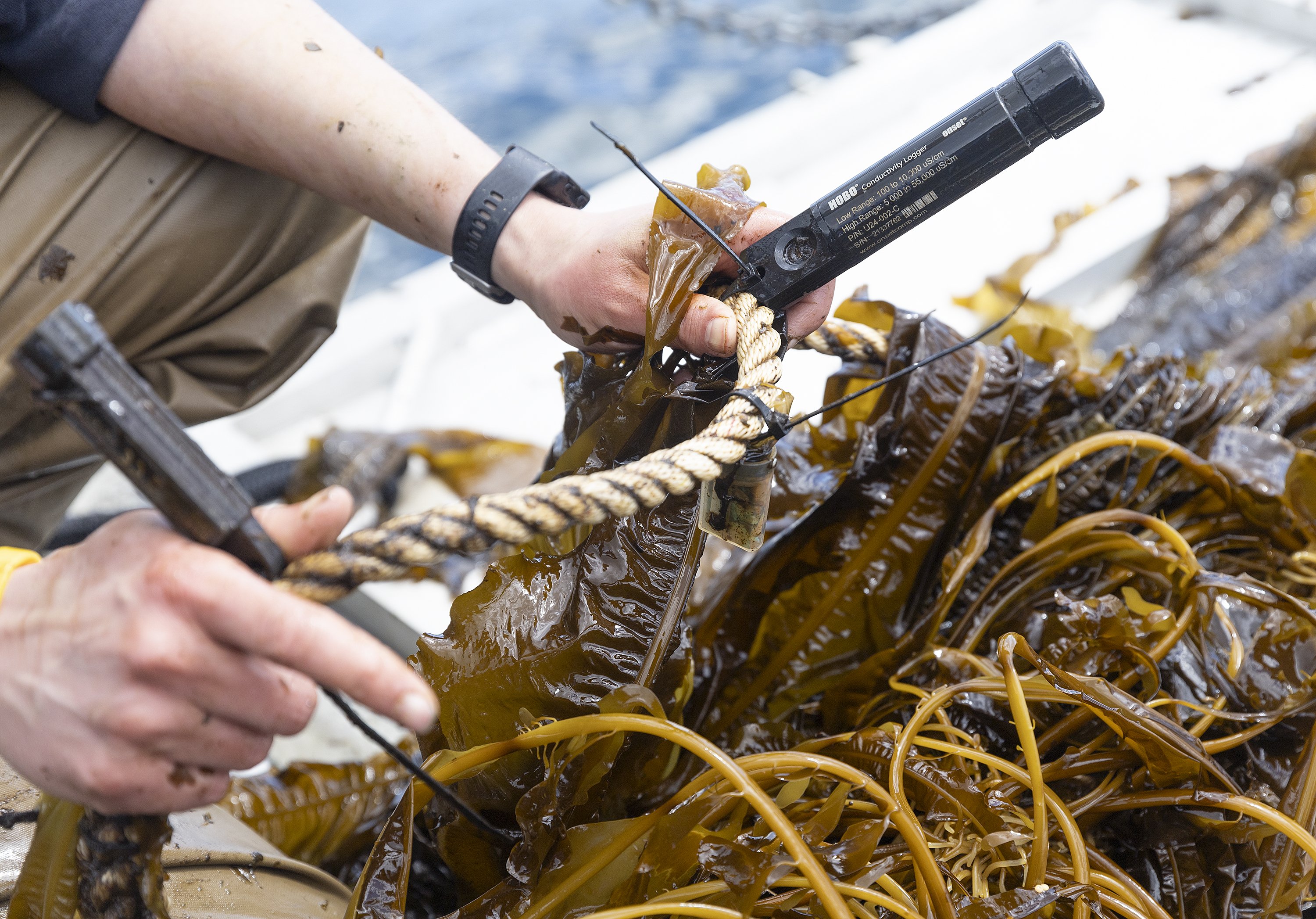
For now, the bars are more about student recruitment, consciousness-raising and research into kelp’s potential for reducing the acidity of the marine environment as they are about revenue, said Cameron Wake, the director of UNE’s Center for North Atlantic Studies.
“It’s a great way for us to show off our aquaculture program,” said Jasmin Townsend-Ng, a 21-year-old senior who is graduating next weekend. “We have had an overwhelming response. It’s been fun to get students from beyond the science majors involved.”
As for the taste? Sweet because of the honey and berries, Townsend-Ng said, but its salty tang is the dominant flavor. A person eating a SeaMade bar will never forget that its major ingredient came straight from the ocean, she said.
On the deck of the Sakohki, UNE’s 31-foot research vessel, the air turned cool and breezy any time the sun slipped behind a passing cloud as program leaders talked about the volatility of a kelp market. The lingering chop from overnight storms kept the crew on their toes.
Two hours later, as the boat headed back up the Saco River, the students were already looking toward the next step: transforming the 1,000 pounds of wet kelp into 100 pounds of the dried material needed to press a run of 5,000 bars.
That was their next lesson, Duddy said: the hardest work often begins after the harvest is over.

We invite you to add your comments. We encourage a thoughtful exchange of ideas and information on this website. By joining the conversation, you are agreeing to our commenting policy and terms of use. More information is found on our FAQs. You can update your screen name on the member's center.
Comments are managed by our staff during regular business hours Monday through Friday as well as limited hours on Saturday and Sunday. Comments held for moderation outside of those hours may take longer to approve.
Join the Conversation
Please sign into your CentralMaine.com account to participate in conversations below. If you do not have an account, you can subscribe here. Questions? Please see our FAQs.