

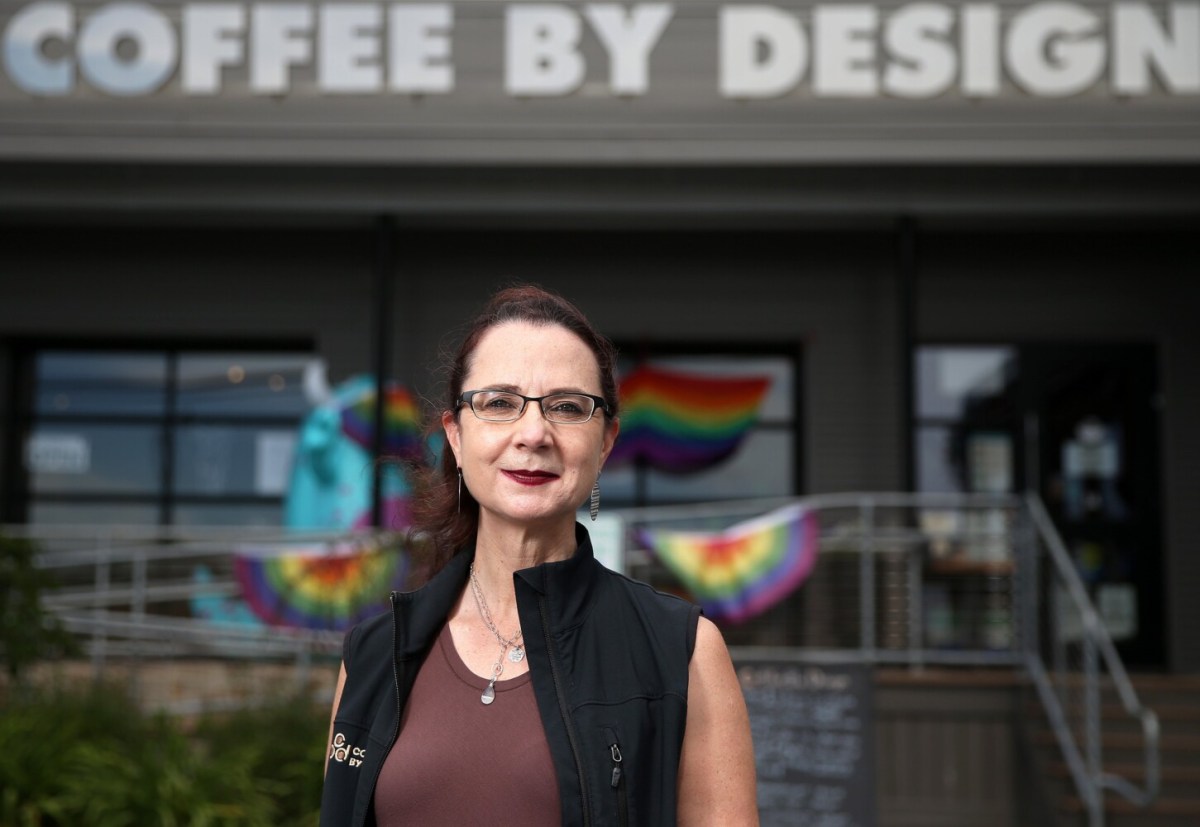
Over its 30-plus years, Coffee by Design has made no secret of its politics. The business has taken unambiguous public stands on issues from AIDS to immigration to women’s reproductive health.
“I think it’s really important that we are transparent with our team, what we believe in, and also our customers,” owner and co-founder Mary Allen Lindemann says. “I believe every choice we make as a business is a political statement, whether you view it that way or not.”
Last winter, the coffee retail and wholesale business was among the many Portland food businesses that affixed placards to their windows and doors making their views on U.S. Immigration and Customs Enforcement clear. Beyond the immediate message from an industry that employs many immigrants, the signs were the latest evidence of a sensitive question that even less activist restaurant owners are also asking themselves: How to navigate politics in polarizing times.

Restaurants are grappling with such issues as whether to post overtly political signs at their businesses, hold campaign fundraisers or air their opinions on social media.
Self-described “conservative-leaning” Steve DiMillo, manager of DiMillo’s on the Water in Portland, takes a very different tack from Lindemann.
“Everybody’s a customer,” he said. “The way we treat things like this is, just stay neutral. Be right in the middle. Don’t be ruffling anybody’s feathers, because whether they lean left or right, I need them to be comfortable.”
Few understand the risks of mixing politics and the plate better than Anne Rutherford (formerly Verrill), proprietor of Foreside Tavern in Falmouth. A decade ago, she caused a firestorm when she wrote on Facebook that supporters of assault weapons were unwelcome in her restaurants; at the time, she also owned the now-shuttered Grace in Portland.
Rutherford was bombarded with threats from across the country. She was inundated with fake reservations. Someone left bullets, “literal bullets,” on a table at the tavern for a terrified server to find. But “really rough” as that experience was, her belief that restaurants need to participate in the political sphere is unshaken.
“Everybody’s solutions might be different,” Rutherford said, “but everybody should be talking about getting us out of this quagmire we’re in.”
IT’S COMPLICATED
There are many shades of gray between the two poles.
Chef/restaurateur David Turin, of David’s in Portland and David’s 388 in South Portland, says he’s personally carried signs in local No Kings marches. A longtime board member of HospitalityMaine, he’s known for his liberal views.
But “when it come to the business, I’ve been very agnostic,” he said. “You keep your political views to yourself and we’ll keep ours to ourselves. I think that’s probably a view that is shared by an awful lot of restaurateurs.”
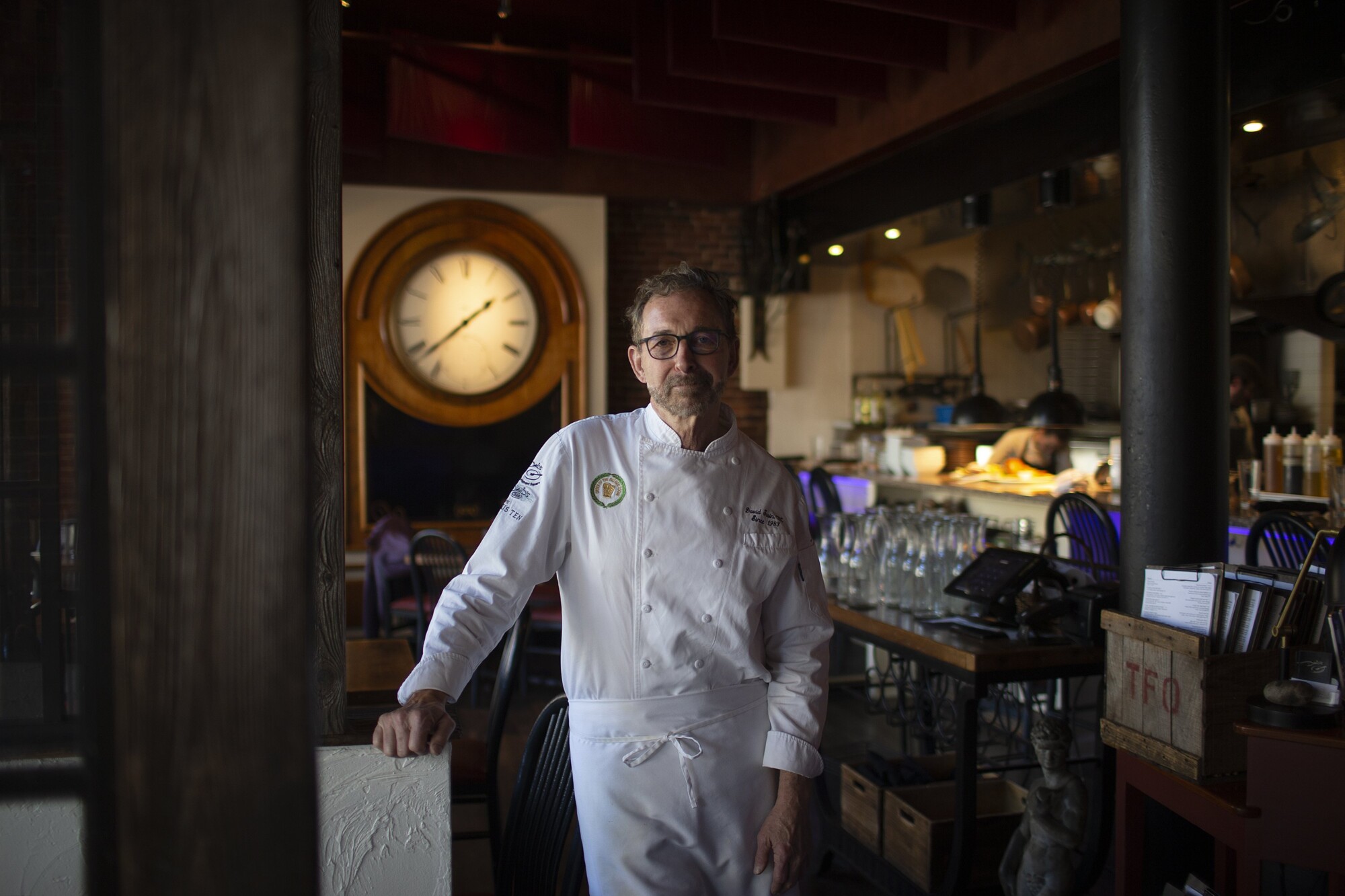
The division troubles him, though. When Turin opened David’s in 1992, the margins were good. The pains of deep economic uncertainty, ever increasing food and labor costs, and spiteful social media attacks lay in the future.
“You could sort of arrogantly think ‘Oh well, if we lose 20% of our customers, who cares?'” Turin said. “And then as time goes on and there’s more and more and more pressure on your business, you get more cautious because, well, I can’t afford to lose a single customer for any reason at this point.”
The business he stands to lose is his, but his sense of responsibility to the roughly 60 people that work for him weighs just as heavily.
“I’d like to be able to be just rawly, unbiasedly principled at absolutely every single thing,” Turin said. “And at the same time, I’m trying to keep my business open. You’re in this dichotomy of feelings that I’ve found very, very difficult to navigate personally.”
For Rutherford, there’s scant distinction between her personal and professional selves. She’s run the tavern she founded in her own community for more than 20 years. Her children work alongside her. She sees the place as an extension of herself.
“My business model has always been this is who I am.” And, as she put it in an eloquent TED talk in 2016, “I do not have to stay silent because I own a business. My voice is not mute because I serve you the food that you order.”
“I’m going to speak out, and if you don’t like it and if I suffer, then that’s the risk that I’ve taken,” she said earlier this month.
GEOGRAPHY IS DESTINY
For Eliza Watson and Cindy Langley, who operate Two Mums Kitchen in Gray, geography plays a role. The town’s name may be Gray, but as the pair readied to open the cafe, established businesses there advised them its politics are purple.
So while the back wall inside Two Mums Kitchen sports a painted rainbow with the words “Variety is the spice of life,” the exterior, in a white, 100-year-old clapboard building on Main Street, is deliberately apolitical.
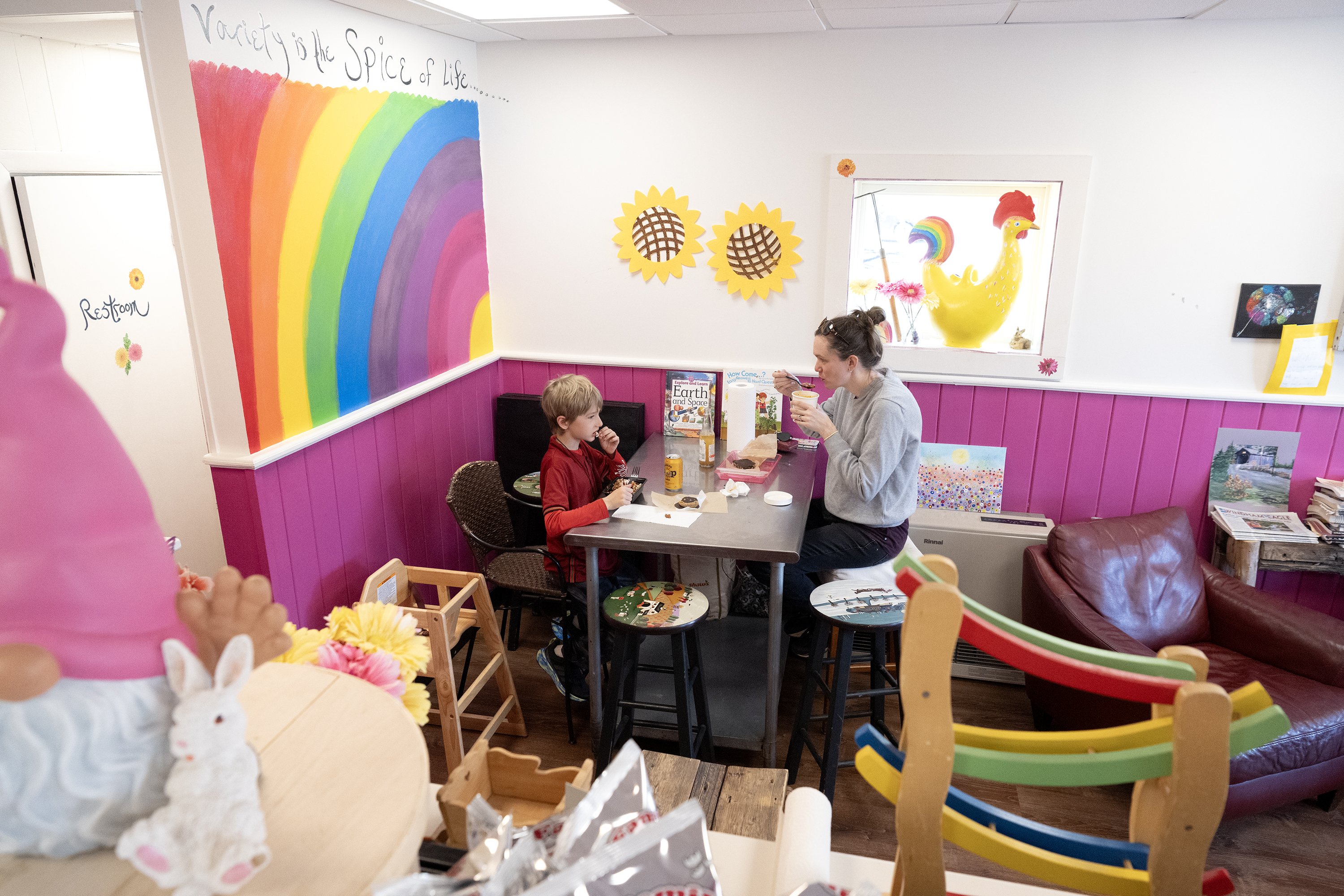
“We want to be a place that’s just about the food, right? Food for everyone. Come on and get your lunch. We don’t care about your politics,” Watson said. “We have some customers who are very conservative, and they are lovely people. And we have customers who are very liberal and they are lovely people.”
Geography is also a consideration for Megs Senk, who owns St. George Pizza in Warren with her husband. As a small business in a small town far from progressive Portland, she serves a wide cross-section of customers. Sure, she could proclaim liberal views on social media, but the question she wrestles with is “Is posting something on Instagram more impactful than cultivating a space where people from differing political views can come together?
“I’m not saying we’re having kumbaya circles every Friday night,” she continued, “but I am saying I know for a fact some of my neighbors have certain political beliefs and they’ll be sitting next to the most liberal people I know — and they will be talking. Even just that face-to-face interaction is something that is really rare these days, and I hold my breath when it happens.”
POLITICAL FRAMEWORK
Customers at Chaval or the Ugly Duckling in Portland are there for a good meal and attentive service, co-owner Ilma Lopez said. “And my job is to cook the best we can. It’s not to talk to you about what I believe or what I don’t believe. We’re just two humans. I’m cooking for you and you’re eating the food. That’s it.”
That said, she’s flown pride flags and posted anti-gun and anti-ICE signs at her restaurants. As an American citizen who grew up in Venezuela, Lopez understands firsthand the issues immigrants face, and she speaks about them frequently and candidly. To her, though, these things are not political. They’re safety concerns. As a restaurant owner, she sees part of her job as protecting her staff, be it from burns, sharp knives and slippery floors in the kitchen or ICE agents at the door.
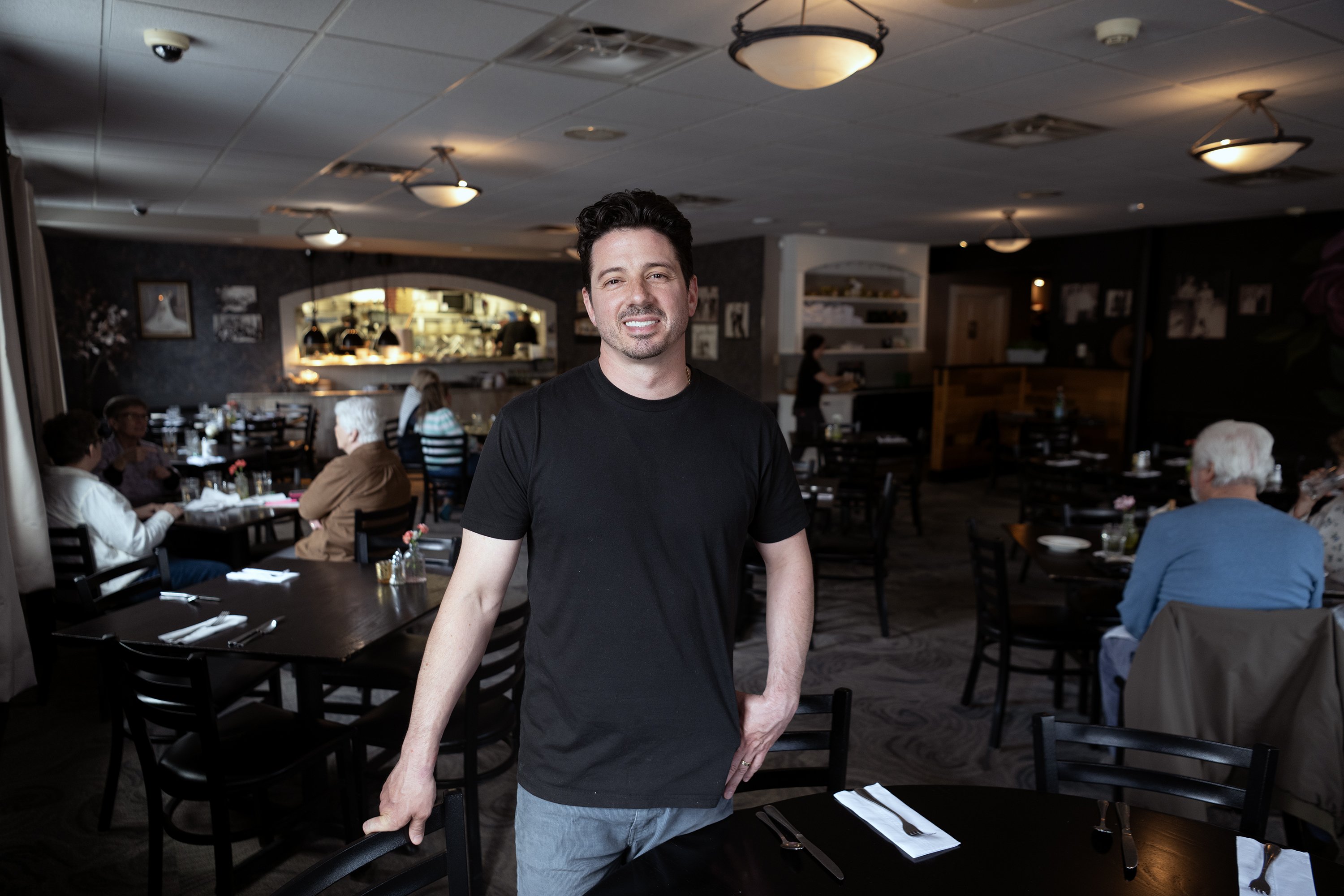
She defines politics as endorsing a political candidate or hosting a campaign event, things, she said, she will never do at her restaurants. Something she has decided to do? Run for City Council from District 5. “However, I want to keep the restaurant as separate as possible,” Lopez said.
Not much more than a mile away in the Old Port, DiMillo, who himself ran for city’s Charter Commission in 2021, sees it differently. The restaurant’s most recent political event, DiMillo said, was a fundraiser for Republican U.S. Sen. Susan Collins. “Their money’s just as good as anybody else’s,” he said, adding that any candidate from any party is welcome to rent the space.
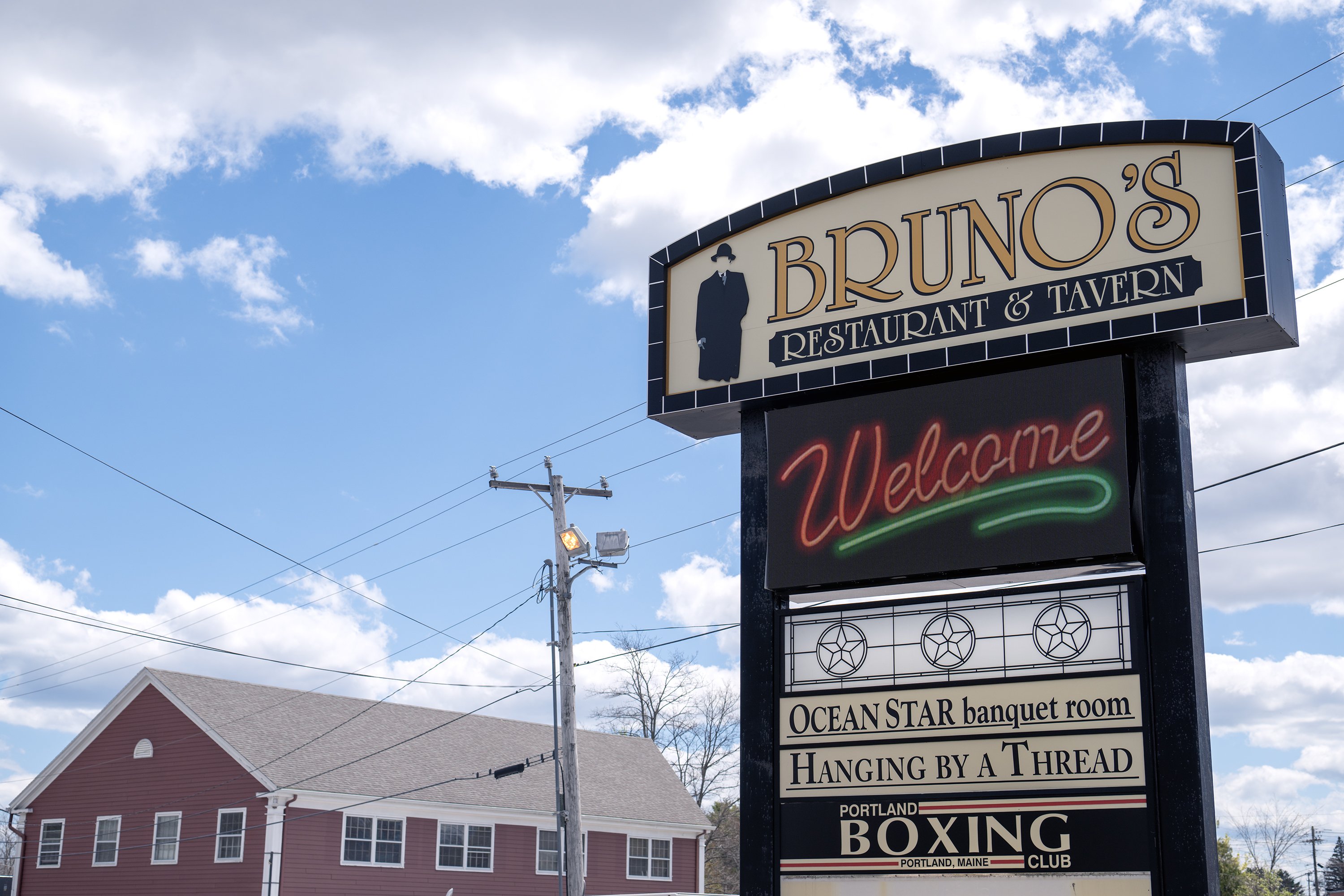
Likewise, Bruno’s Restaurant & Tavern in Portland’s Morrills Corner has rented out its banquet room to the local Republican Party on occasion. While the Democrats have not yet followed suit, “if they wanted to, absolutely,” General Manager Danny Napolitano said of his family business.
Lindemann threads the needle carefully. When Barack Obama ran for president, her staff was 100 percent on board, she said. More recently, they were divided between Gov. Janet Mills and oyster farmer Graham Platner for U.S. Senate. So she held a meet-and-greet for Mills after store hours to convey that the endorsement was her personal choice. (Mills has since dropped out.)
OFFICE POLITICS
Lindemann and Rutherford say they are careful to discuss the stances they plan to take with their staffs before going public, since it’s the staff who will likely be on the frontlines of any fallout. It’s a lesson Rutherford learned from experience. During the assault rifle controversy, some of her employees quit out of fear. Now she talks with them about what to expect.
Lindemann brings up her activism during the hiring process. “I just want to make sure you understand our core values as a business,” she’ll tell potential hires. “If there are any issues, no judgment, but this would not be a good match.”
As someone in the coffee business, who buys her beans in Africa and Central and Latin America, she feels a special responsibility to take stands. She’d like her employees, and customers, to understand that.
“I think that people don’t realize coffee in itself is a world in a cup. It’s more than just a transaction. So when people say, ‘I just want a cup of coffee,’ you’ve just joined the journey into a global network. And the majority of (coffee producers) don’t look like us.”
Lindemann recalled challenges at the workplace with an employee who refused to touch any coffee carafes or brews that were going to Planned Parenthood events that the business supported, and another who ignored COVID restrictions.
For his part, Turin found himself in a surprising situation once, defending an employee who supported President Donald Trump from other staffers who didn’t.
“I thought ‘Well, if I’m going to stand for this idea that we’re all tolerant of everyone’s views, then I have to stand for a view that I don’t believe in myself,'” Turin said. “It’s a problem with democracy isn’t it? You have to embrace free speech, right? You have to allow stuff that you don’t believe in sometimes.”

We invite you to add your comments. We encourage a thoughtful exchange of ideas and information on this website. By joining the conversation, you are agreeing to our commenting policy and terms of use. More information is found on our FAQs. You can update your screen name on the member's center.
Comments are managed by our staff during regular business hours Monday through Friday as well as limited hours on Saturday and Sunday. Comments held for moderation outside of those hours may take longer to approve.
Join the Conversation
Please sign into your CentralMaine.com account to participate in conversations below. If you do not have an account, you can subscribe here. Questions? Please see our FAQs.