


Swim advisory warnings are the front line of Maine’s voluntary public health effort to protect swimmers from microscopic pathogens that can thrive in our warmer, wetter climate and make beachgoers sick.
Maine’s clean coastal waters support a $9 billion tourism industry. However, heavy summer rains frequently turn popular beaches into collection points for agricultural runoff, pet waste, and sewage overflows, according to data from Maine Healthy Beaches program.
More than 10 beaches in Maine were deemed unsafe for swimming last week due to high bacteria levels, from Goochs Beach in Kennebunk, which tested more than double the federal safety limit, as far north as City Park in Belfast, which tested almost 40 times the safety limit.
As of Thursday, all of Maine’s monitored saltwater beaches were considered safe for swimming. Data is updated on a rolling basis on the state Department of Environmental Protection website.
A swim advisory is a recommendation to stay out of the water because the bacteria levels exceed state and federal safety thresholds. These indicator bacteria suggest the presence of pathogens that can cause gastrointestinal distress, respiratory issues or skin rashes.
But knowing how many people actually get sick from those pathogens is difficult because people rarely connect their distress to water exposure, said Alex Laddyer, the coordinator of the healthy beaches program.
“Most folks go to the beach all day, and (if) they don’t feel so good that night, they’ll attribute that illness to the taco stand that they went to on their way home, or assume they got too much sun,” Laddyer said. “They rarely connect the dots.”
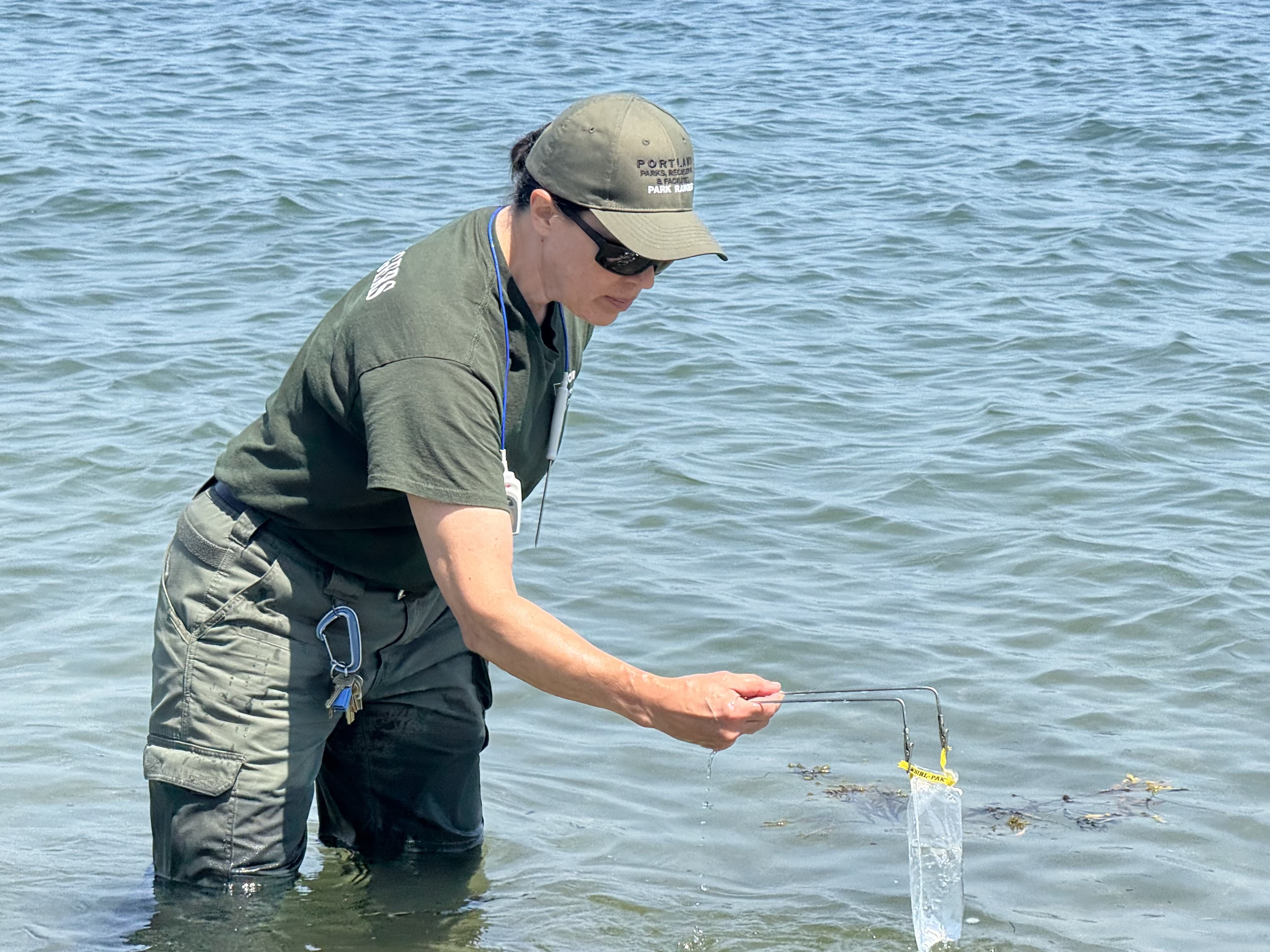
When it rains, water rushes over the landscape, picking up waste from wildlife and pets, and carrying it through storm drains and rivers into the surf, Laddyer said. In older cities, aging septic tanks and leaking sewer pipes can also contribute to the contamination.
That dynamic means annual water safety trends are inextricably tied to the weather. Over the last decade, the frequency of Maine swim advisories mirrored rainfall patterns, with more advisories issued during wetter years and fewer during drought years, data shows.
In 2025, a year gripped by drought, 4.3% of water samples taken at Maine beaches went over the safety limit. In 2023, a wet year with a lot of storms that dumped an inch or more of rain in a single day, Maine’s failure rate hit 12.1%.
While there is no straight-line trend, Laddyer said “warming temperatures and wet weather” typically align with unsafe bacterial spikes across not just in Maine, but across the rest of New England as well. The Environmental Protection Agency classifies bacterial spikes as a national area of concern.
Climate projections suggest the battle for clean swimming water is only beginning. The Maine state climatologist, Sean Birkel, said the latest models suggest an average increase of two to three extreme precipitation days a year by midcentury, with some parts of Maine facing more.
In 2025, 10 Maine beaches were found unsafe for swimmers in at least 10% of the days they were sampled. Riverside Beach in Ogunquit had a 31.6% failure rate, Lagoon Beach at Reid State Park in Georgetown was at 25% and Goodies Beach in Rockland was at 16.7%.
The swimming areas with the most bacterial warning days were Riverside (16 days), Little Beach in Ogunquit (14 days), Goochs Beach in Kennebunk (13 days) and Goose Rocks Beach in Kennebunkport (12 days).
The science of testing is a race against time. Every week, a small army of 200 volunteers and staff wades into the surf with sterile bags used to grab water samples from a depth of 2 to 3 feet. The samples are put in coolers and rushed to one of four regional labs.
At the labs, the samples are mixed with a substance that acts as food for the bacteria as they incubate overnight. But that substance also causes the bacteria — enterococci for salt water — to glow, which makes them easier to count the next day, Laddyer said.
The threshold for a swim advisory — set by the U.S. Environmental Protection Agency — is 104 enterococci cells per 100 milliliters of water, Laddyer said. But it is up to the 60 cities and towns that participate in the Maine Healthy Beaches program to issue the advisory.
From beach to bench, the testing method takes about 24 hours, which means swimmers are usually notified of yesterday’s risks, Laddyer said. Faster methods do exist, including predictive real-time modeling, but those are very expensive.
A $258,000 federal grant covers the state’s lab testing costs.
The state program only coordinates saltwater testing, Laddyer said. Local municipalities manage freshwater beaches, where swim safety is assessed using E. coli as an indicator bacteria and 235 colonies per 100 milliliters of water as the safety threshold.
Like saltwater, however, there is no mandatory statewide structure for freshwater closures.
“High activity in beach water, including both beachgoers and waterfowl, can raise E. coli levels,” said Michelle Clements, a spokeswoman for the Portland Water District, which is the regulatory agency that tests Sebago Lake.
To stay safe, public health experts suggest people stay out of the water for at least 24 to 48 hours after a heavy rain. Swimmers should shower before swimming, ensure children wear swim diapers, pick up after their pets and avoid feeding birds.
These steps are cheap and easy ways to reduce direct exposure and contamination, but won’t eliminate the problem. Environmental groups say implementing regulatory measures to limit upstream runoff and replace aging septic and sewer systems is a bigger challenge.
“We absolutely support more funding to upgrade old pipes and infrastructure,” said Casco Baykeeper Ivy Frignoca, whose group, Friends of Casco Bay, monitors the health of area waters. “But it’s not an easy or cheap process.”
South Portland has been trying to resolve the water quality problems at Willard Beach for more than a decade, lining stormwater pipes and conducting dye and smoke tests to track water flow and find leaks. An outfall pipe that drains 117 densely populated acres is the biggest culprit.
For now, the best defense for a safe summer swim remains a quick check of the state’s digital beach dashboard before the first dive of the day. People can register for emailed alerts for swim advisories for favorite beaches.

We invite you to add your comments. We encourage a thoughtful exchange of ideas and information on this website. By joining the conversation, you are agreeing to our commenting policy and terms of use. More information is found on our FAQs. You can update your screen name on the member's center.
Comments are managed by our staff during regular business hours Monday through Friday as well as limited hours on Saturday and Sunday. Comments held for moderation outside of those hours may take longer to approve.
Join the Conversation
Please sign into your CentralMaine.com account to participate in conversations below. If you do not have an account, you can subscribe here. Questions? Please see our FAQs.