


Once, when I was very young and very in love, I spent Christmas with my sweetheart, Bryan, and his family at their pony farm outside Olympia, Washington. Bryan called it “the farm,” but that was probably a stretch. The family owned about 50acres and a dozen or so half-wild miniature ponies; I got a pony as a Christmas gift on the condition that “Bub,” as I named him, live out his life on the farm. After the original farmhouse burned down, Bryan’s father had built their new house on weekends and late nights, plank by plank and nail by nail.
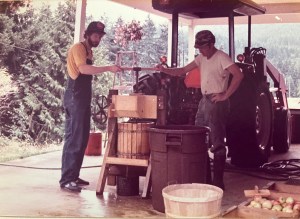
I was 19 at the time and had grown up in suburban Philadelphia with backyard barbecues, ballet lessons and shopping malls. Farm life was new and exciting to me. One day, Bryan’s dad, whom I adored, announced that we were going to make apple cider. Bill picked all the apples from trees on the farm. He hauled them to the carport, set up the press, and hoisted the apples into the press. He invited me to give it a turn. I cranked it a turn or two and pressed out a dribble of cider. “It’s so easy!” I remarked, delighted.
I thought of that long-ago day when I showed up at the kitchen of Oun Lido’s, a Cambodian restaurant on Market Street in Portland on a recent afternoon, to get a lesson from chef/owner Bounahcree “Bones” Kim on how to make spring rolls, one of 12 items on my culinary bucket list for this year. I’d invited myself — inserted myself might be more accurate — into the busiest time of a coastal Maine restaurateur’s year. But the unfailingly gracious Kim acted as though he had no idea the clock was ticking toward the dinner rush.
Spring rolls are easy, Kim assured me when I arrived. Well sure, if someone else has already done all the work!
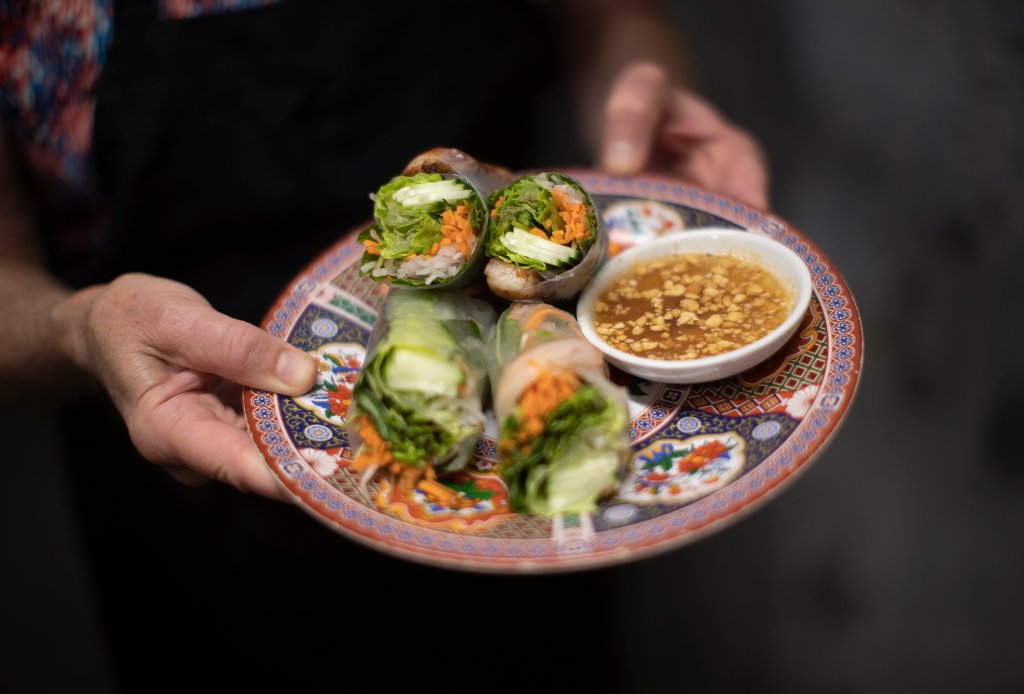
Arrayed before me on a clean wooden counter in an orderly fashion were hotel pans holding cool water; julienned carrots; julienned daikon; elegantly sliced, unpeeled cucumber; pea shoots; and mint, basil and shiso leaves, already washed and separated from their stems. Leaves of red leaf lettuce; large cooked shrimp, which Kim proceeded to cut in half; chunks of braised pork belly, a package of Three Ladies Brand rice paper wrappers (the best, Kim said); and a container of house-made fish caramel completed the mise en place. All that was left for me to do was dip the rice paper in the water to make it pliable, layer on the ingredients, and roll.
Kim conceded work was involved when I pointed out that all the dicing, slicing and braising had been done for me, “but each component is easy in itself,” he maintained. And he was right about the stuffing and rolling — it was easy, or easy enough, once I got the hang of it. My first attempt took too long, so the rice paper stuck to the counter and the roll itself turned out large, lumpy and hoagie-sized. Kim, ever polite, said he likes to make the rolls on the large size himself: “I want to make it count.” My second attempt, while the spring roll lacked the military corners and taut precision of a Oun Lido’s roll, was already a big step up.

Kim, who grew up in Portland, the child of war refugees from Cambodia, said he’s always eaten spring rolls, which his mom taught him how to make. Rather than assembling the rolls, she often laid out the ingredients, just as Kim had for me, and let her six children customize their rolls with whichever ingredients appealed. Asian meals, Kim said, are typically more interactive than Western ones.
The contents of Oun Lido’s spring rolls mostly adhere to Cambodian tradition, he said, although it’d likely be mung bean, not pea shoots, and the shiso leaves are his own touch. Sometimes, he includes fried, marinated tofu. While rice vermicelli noodles are a common addition to spring rolls, Kim leaves them out as he said he’s going for a salad effect. Before closing up the roll, he dribbles each halved shrimp with his fish caramel (caramel, fish sauce, garlic and chili) to give the rolls “a nice pop.”
But Kim is by no means a strict traditionalist. Some people like to put edible flowers in spring rolls because they’re so pretty, he said. We tossed around the idea of using julienned jicama or kohlrabi. Portland-based cookbook author Vanessa Seder puts lobster and asparagus in her recipe in “Eat Cool: Good Food for Hot Days.” Would a purist frown at such unorthodox fillings?
“I think it’s fine,” Kim said. “Honestly, food evolves. It’s important to respect traditions, but when you start to dictate food, that gets a little complicated and you take a little bit of the joy out.
“Pay tribute to the origin and the ancestors,” he continued, but don’t obsess. Also, the contents of any particular spring roll will depend on where you live. “Any local veggies you can get? In a way, that’s honoring springtime and harvest,” Kim said.
Spring rolls, called fresh rolls on Oun Lido’s menu and sometimes called summer rolls elsewhere, have long been eaten at Spring Festival in China to celebrate the season. Many Southeast Asian countries — Cambodia, the Philippines and Vietnam among them — have their own variations on the snack. At Oun Lido’s, the rolls — fresh, light and cooling — are served, halved, two per order, with a dipping sauce made from fish sauce, garlic, ginger, bird’s eye chili, lime juice and peanuts. Kim is rebooting his dinner menu and will expand its spring roll selection.
A few other takeaways from my lesson:
• Use an Asian mandolin to cut vegetables like carrots and daikon quickly and evenly.
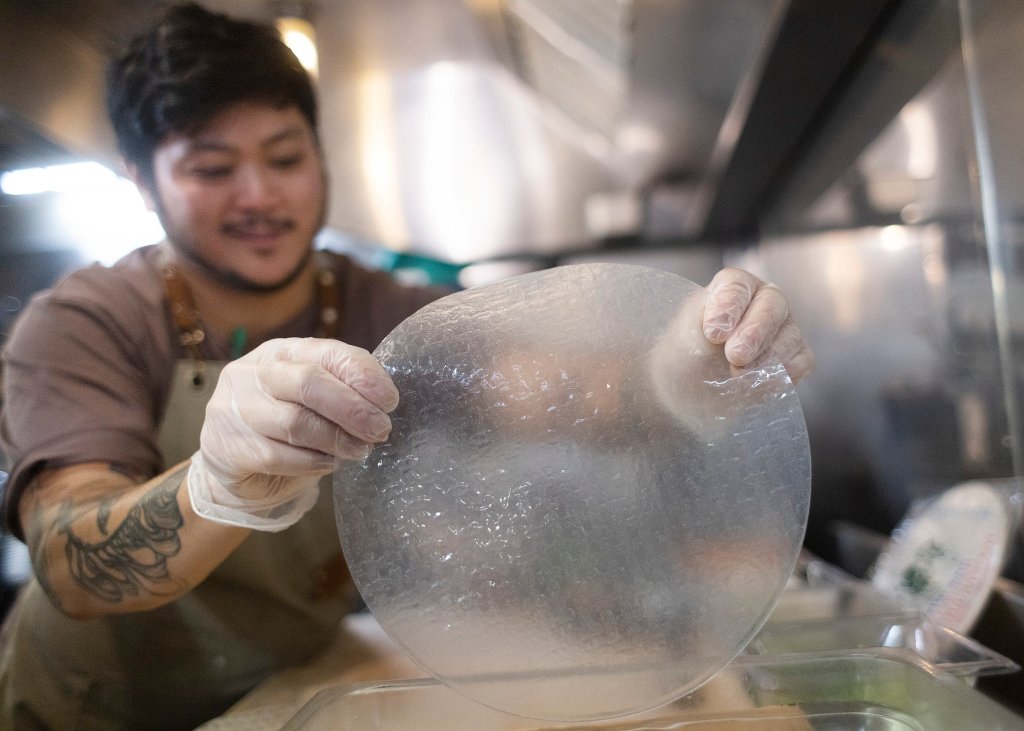
• Soften the rice paper in cool water for just a few seconds and figure out the timing to make your roll: Roll too quickly and the wrapper will be a little stiff and could tear. Roll too slowly, and the wrapper may stick to your counter.
• Center the filling ingredients on the wrapper, putting the prettiest ingredients at the bottom of the stack as those are the ones you’ll see through the translucent rice paper wrappers.
• Do not plan – as I did – to make a big stash of spring rolls ahead of time to bring to a picnic or a party or to eat all week long for lunch. The wrappers will get hard, Kim cautioned, comparing them to nasty, cold, stale rice in sushi rolls that have been sitting around in the refrigerator. “I’m a firm believer we’ve got to make it to order to keep it fresh,” he said. If you must bring a spring roll for lunch at the office, say, roll it up that morning and wrap it well in plastic wrap.
Summers in Maine (and everywhere) are getting hotter. I’d bet a pile of cash that any day now I’ll be seeing a Press Herald article telling me that 2025 was the hottest summer ever on record in Maine. That annual article has, unhappily, become as reliable as heavy southbound traffic on I-295 on an August Sunday. I never used to need the AC here, but now I regularly turn it on, which only makes climate change (and my own feelings of guilt) worse. My happier way to face down the heat is my growing stockpile of recipes that don’t require that I turn on the stove and of meals that can revive me on sweltering days. For me, spring rolls began as an item to tick off on my culinary bucket list; I’ve long meant to try making them. But given how nicely they tick off additional boxes for me — easy, tasty, healthy, no oven required — I’m pretty sure they’ve found a spot in my repertoire.
LOBSTER, ASPARAGUS AND DAIKON SUMMER ROLLS WITH ORANGE, SESAME AND CHILE DIPPING SAUCE
Recipe from Vanessa Seder’s “Eat Cool: Good Food for Hot Days.” At this time of year, I’d likely swap in green beans for the asparagus.
FOR THE DIPPING SAUCE:
1 teaspoon fresh orange zest
1/4 cup fresh orange juice
2 tablespoons low-sodium soy sauce
1 tablespoon toasted sesame oil
1 teaspoon sugar
1 to 2 teaspoons sambal chili sauce
FOR THE SUMMER ROLLS:
3 ounces dried thin rice vermicelli
Sea salt
1 pound asparagus, bottom ends trimmed, each cut in half lengthwise, if thick
8 large round rice wrappers, about 10 inches in diameter
8 ounces fresh pre-shelled lobster meat
2 cups julienned daikon (from one 1-pound white or purple daikon using a serrated vegetable peeler
Pickled ginger, for serving (optional)
To make the dipping sauce, whisk together all the ingredients in a small bowl and set aside until you’re ready to use it.
To make the summer rolls, cook the vermicelli according to the package instructions. Transfer to a bowl of ice water to stop the cooking, then drain and set aside. Reserve the bowl of ice water for the asparagus.
Fill a large, high-sided skillet with 1-inch of water. Bring to a boil over high heat, about 4 minutes. Heavily salt the water and add the asparagus. Cook until the asparagus is crisp-tender, about 3 minutes, then use tongs to transfer to the bowl of ice water to stop the cooking. Drain the asparagus and set aside until ready to use.
Fill a large, shallow dish with very hot water. Working quickly, completely submerge one rice wrapper in the hot water until soft and pliable, 10 to 15 seconds.
Remove from the water and place on a cutting board. Lay 1 once of lobster in the center of the rice wrapper along with some of the vermicelli, daikon and asparagus. Fold the bottom half of the rice paper filling over the filling, then fold in the sides of the wrapper. Pressing down firmly, hold the folds in place and tightly roll the wrapper up from bottom to the top, then transfer to a large platter. Repeat with the remaining rice wrappers and fillings. Serve the summer rolls immediately, with the dipping sauce and pickled ginger, if desired.

We invite you to add your comments. We encourage a thoughtful exchange of ideas and information on this website. By joining the conversation, you are agreeing to our commenting policy and terms of use. More information is found on our FAQs. You can update your screen name on the member's center.
Comments are managed by our staff during regular business hours Monday through Friday as well as limited hours on Saturday and Sunday. Comments held for moderation outside of those hours may take longer to approve.
Join the Conversation
Please sign into your CentralMaine.com account to participate in conversations below. If you do not have an account, you can subscribe here. Questions? Please see our FAQs.