

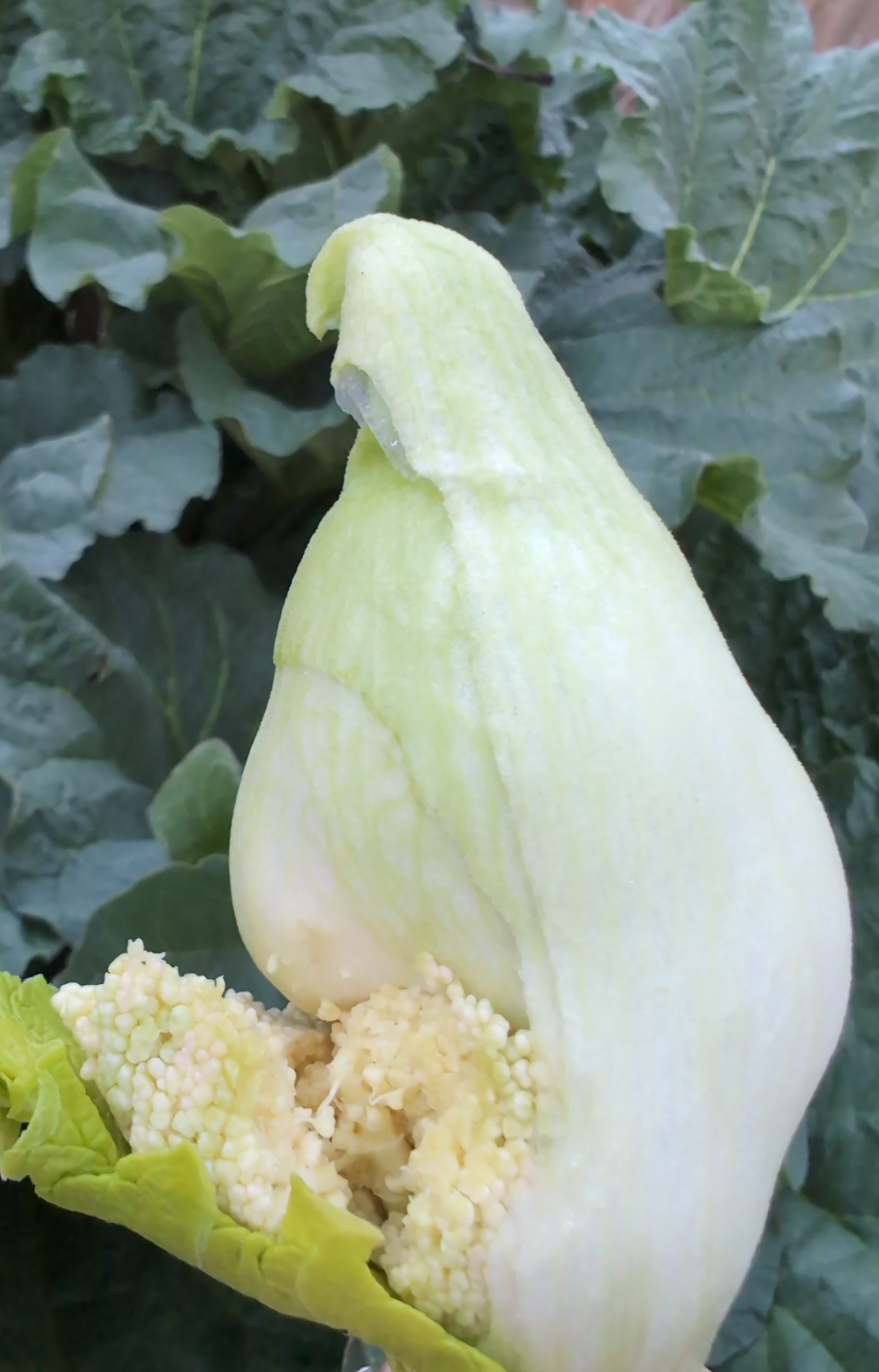
FARMINGTON — In gardens across the state, rhubarb is once again pushing through the soil, marking one of Maine’s earliest and most familiar signs of the growing season.
“You know that summer is on its way in Maine when the rhubarb stalks are large enough to gather,” according to Nutrition Specialist Nellie Hedstrom of the University of Maine Cooperative Extension.
Known for its tart flavor and thick red or green stalks, rhubarb is commonly used in pies, crisps, jams, sauces and baked goods. Though often treated like a fruit in recipes, UMaine Extension notes that “rhubarb is a member of the buckwheat (polygonaceae) family and is sometimes known as ‘pieplant.’”
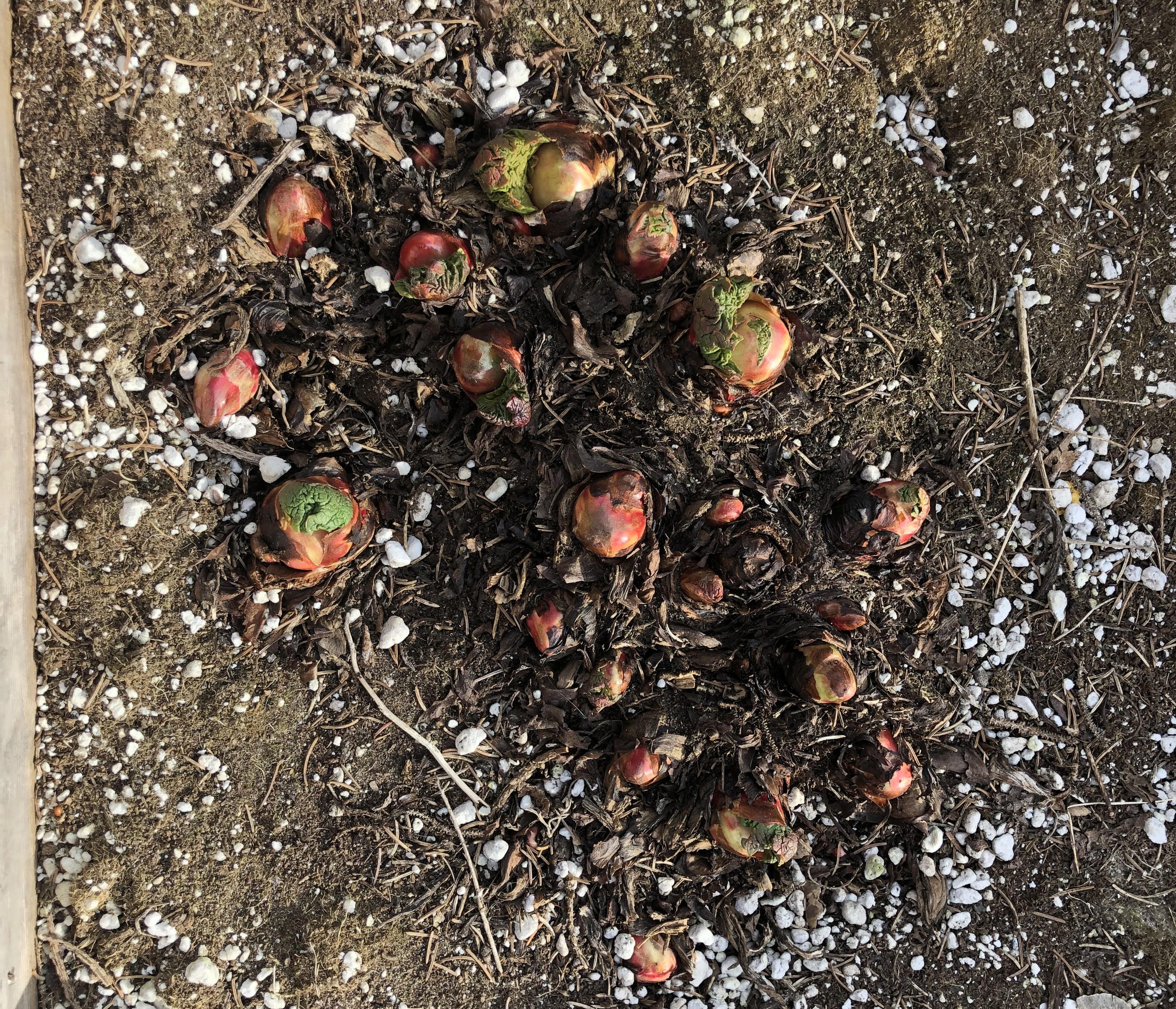
Rhubarb has remained a longtime staple in Maine gardens because the cool-weather perennial thrives in northern climates, returns year after year with relatively little maintenance and often produces harvests for decades. The plant’s early spring growth and reputation for toughness have made it a familiar sight around Maine homes, gardens and farm buildings.
“Rhubarb is a cool-weather perennial that thrives in the northern states, where it gets cold enough to force the rhubarb into dormancy,” according to UMaine Extension Bulletin #2514, Growing Rhubarb in Maine.
Extension specialists note the plant “shows the best growth in early spring, before the weather becomes too warm, and is one of the first crops ready for eating.”
The Old Farmer’s Almanac describes rhubarb as “refreshingly easy to care for” and notes that “a healthy plant will remain productive for 10 years or more.”
UMaine Extension similarly describes the plant as one that “grows in backyards and around farm buildings without much attention.”
Most rhubarb in Maine is not grown from seed.
“The best way to propagate rhubarb is by splitting the crown of an older, already established plant,” UMaine Extension recommends.
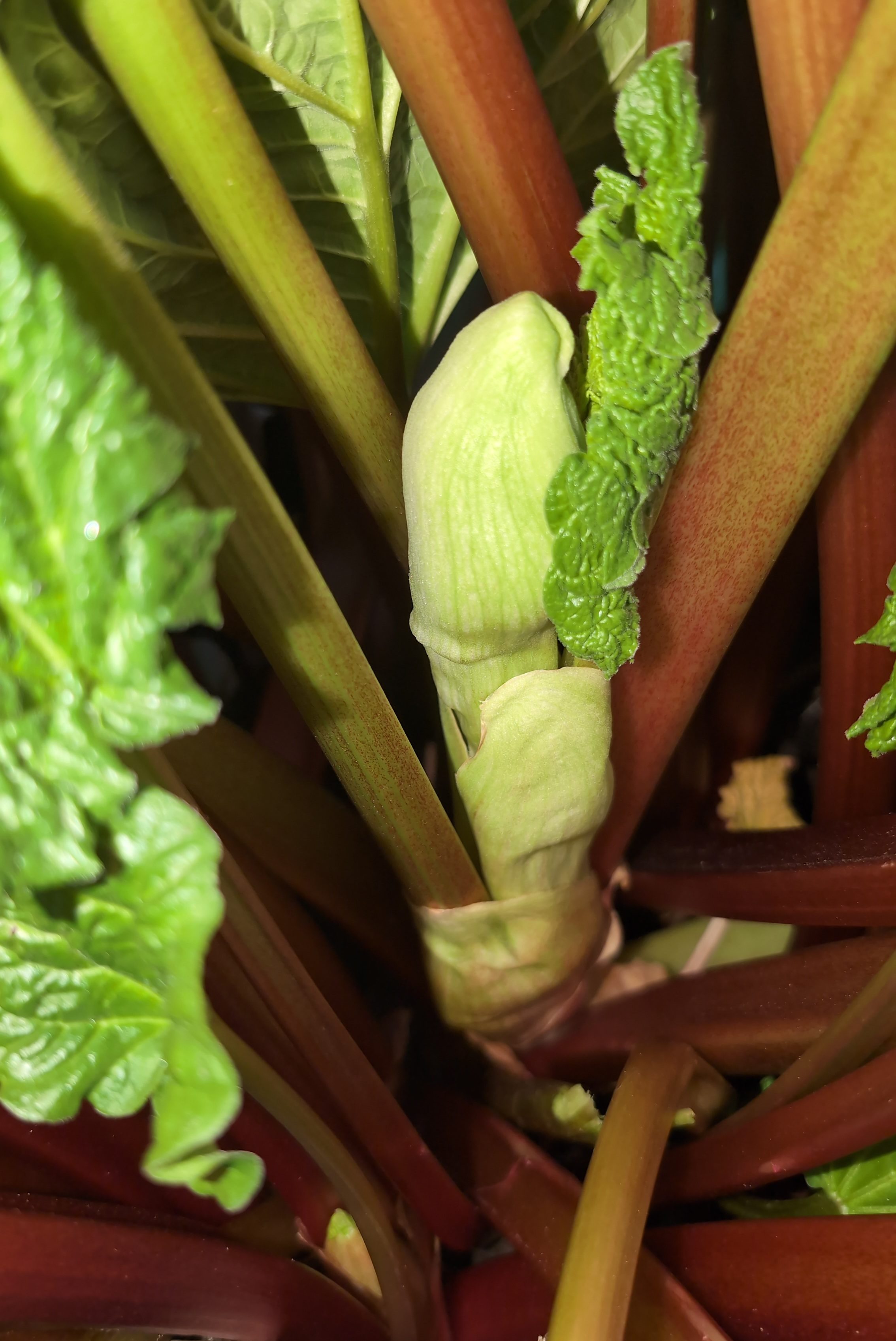
Gardeners also commonly remove flower stalks, sometimes called seed stalks or seed pods, as they emerge from the center of the plant.
“Remove seed stalks as soon as they appear, as they will only drain energy from the plant that could be used to produce stalks or roots,” according to The Old Farmer’s Almanac.
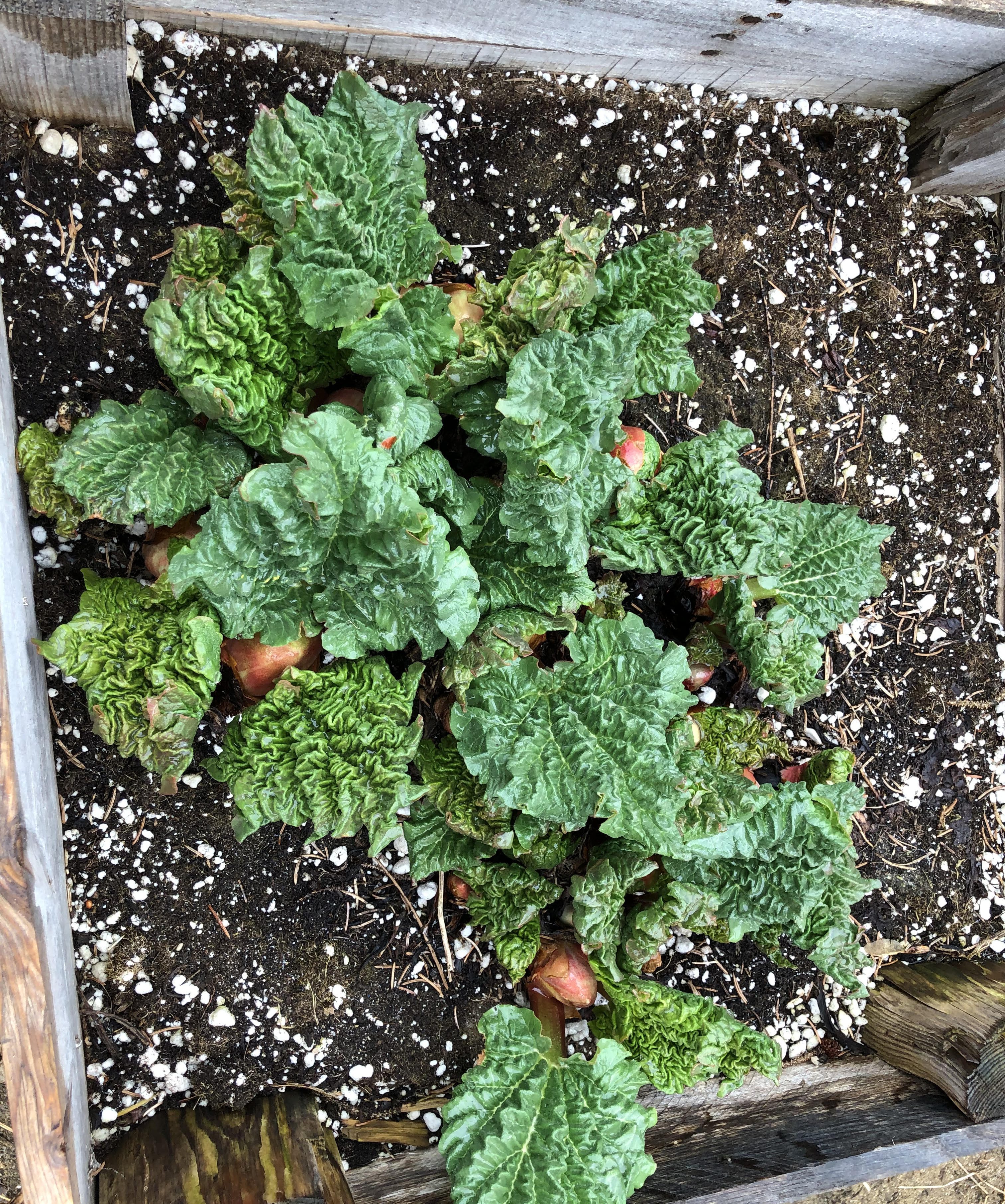
Extension specialists recommend planting rhubarb in full sun with well-drained soil. “Rhubarb does best in well-drained, loamy soil in a location that gets full sun throughout the day.”
The plant also benefits from periodic dividing and maintenance. “Rhubarb crowns should be split at least every four to five years, or whenever the plant begins to produce many small stalks rather than fewer large stalks,” according to UMaine Extension.
For new gardeners, Extension specialists caution against harvesting too early. “Do not harvest stalks from first-year transplants,” the bulletin states.
Rhubarb is generally harvested in Maine from spring into early summer, though Extension guidance notes that “using August 31 as a final harvest date will ensure that plants have adequate time to prepare for winter.”
While the stalks are edible, the leaves should not be eaten because they “are somewhat poisonous because they contain oxalic acid,” according to UMaine Extension.
The tart stalks are often paired with sweeter fruits, especially strawberries, in what has become one of Maine’s most recognizable spring desserts: strawberry-rhubarb pie. Many home cooks prepare the pie with a traditional pastry crust, while others favor graham cracker crusts for a sweeter flavor.
“By combining the stalks with sweeter fruits, like strawberries, the sugar content can be lowered quite a bit,” according to UMaine Extension.
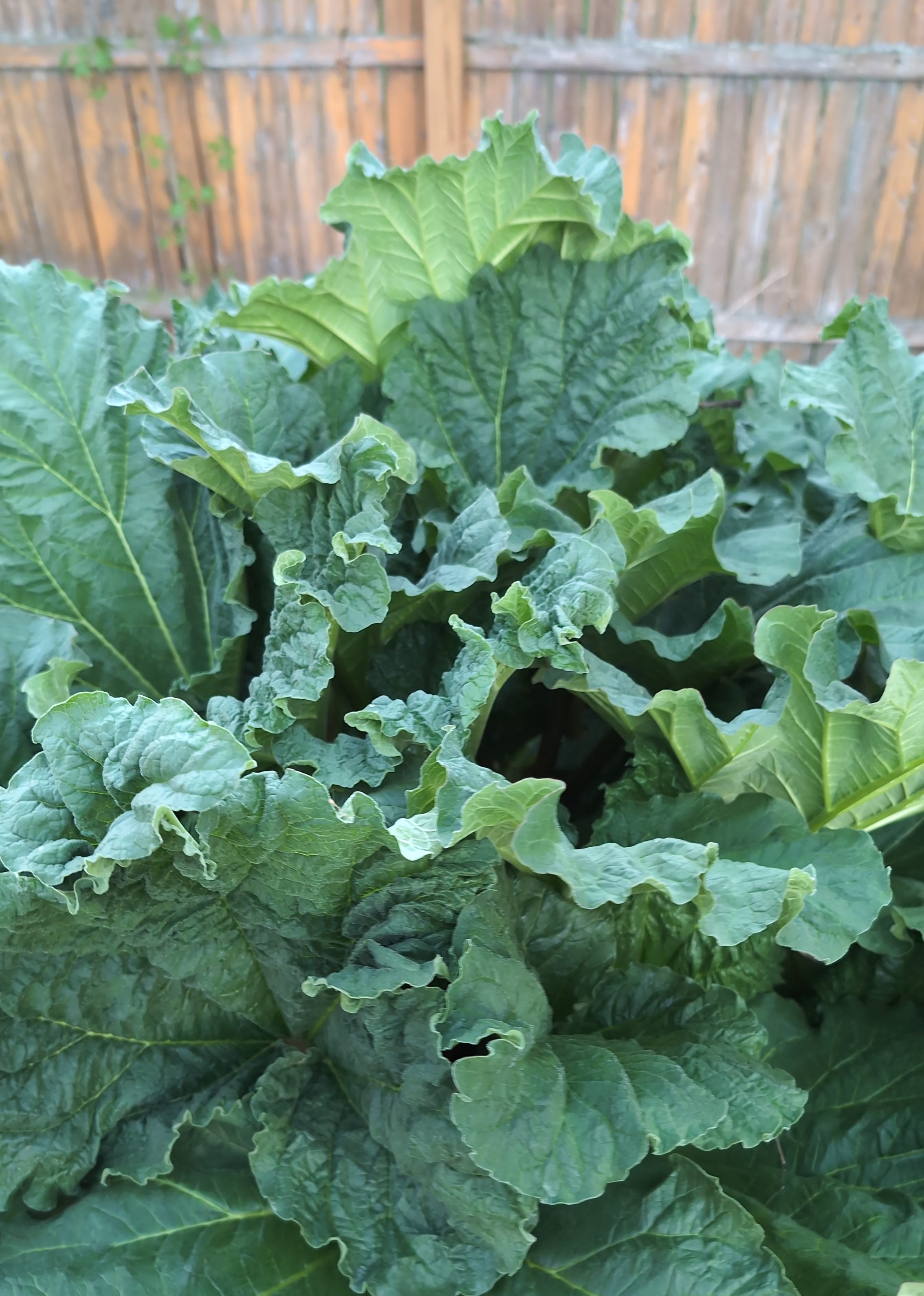
Consumers shopping for rhubarb are advised to “choose stalks that are well-colored, good-sized, straight, and firm,” according to the Extension bulletin.
As roadside stands and farmers markets reopen for the season, rhubarb is expected to appear alongside asparagus and other early crops commonly harvested in Maine during the spring.
In Jay, Sweet Scoops offers strawberry rhubarb crisp ice cream, another local use for one of Maine’s early garden crops.
A Rhubarb Festival is scheduled for Sunday, May 31, from 11 a.m. to 3 p.m. at Snell Family Farm, 1000 River Road in Buxton. According to the event listing, the festival will include fresh rhubarb, rhubarb plants, bakery treats, rhubarb ice cream, sourdough bread, savory focaccia, live leaf printing, flowers, crafts and greenhouse shopping.
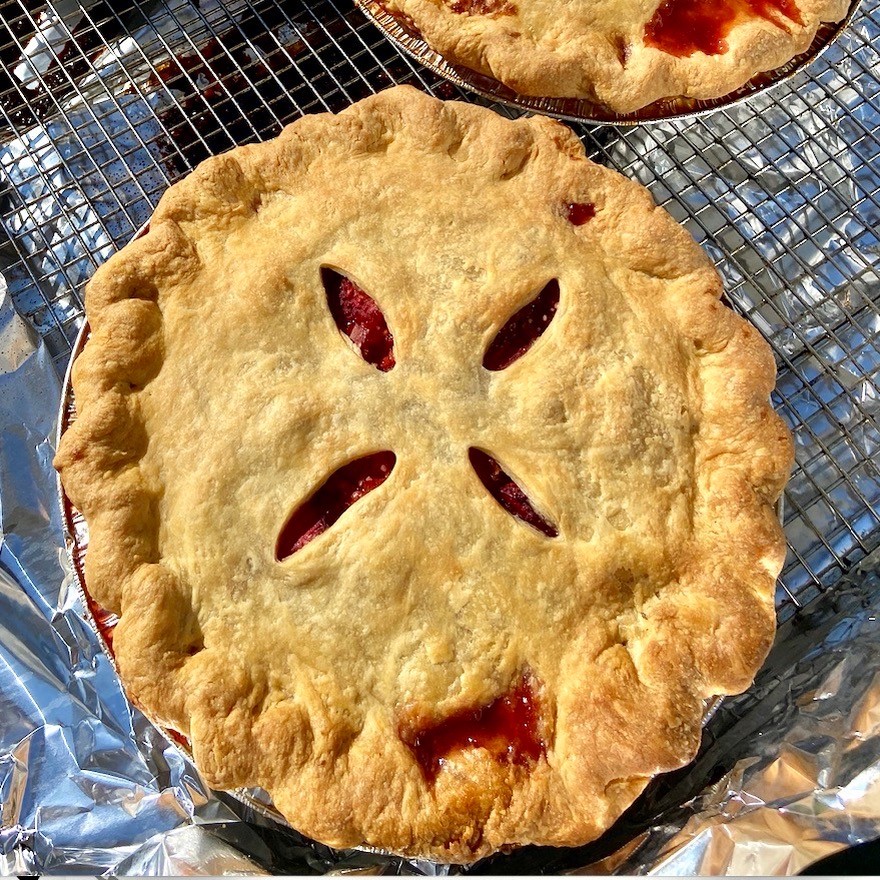
STRAWBERRY RHUBARB PIE
Use your favorite pie crust recipe, a frozen pie crust, or a graham cracker crust.
Ingredients:
1 prepared 9-inch pie crust
2 cups chopped rhubarb
2 cups sliced strawberries
3/4 cup sugar
1/4 cup cornstarch
1 tablespoon lemon juice
1 teaspoon vanilla extract
1/4 teaspoon salt
1 tablespoon (plant-based) butter, cut into small pieces, optional
Directions:
Heat oven to 375 degrees. In a large bowl, combine rhubarb, strawberries, sugar, cornstarch, lemon juice, vanilla and salt. Let sit for 10 minutes, then stir again.
Pour filling into the pie crust and dot with (plant-based) butter, if using. Bake 45 to 55 minutes, until the filling is bubbling and the crust is golden. If the crust browns too quickly, cover the edges loosely with foil.
Let pie cool at least 2 hours before slicing so the filling can set.
Note: This recipe uses no eggs or dairy.

We invite you to add your comments. We encourage a thoughtful exchange of ideas and information on this website. By joining the conversation, you are agreeing to our commenting policy and terms of use. More information is found on our FAQs. You can update your screen name on the member's center.
Comments are managed by our staff during regular business hours Monday through Friday as well as limited hours on Saturday and Sunday. Comments held for moderation outside of those hours may take longer to approve.
Join the Conversation
Please sign into your CentralMaine.com account to participate in conversations below. If you do not have an account, you can subscribe here. Questions? Please see our FAQs.